Swimmer’s ear is an infection of the outer ear canal, usually caused by bacteria that grow when water stays trapped inside your ear. The telltale sign is pain that gets worse when you tug on your earlobe or press the small flap in front of your ear. Most cases clear within 7 to 10 days with prescription eardrops, and a few simple drying habits prevent most repeat infections.
Last updated: October 29, 2026. This guide is general information, not a diagnosis. See a doctor if you have ear pain, drainage or any change in your hearing.
What swimmer’s ear is
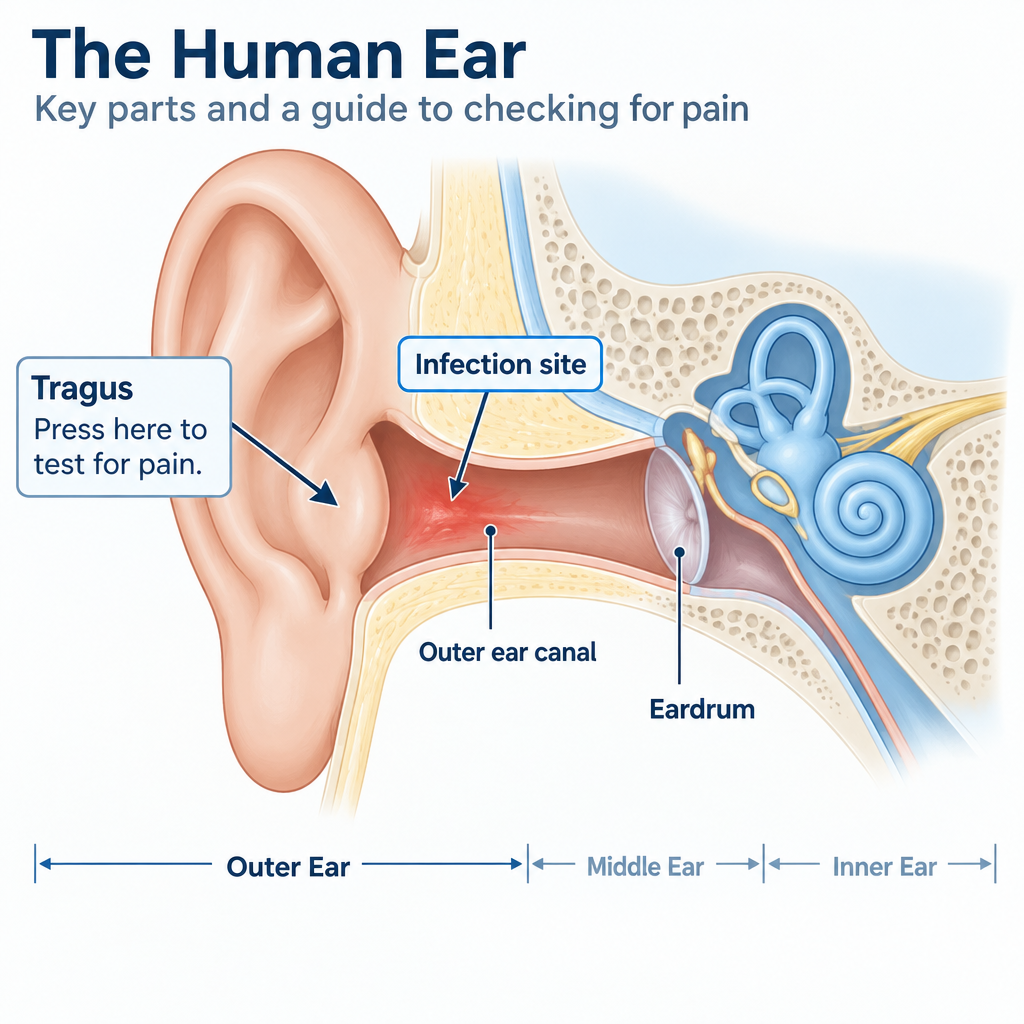
Your ear canal is a short tunnel. It runs from the opening of your ear to your eardrum. Thin skin lines it, and a light coating of earwax protects that skin from water and germs.
Swimmer’s ear happens when that protection breaks down. Water sits in the canal, the skin softens, and bacteria move in. Doctors call it acute otitis externa: “otitis” means ear inflammation and “externa” means the outer ear.
It’s far from rare. A CDC analysis estimated that outer ear infections lead to about 2.4 million healthcare visits a year in the United States. Summer brings the most cases, but you can get swimmer’s ear any time of year, even if you never swim.
Most infections are bacterial. The two usual culprits are Pseudomonas aeruginosa and Staphylococcus aureus. A smaller share are fungal, which doctors call otomycosis. Fungal cases tend to itch more and often follow antibiotic drops.
Symptoms of swimmer’s ear
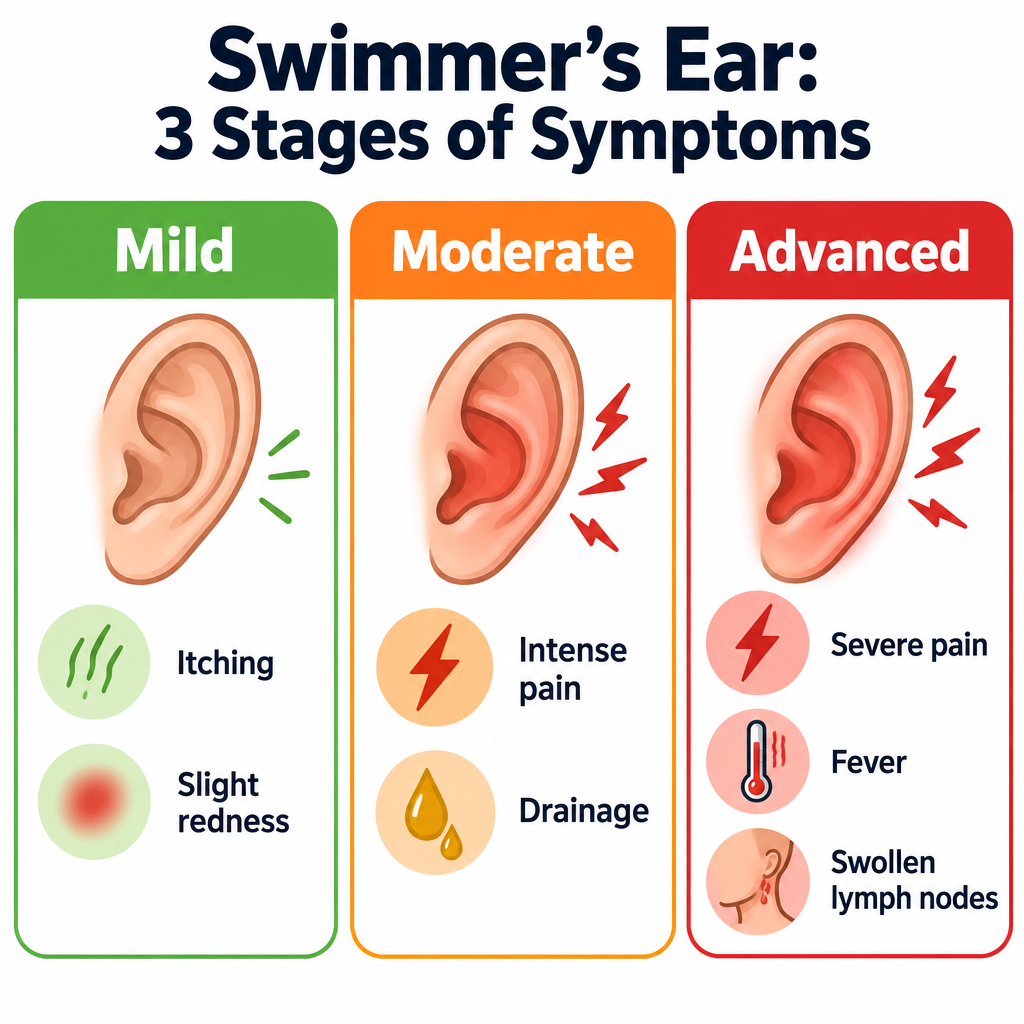
Symptoms usually start mild and can build over a few days if you don’t treat them. Doctors often sort them into three stages.
Mild symptoms
- Itching inside the ear canal
- Slight redness
- Mild discomfort that gets worse when you pull on the outer ear or push on the tragus (the bump in front of the canal)
- Some clear, odorless fluid
Moderate symptoms
- More intense itching and pain
- Spreading redness
- Heavier fluid drainage
- A feeling of fullness, as if the ear is plugged
- Partial blockage of the canal from swelling, debris or fluid
- Decreased or muffled hearing
Advanced symptoms
- Severe pain that can spread to your face, neck or side of your head
- A canal that is completely blocked
- Redness or swelling of the outer ear
- Swollen lymph nodes in your neck
- Fever
The muffled hearing comes from swelling and gunk physically blocking sound. It usually returns to normal once the infection clears. If your hearing drops suddenly, especially in one ear and without the pain and swelling of an infection, treat it as an emergency (more on that below).
Sore ears after swimming: is it swimmer’s ear?
Not every sore ear after swimming is an infection. A few other problems feel similar, and the details help you tell them apart.
| What you notice | Swimmer’s ear | Middle ear infection | Trapped water | Earwax blockage |
|---|---|---|---|---|
| Pain when you tug the ear | Yes, often sharp | Usually no | No | No |
| Where it starts | Outer canal | Behind the eardrum | Outer canal | Outer canal |
| Common trigger | Water, scratching | Cold or sinus infection | Swimming, showering | Wax buildup, swabs |
| Drainage | Clear fluid, then pus | Only if eardrum ruptures | Water trickles out | Rarely |
| Fever | Only in advanced cases | Common, especially in kids | No | No |
| Fullness or muffled hearing | Yes | Yes | Yes, briefly | Yes |
The tug test is the most useful clue. Gently pull your earlobe down or your outer ear up and back. If that sends a jolt of pain through the canal, an outer ear infection is likely. Middle ear infections hurt deeper and don’t usually change when you move the outer ear.
Trapped water feels sloshy and annoying, but it doesn’t hurt much. It usually drains within a few hours. If it lingers for a day and starts to itch or ache, that’s when swimmer’s ear can begin.
Drainage after a middle ear infection can mean the eardrum has torn. A perforated eardrum needs a doctor’s look before you put anything in your ear, including home drops.
What causes swimmer’s ear
Your ear has natural defenses: earwax that repels water, a slightly acidic surface that slows bacteria, and skin that sheds debris outward. Swimmer’s ear starts when something overwhelms those defenses.
Common triggers include:
- Moisture. Water left in the canal after swimming, showering or sweating softens the skin and gives bacteria a warm, damp place to grow.
- Contaminated water. Lakes, rivers and poorly maintained pools and hot tubs can carry higher bacteria levels.
- Scratches and scrapes. Cotton swabs, fingers, hairpins and fingernails can make tiny breaks in the skin.
- Removing too much earwax. Cleaning your ears aggressively strips the protective coating.
- Skin sensitivity. Hair dye, hairspray, shampoo and some earrings can irritate the canal skin.
A single swim rarely causes it on its own. The combination of moisture plus damaged skin is what usually opens the door.
Risk factors
Some people get swimmer’s ear more often than others. Your risk goes up if you:
- Swim often, especially in lakes or rivers
- Live in a hot, humid climate
- Have narrow ear canals, which trap water more easily
- Clean your ears with cotton swabs or other objects
- Wear hearing aids, earbuds or earplugs for long stretches
- Have eczema, psoriasis or seborrheic dermatitis affecting the ear
- Have allergies to hair products or metals in jewelry
- Have diabetes or a weakened immune system, which raises the risk of serious complications
Children and teens who spend summers in pools get it often. Adults who wear in-ear devices all day are a large group that rarely gets mentioned, and we cover them in their own section below.
When to see a doctor
You can’t treat a true swimmer’s ear infection with over-the-counter products alone. Antibiotic eardrops require a prescription. Book a visit with your doctor, an urgent care clinic or a telehealth service if you have even mild symptoms that don’t settle within a day or two.
Many primary care offices offer same-day appointments for ear pain. A telehealth visit can help you decide what to do, but a clinician usually needs to look inside the ear to confirm the diagnosis.
See a professional
Get same-day care for severe pain, fever, pus, swollen neck glands or redness spreading to your face. Sudden hearing loss in one ear is an emergency: go to an ER or call an ENT within 72 hours.
Call your doctor sooner rather than later if you have diabetes or a weakened immune system. Infections can spread faster in these groups.
Also go back if you started drops and you don’t notice improvement within 48 to 72 hours. That usually means the drops aren’t reaching the infection, the germ isn’t responding, or the problem is something else.
Possible complications
Most cases heal fully. When swimmer’s ear goes untreated or doesn’t respond, a complication can happen:
- Temporary hearing loss. Muffled hearing usually returns once the swelling goes down.
- Chronic otitis externa. Doctors use this term when the infection lasts longer than three months. It’s more likely with unusual bacteria, skin conditions or fungal infections.
- Deep tissue infection. Rarely, the infection spreads into the surrounding skin and tissue (cellulitis).
- Necrotizing otitis externa. This is the most serious complication. The infection spreads to the cartilage and bone at the base of the skull. It mainly affects older adults with diabetes or weakened immunity and needs urgent hospital treatment.
Warning signs of a spreading infection include worsening pain despite treatment, pain deep in the head, facial weakness and fever. Don’t wait on any of these.
How doctors diagnose and treat swimmer’s ear
Diagnosis
Your doctor will look inside your ear with an otoscope, a lighted scope. They’ll check for redness, swelling and debris, and try to see your eardrum. If they can’t see it because of swelling, they’ll treat you as though it could be damaged.
If the infection is severe, keeps coming back or doesn’t respond to treatment, your doctor may take swabs of the discharge. A lab can identify the germ and show which antibiotic or antifungal works best. Some people get referred to an ear, nose and throat specialist. The American Academy of Otolaryngology’s ENThealth site is a solid source of patient information if you want to read more about specialist care.
Cleaning the canal
Drops can’t work if they can’t reach the skin. Your doctor may gently remove debris and discharge with suction or a small instrument. This step makes a big difference in how fast you heal.
Prescription eardrops
Eardrops are the first-line treatment for most cases. The American Academy of Otolaryngology–Head and Neck Surgery guideline recommends topical drops over oral antibiotics for uncomplicated swimmer’s ear. Common options include:
- Antibiotic drops, such as ofloxacin, or ciprofloxacin with a steroid
- Combination drops with an antibiotic and a steroid to calm swelling
- Acidic drops that restore the ear’s normal pH
- Antifungal drops if a fungus is the cause
If your eardrum might be torn or you have ear tubes, your doctor will choose drops that are safe for the middle ear. Some antibiotics, such as neomycin, can damage hearing if they get past the eardrum, so tell your doctor about any past eardrum problems.
Most people feel better in two to three days. Keep using the drops for the full course your doctor prescribes, which is typically 7 to 10 days.
Ear wick
If your canal is too swollen for drops to get in, your doctor may place a wick. This is a small piece of sponge or gauze that draws the medicine deeper. It usually falls out or gets removed after a few days.
Oral antibiotics
Pills are not usually needed. Doctors save them for infections that spread beyond the ear canal, or for people with diabetes or weakened immune systems.
Pain relief
Swimmer’s ear can be surprisingly painful. Over-the-counter pain relievers such as ibuprofen or acetaminophen help with mild to moderate pain. Your doctor may suggest something stronger for a few days if the pain is severe.
How to use eardrops correctly
Many treatment failures come down to technique. The drops have to reach the full length of the canal.
How to put in eardrops
- Warm the bottle in your hands for a minute or two. Cold drops can make you dizzy.
- Lie on your side with the affected ear facing up.
- For adults, gently pull the outer ear up and back. For children, pull it down and back.
- Fill the canal with the number of drops your doctor prescribed.
- Press the tragus a few times to push the drops deeper.
- Stay lying down for 3 to 5 minutes.
- Wipe away any excess with a tissue. Don’t plug the ear tightly.
If possible, have someone else put the drops in for you. It’s much easier to get the angle right.
Home care while you heal
Treatment works best when you protect the ear while it recovers.
- Keep the ear dry. When you shower, place a cotton ball coated in petroleum jelly at the opening of your ear.
- Skip swimming. Most doctors advise staying out of the water until symptoms clear, often 7 to 10 days. Ask your doctor before getting back in.
- Don’t put anything in your ear. No cotton swabs, fingers or homemade remedies.
- Pause in-ear devices. Leave out earbuds and hearing aids until the pain and drainage stop, unless your doctor says otherwise.
- Follow up if needed. Return if you don’t feel better in two to three days or you get worse at any point.
Some people notice ringing in the ear while the canal is swollen. It usually fades as the infection clears. If it keeps you up at night, a white noise maker for tinnitus can make the quiet less noticeable, but tell your doctor if the ringing continues after you’ve healed.
7 ways to prevent swimmer’s ear
You can prevent most cases with a few habits. These matter most if you swim often or have had swimmer’s ear before.
- Dry your ears after water. Use the steps below after every swim and shower.
- Wear a swim cap or earplugs. Well-fitted swim earplugs keep water out. Custom-molded plugs from an audiologist fit best if you swim a lot.
- Leave earwax alone. A normal amount of wax protects your canal. If wax causes a blockage, have a professional remove it.
- Never use cotton swabs inside the canal. Clean only the outer ear with a washcloth.
- Choose clean water. Avoid swimming in lakes or rivers after heavy rain or where water quality warnings are posted. Skip pools and hot tubs that look cloudy.
- Protect your ears from hair products. Put cotton balls in your ears before using hairspray or hair dye.
- Consider drying drops. Over-the-counter drops made of isopropyl alcohol and glycerin help water evaporate. Some doctors suggest a homemade mix of equal parts white vinegar and rubbing alcohol. Use either only if your eardrum is intact and you have no ear tubes, and never on an ear that’s already sore.
Dry your ears after swimming
- Towel-dry the outside of each ear gently.
- Tilt your head to each side and pull your earlobe in different directions to let water drain.
- Set a hair dryer to the lowest heat and fan speed.
- Hold it several inches from your ear and move it back and forth for about 30 seconds.
- Never put a towel corner or swab into the canal.
Hearing tip
If you’ve had swimmer’s ear more than once, ask your doctor whether preventive drying drops make sense for you before swim season starts.
Hearing aids, earbuds and swimmer’s ear
Anything that sits in your ear canal for hours can raise your risk. In-ear devices trap heat and moisture, block airflow and can rub the skin. Sweat from a workout makes it worse.
Some simple habits help:
- Clean devices daily. Wipe earbud tips, hearing aid domes and earmolds with a dry cloth or the cleaning tool that came with them. Replace domes and wax filters on the schedule in your user guide.
- Let your ears breathe. Take earbuds out between calls or playlists. If you wear hearing aids all day, remove them for a while during the evening.
- Dry your devices overnight. A hearing aid drying box or dehumidifier pulls moisture out of the devices before you put them back in.
- Don’t share earbuds. Sharing moves bacteria from one ear to another.
- Don’t confuse water resistance with ear protection. A device rated IP68 can survive water. That says nothing about the moisture it traps against your skin.
If you get swimmer’s ear often while wearing hearing aids, talk to your audiologist. A more open dome, a vented earmold or a different style can let more air in. When you get a new fitting, a real ear measurement helps confirm the device still delivers the right sound once the earmold changes.
Never wear hearing aids or earbuds over an infected ear unless your doctor clears it. The device can push debris deeper, trap drainage and slow healing.
FAQ
How long does swimmer’s ear last?
With prescription drops, most people feel better in two to three days. The infection usually clears in 7 to 10 days. Untreated, it can last much longer and get worse.
Can swimmer’s ear go away on its own?
Very mild irritation sometimes settles if the ear stays dry. A true infection usually needs antibiotic drops. Waiting it out risks a deeper or longer-lasting infection, so see a doctor if pain lasts more than a day.
Is swimmer’s ear contagious?
No. It doesn’t spread from person to person. Sharing earbuds or earplugs can still move bacteria around, so keep your own.
What’s the difference between swimmers ears and a regular ear infection?
Swimmer’s ear affects the outer canal and hurts when you move the outer ear. A regular ear infection usually means a middle ear infection behind the eardrum. It often follows a cold and doesn’t hurt more when you tug the ear.
Can swimmer’s ear cause hearing loss?
It often causes temporary muffled hearing from swelling and blockage. Hearing usually returns once the infection clears. Permanent hearing loss is rare. If your hearing doesn’t come back after treatment, see an audiologist.
Why do I keep getting swimmer’s ear?
Repeat infections usually come from moisture, cleaning habits, narrow canals, skin conditions or long hours wearing in-ear devices. A doctor can check for an underlying cause, such as eczema or a fungal infection, and suggest preventive drops.
Can I fly with swimmer’s ear?
Usually yes. Flying doesn’t directly affect the outer ear canal the way it can affect the middle ear. If you have severe pain or a possible perforated eardrum, check with your doctor before you travel.