Category: Hearing Loss Basics

  • Sensorineural Hearing Loss Explained: Causes and Treatment Options

    Sensorineural Hearing Loss Explained: Causes and Treatment Options

    Sensorineural deafness is hearing loss caused by damage to the inner ear (the cochlea) or to the auditory nerve that carries sound signals to the brain. It is the most common type of permanent hearing loss in adults, and while it usually cannot be reversed, hearing aids, cochlear implants and fast medical care for sudden cases can make a large difference.

    Last updated: October 30, 2026. General information only, not a diagnosis.

    TypeInner ear or nerve
    Medical abbreviationSNHL
    Usually reversibleNo
    Main treatmentsHearing aids, implants
    Emergency formSudden SNHL

    Sensorineural Deafness Definition

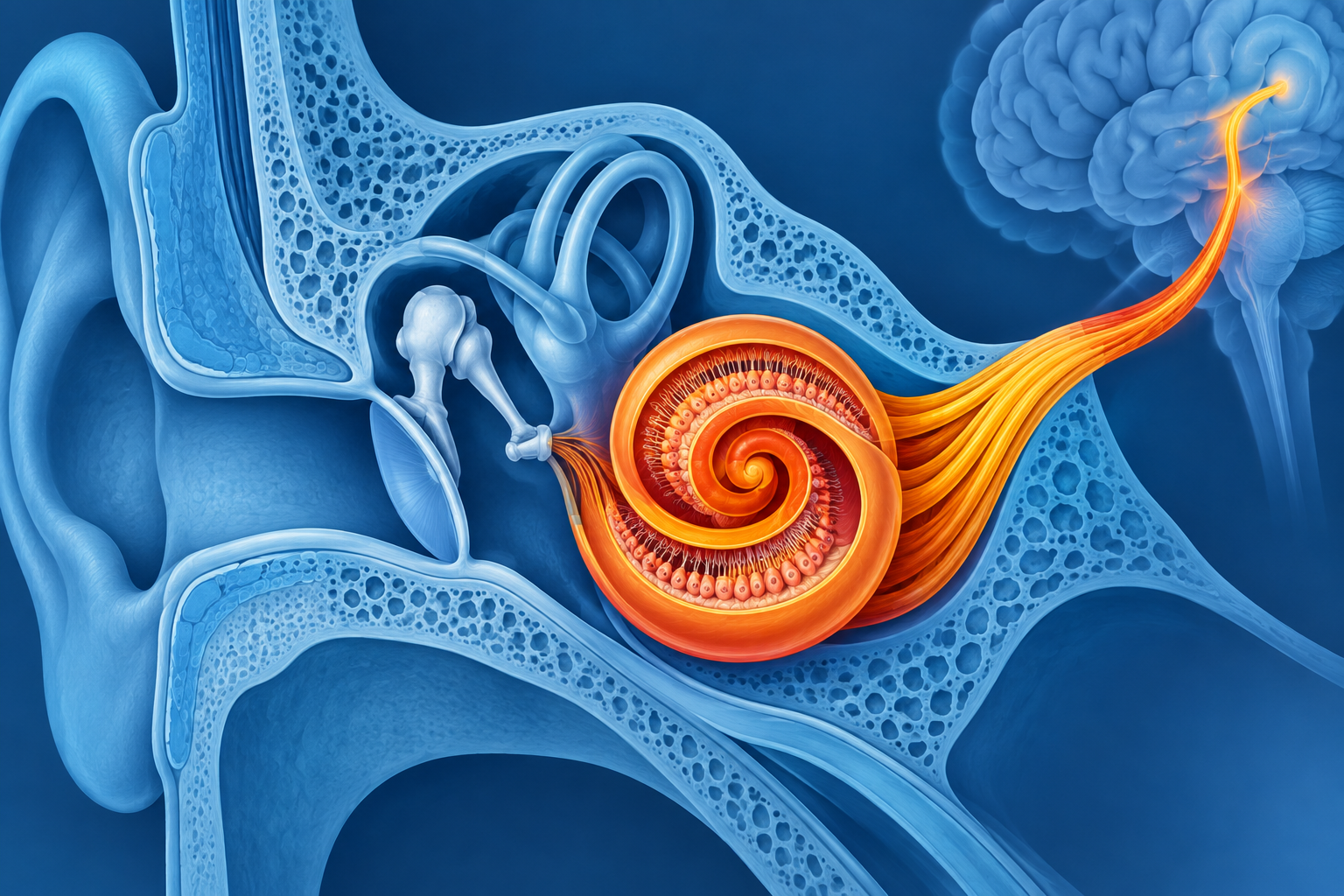
    “Sensorineural” combines two words. Sensory refers to the hair cells inside the cochlea that turn sound vibrations into electrical signals. Neural refers to the auditory nerve that carries those signals to your brain. Damage to either part causes sensorineural hearing loss.

    The medical abbreviation is SNHL. You may also see SSNHL or SSHL for sudden sensorineural hearing loss. Older texts and MedlinePlus list “nerve deafness” as an alternative name, although the nerve itself is often not the damaged part.

    “Deafness” in a medical heading does not always mean total loss of hearing. Doctors use “sensorineural deafness” for anything from a mild high-pitch loss to profound hearing loss. In everyday use, “deaf” usually describes profound loss, and many people who identify as Deaf (capital D) see themselves as part of a cultural and linguistic community rather than as having a condition to fix.

    How SNHL Differs From Other Types

    Hearing loss falls into three main types. Where the problem sits decides how it is treated.

    Type Where the problem is Common examples Typical outlook
    Sensorineural Cochlea or auditory nerve Aging, loud noise, genetics, some drugs Usually permanent; managed with devices
    Conductive Outer or middle ear Earwax, fluid, ear infection, perforated eardrum Often treatable with medicine or surgery
    Mixed Both at once Chronic ear disease plus age-related loss Conductive part may be treatable

    A blocked ear from swimmer’s ear or a perforated eardrum stops sound reaching the inner ear. That is conductive loss, and it often clears up. With SNHL, sound arrives normally but the inner ear or nerve cannot process it properly.

    Sensorineural loss is by far the most common type. Many clinical and industry sources put it at roughly 90% of hearing loss in adults.

    Symptoms of Sensorineural Hearing Loss
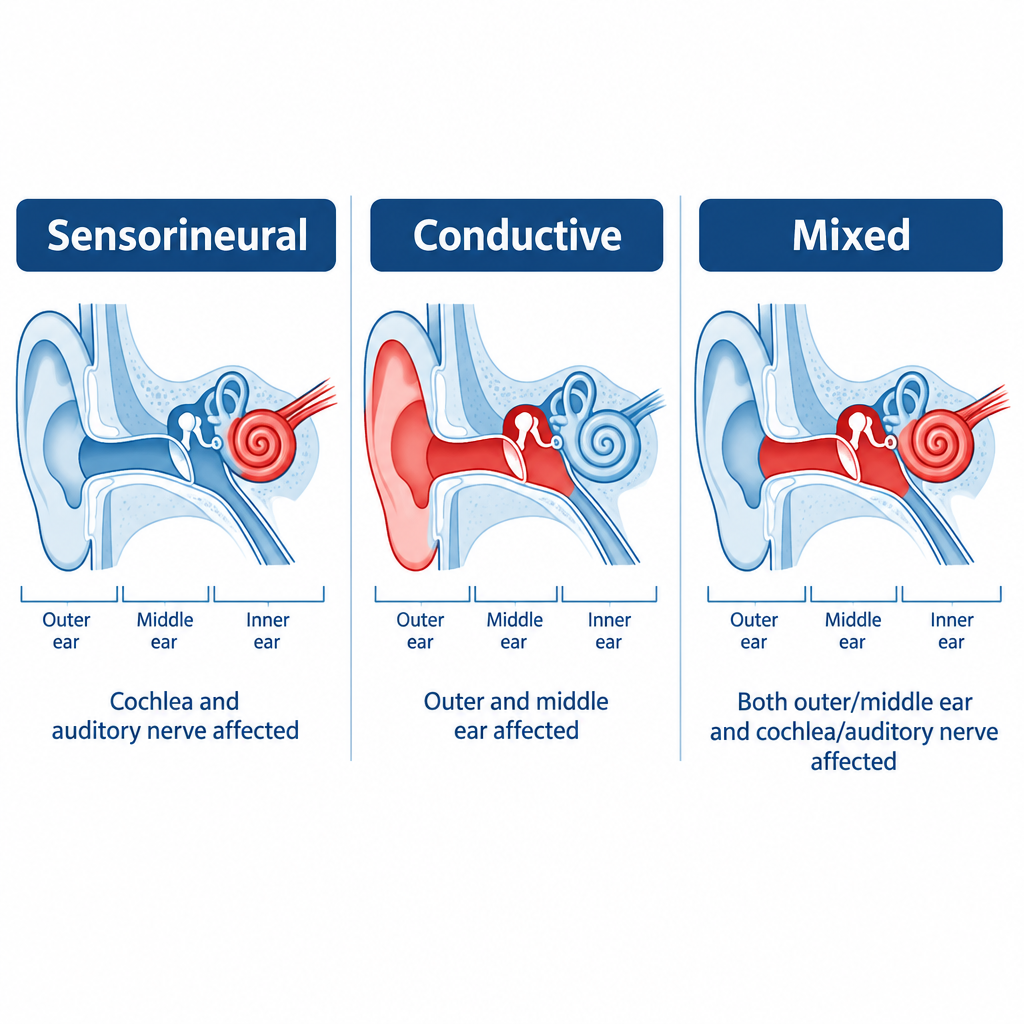
    Types of Hearing Loss Comparison

    SNHL usually creeps in slowly. Many people notice the effects on conversation before they notice “hearing loss” itself.

    Common signs include:

    • Speech sounds mumbled, especially in noisy restaurants or group settings
    • Trouble hearing women’s and children’s voices, which tend to be higher pitched
    • Missing consonants like “s,” “f,” “th” and “sh,” so words blur together
    • Turning up the TV louder than others prefer
    • Ringing, buzzing or hissing in the ears (tinnitus)
    • Sounds seeming too loud and too quiet at the same time, called recruitment
    • Dizziness or balance problems in some cases, since the inner ear also controls balance

    The clarity problem matters. Damaged hair cells distort sound, so making it louder does not fully restore crispness. That is why people with SNHL often say, “I can hear you, I just can’t understand you.”

    See a professional

    Sudden hearing loss in one or both ears, over hours or up to three days, is a medical emergency. See a doctor or urgent care the same day, ideally within 72 hours.

    What Causes Sensorineural Deafness

    Many cases have more than one cause. Here are the main ones.

    Aging (presbycusis)

    Age-related hearing loss is the most common cause. According to the National Institute on Deafness and Other Communication Disorders (NIDCD), about one in three US adults aged 65 to 74 has hearing loss, and nearly half of those over 75 do. It usually affects both ears equally and hits high pitches first.

    Loud noise exposure

    Noise damages the delicate hair cells in the cochlea. A single extreme blast, like a gunshot or explosion, can cause instant damage. More often, damage builds over years of loud work, concerts, power tools or earbuds turned up high.

    Hair cells in humans do not grow back. Once enough are lost, the hearing loss is permanent.

    Genetics and congenital causes

    Some babies are born with SNHL, and some inherit genes that cause loss later in life. Changes in the GJB2 gene (connexin 26) are the most common genetic cause of congenital hearing loss in many populations. Cytomegalovirus (CMV) infection during pregnancy is the leading non-genetic cause of congenital SNHL. Newborn hearing screening in US hospitals is designed to catch these cases early.

    Ototoxic medicines

    Certain drugs can damage the inner ear. Known examples include:

    • The chemotherapy drug cisplatin
    • Aminoglycoside antibiotics such as gentamicin
    • High doses of loop diuretics such as furosemide
    • Very high doses of aspirin, where hearing effects are usually reversible
    • Quinine

    Never stop a prescribed medicine on your own. If you notice ringing or hearing changes during treatment, tell your prescriber.

    Illness, injury and other conditions

    • Infections: meningitis, measles, mumps and some viral infections
    • Ménière’s disease: episodes of vertigo, tinnitus, ear fullness and fluctuating low-pitch hearing loss
    • Autoimmune inner ear disease: the immune system attacks the inner ear, often causing loss in both ears over weeks to months
    • Head trauma: skull fractures or concussion can injure the cochlea
    • Vestibular schwannoma (acoustic neuroma): a noncancerous tumor on the nerve, usually causing loss in one ear only
    • Blood flow problems: reduced blood supply to the inner ear, which is one suspected cause of sudden SNHL

    Sudden sensorineural hearing loss

    The NIDCD defines sudden SNHL as a loss of at least 30 decibels across three connected frequencies, happening within 72 hours. It usually affects one ear. Many people first notice it on waking, or after a “pop” in the ear.

    In most cases, doctors never find a specific cause. The NIDCD reports that about half of people recover some or all of their hearing on their own, usually within one to two weeks. Prompt treatment, usually corticosteroids, gives you the best chance at recovery.

    How Loud Is Too Loud?

    Cochlea Hair Cell Damage Illustration

    Noise is the one major cause you can control. The National Institute for Occupational Safety and Health (NIOSH) recommends a limit of 85 decibels (dBA) averaged over 8 hours. For every 3 dB increase, the safe time halves.

    Sound level (dBA) NIOSH recommended max time Everyday comparison
    85 8 hours Heavy city traffic
    88 4 hours Lawn mower range
    91 2 hours Loud power tools
    94 1 hour Motorcycle
    97 30 minutes Loud nightclub range
    100 15 minutes Rock concert range

    The OSHA legal workplace limit is looser, at 90 dBA over 8 hours. Treat the NIOSH numbers as the safer target.

    Hearing tip

    Your phone can track noise for you. On iPhone, add the Noise control to Control Center or check Health > Hearing. On Apple Watch, the Noise app warns you when sound passes your chosen level.

    For concerts, motorsports or loud work, choosing the right types of earplugs matters. Foam plugs block the most noise, while filtered “musician” plugs lower volume more evenly so music still sounds natural.

    How SNHL Is Diagnosed

    Diagnosis usually starts with a primary care doctor and moves to an audiologist and an ear, nose and throat specialist (ENT, also called an otolaryngologist).

    What to expect at your visit

    1. History and exam. The doctor asks when the loss started, whether it affects one or both ears, and about noise, medicines, dizziness and family history. They look in your ears to rule out wax, infection or a damaged eardrum.
    2. Tuning fork tests. In the Weber test, a vibrating fork on your forehead sounds louder in the better ear when SNHL is present. The Rinne test compares hearing through air and through bone.
    3. Pure-tone audiogram. In a sound booth, you respond to beeps at different pitches. Testing through headphones (air conduction) and a bone vibrator (bone conduction) shows where the problem is. In SNHL, both results are lowered by a similar amount.
    4. Speech testing. You repeat words at set volumes. This shows how well you understand speech, which helps predict how much hearing aids will help.
    5. Tympanometry. A small probe checks how the eardrum and middle ear move.
    6. Further tests if needed. An MRI is often ordered for loss in one ear or uneven loss, to rule out a tumor on the nerve. Blood tests may check for infection or autoimmune disease.

    Reading your audiogram

    Results are measured in decibels hearing level (dB HL). Higher numbers mean you need louder sounds to hear. Clinics commonly use these ranges, based on the American Speech-Language-Hearing Association (ASHA) classification:

    Degree Hearing threshold (dB HL) What it often feels like
    Normal −10 to 15 No trouble in quiet
    Slight 16 to 25 Faint speech hard in noise
    Mild 26 to 40 Soft speech and whispers missed
    Moderate 41 to 55 Normal conversation is a strain
    Moderately severe 56 to 70 Group talk very difficult
    Severe 71 to 90 Only loud speech heard
    Profound 91+ Most speech not heard without devices

    5 Treatment Options for Sensorineural Hearing Loss

    No pill or surgery currently regrows hair cells. Treatment aims to restore access to sound and speech. The exception is sudden SNHL, where early medical treatment may bring hearing back.

    1. Steroids for sudden SNHL

    Corticosteroids, taken as pills or injected through the eardrum, are the standard treatment for sudden SNHL. Clinical guidelines favor starting within two weeks of onset, and sooner is better. Some clinics also offer hyperbaric oxygen therapy as an add-on. Steroids are not used for gradual age-related or noise-related loss.

    2. Hearing aids

    Hearing aids are the main treatment for most people with SNHL. They amplify the frequencies you have lost and reduce background noise. Modern models are often rechargeable, connect to phones over Bluetooth, and adjust through an app.

    You have two routes in the US:

    • Over the counter hearing aids: The FDA created this category in a rule that took effect on October 17, 2022. They are for adults 18 and older with perceived mild to moderate hearing loss. You can buy them without an exam or prescription.
    • Prescription hearing aids: Fitted by an audiologist or hearing aid specialist. These suit severe loss, children, unusual hearing patterns and anyone who wants professional fine-tuning.

    Telecoil-equipped aids can also pick up hearing loop systems in theaters and places of worship. Newer aids increasingly support Auracast broadcast audio, which streams sound from venue systems or TVs straight to compatible hearing devices.

    3. Cochlear implants

    When hearing aids no longer provide clear speech, a cochlear implant may help. A surgeon places an electrode array inside the cochlea. It bypasses the damaged hair cells and stimulates the auditory nerve directly. An external processor worn behind the ear picks up sound.

    Implants are FDA-approved for both children and adults with severe to profound SNHL. Candidacy has widened over time, and some people with single-sided deafness now qualify. The brain needs time to learn the new signal, so auditory rehabilitation afterward is part of the process.

    4. Options for single-sided deafness

    If one ear has severe SNHL and the other hears well, you have specific choices:

    • CROS hearing aids: a microphone on the deaf side sends sound to a receiver in the hearing ear
    • Bone-conduction devices: these send sound vibrations through the skull to the working cochlea
    • Cochlear implant: an option for some people, as noted above

    5. Assistive technology and communication

    Devices and skills fill the gaps where hearing aids fall short:

    • Live captioning on phones, such as Live Caption on Android and Live Captions on iPhone
    • Captioned telephones and relay services
    • Remote microphones that clip onto a speaker’s shirt
    • Visual alerts, like a light for telephone calls, doorbells and smoke alarms
    • Speechreading lessons and American Sign Language (ASL)

    For tinnitus that often comes with SNHL, sound therapy can make it less intrusive. Hearing aids with built-in tinnitus sounds or a white noise maker for tinnitus at bedtime help many people, though neither cures it.

    What about gene therapy?

    Research is moving fast. In 2024, early clinical trials reported that gene therapy restored some hearing in children with a rare form of genetic deafness caused by changes in the OTOF gene. These treatments are experimental. They apply only to specific genetic causes and are not available as routine care. Be wary of any clinic or supplement that claims to reverse SNHL.

    Outlook and Prognosis

    Your outlook depends on the cause:

    • Age and noise-related loss: permanent and often slowly progressive. Regular hearing tests track changes.
    • Sudden SNHL: around half recover some or all hearing on their own, and early treatment improves the odds. Severe initial loss and accompanying vertigo tend to predict a poorer recovery.
    • Drug-related loss: usually permanent once it happens, though aspirin-related changes often reverse.
    • Congenital loss: early detection and fitting with hearing aids or implants, or early access to sign language, gives children the best language outcomes.

    Treating hearing loss matters beyond hearing itself. Untreated hearing loss in older adults is linked to social isolation and has been identified as a risk factor for dementia. The 2023 ACHIEVE trial found that hearing intervention slowed cognitive decline in older adults who were at higher risk.

    Living With Sensorineural Hearing Loss

    Daily habits that help

    1. Get a baseline hearing test now, then retest as advised.
    2. Wear hearing aids all waking hours so your brain adapts.
    3. Ask people to face you and speak clearly, not loudly.
    4. Choose quiet restaurant seats away from kitchens and speakers.
    5. Turn on captions for TV, video calls and phone calls.
    6. Protect the hearing you have from loud noise.

    Tell people what helps you. A simple “I hear better when you face me” works better than nodding along. Many people also find support groups, such as local chapters of the Hearing Loss Association of America, useful for practical tips and connection.

    FAQ

    What does SNHL stand for in medical terms?

    SNHL stands for sensorineural hearing loss. It means hearing loss caused by damage to the cochlea in the inner ear or to the auditory nerve. SSNHL or SSHL refers to sudden sensorineural hearing loss.

    Can sensorineural deafness be cured?

    In most cases, no. Damaged inner ear hair cells do not regrow in humans. Sudden SNHL is the main exception, where steroids and natural recovery may restore some or all hearing. Hearing aids and cochlear implants do not cure SNHL, but they restore access to sound.

    Is sensorineural hearing loss the same as nerve deafness?

    “Nerve deafness” is an older name for the same thing. It is a bit misleading, since the damage is usually in the cochlea’s hair cells rather than the nerve itself.

    Will over the counter hearing aids work for SNHL?

    They can, if your loss is mild to moderate and you are 18 or older. They are designed for exactly that range. For severe loss, loss in one ear only, sudden changes, ear pain or dizziness, see an audiologist or doctor first.

    Does sensorineural hearing loss get worse over time?

    Age-related and noise-related SNHL often progresses slowly. Protecting your ears from loud noise and avoiding ototoxic drugs where possible can help slow further damage. Regular testing lets you adjust your hearing aids as your hearing changes.

    How fast do I need to see a doctor for sudden hearing loss?

    Treat it as an emergency and go the same day if you can. Steroid treatment works best when started early, and guidelines favor starting within two weeks of onset.
  • Swimmer’s Ear Basics: Causes, Prevention and When to See a Doctor

    Swimmer’s Ear Basics: Causes, Prevention and When to See a Doctor

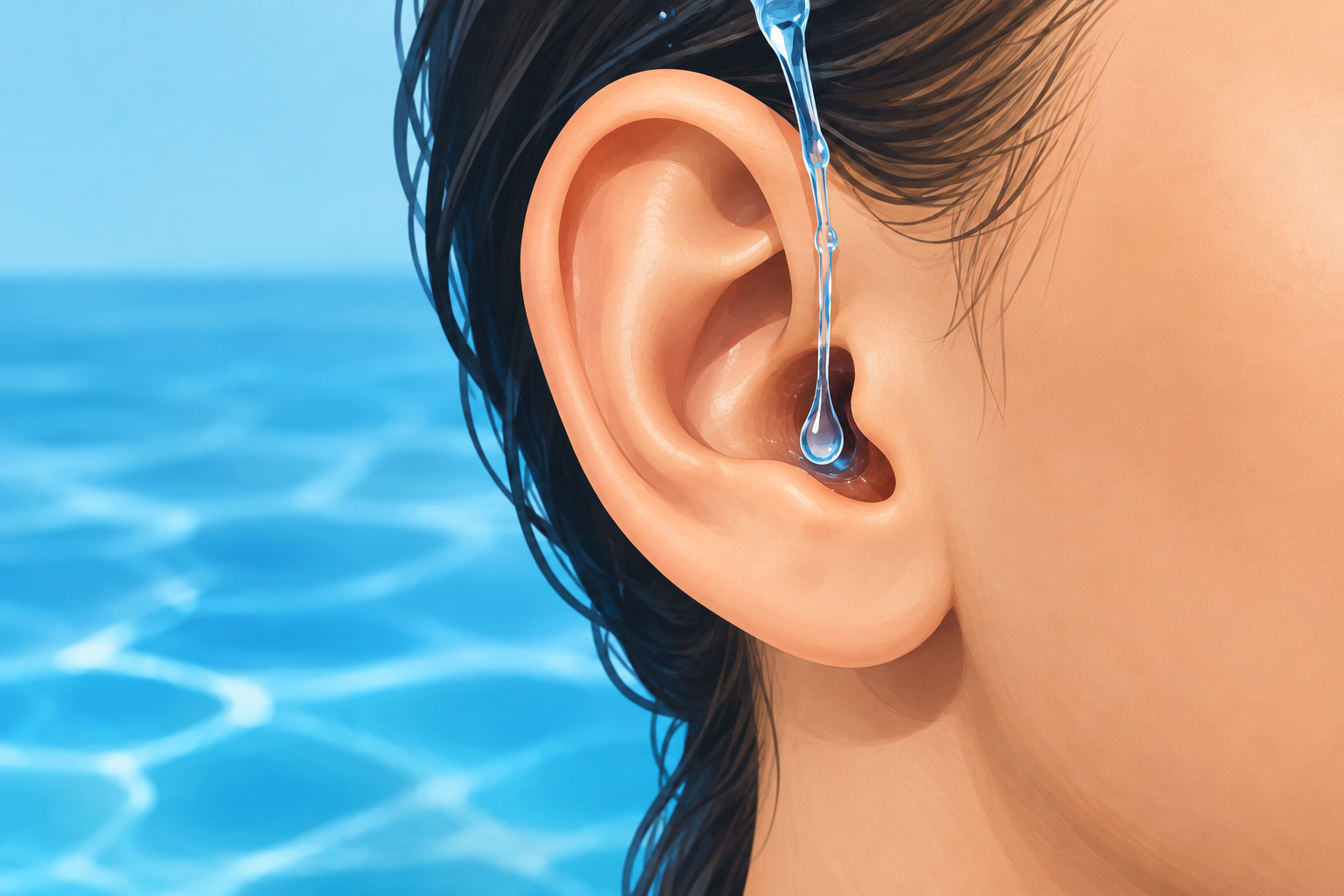
    Swimmer’s ear is an infection of the outer ear canal, usually caused by bacteria that grow when water stays trapped inside your ear. The telltale sign is pain that gets worse when you tug on your earlobe or press the small flap in front of your ear. Most cases clear within 7 to 10 days with prescription eardrops, and a few simple drying habits prevent most repeat infections.

    Last updated: October 29, 2026. This guide is general information, not a diagnosis. See a doctor if you have ear pain, drainage or any change in your hearing.

    Medical nameAcute otitis externa
    Usual causeBacteria in trapped water
    Key signPain when ear tugged
    Typical treatmentAntibiotic eardrops
    Usual recovery7 to 10 days

    What swimmer’s ear is

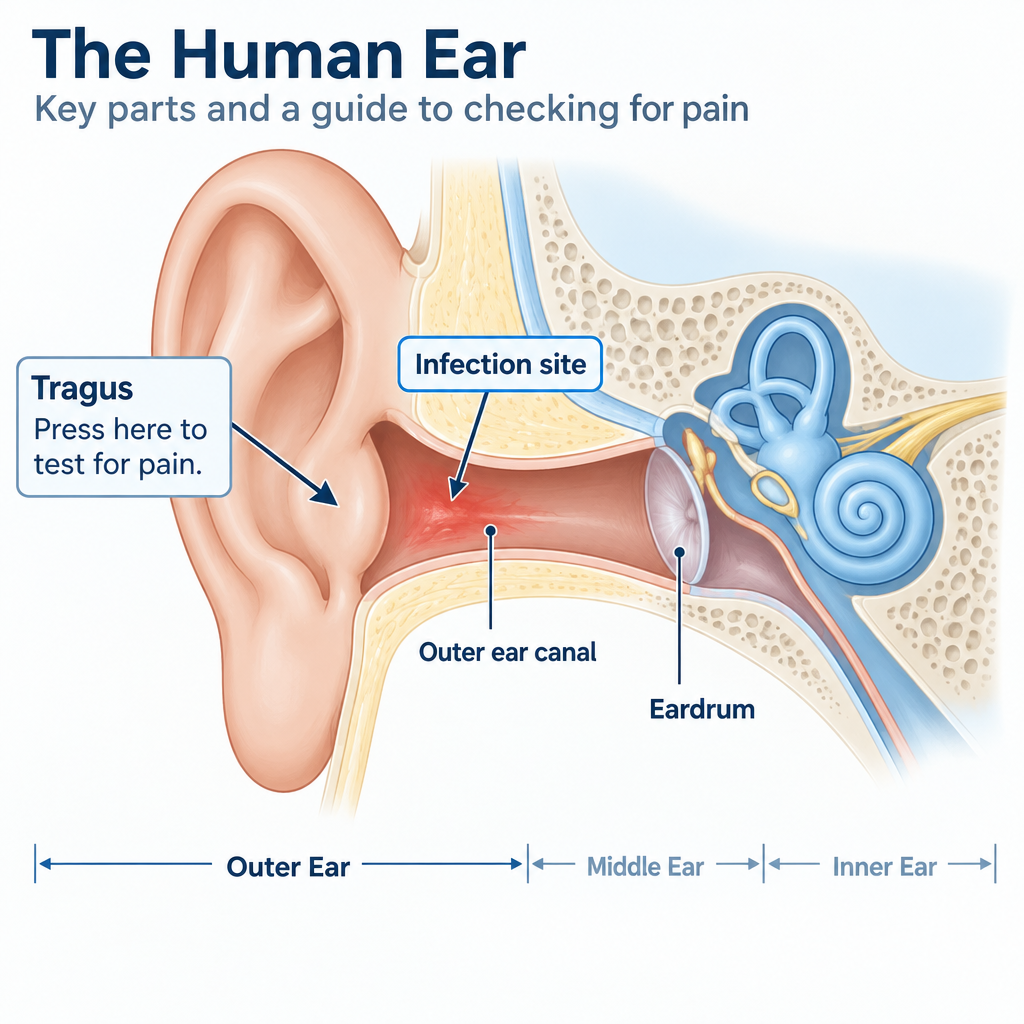
    Your ear canal is a short tunnel. It runs from the opening of your ear to your eardrum. Thin skin lines it, and a light coating of earwax protects that skin from water and germs.

    Swimmer’s ear happens when that protection breaks down. Water sits in the canal, the skin softens, and bacteria move in. Doctors call it acute otitis externa: “otitis” means ear inflammation and “externa” means the outer ear.

    It’s far from rare. A CDC analysis estimated that outer ear infections lead to about 2.4 million healthcare visits a year in the United States. Summer brings the most cases, but you can get swimmer’s ear any time of year, even if you never swim.

    Most infections are bacterial. The two usual culprits are Pseudomonas aeruginosa and Staphylococcus aureus. A smaller share are fungal, which doctors call otomycosis. Fungal cases tend to itch more and often follow antibiotic drops.

    Symptoms of swimmer’s ear

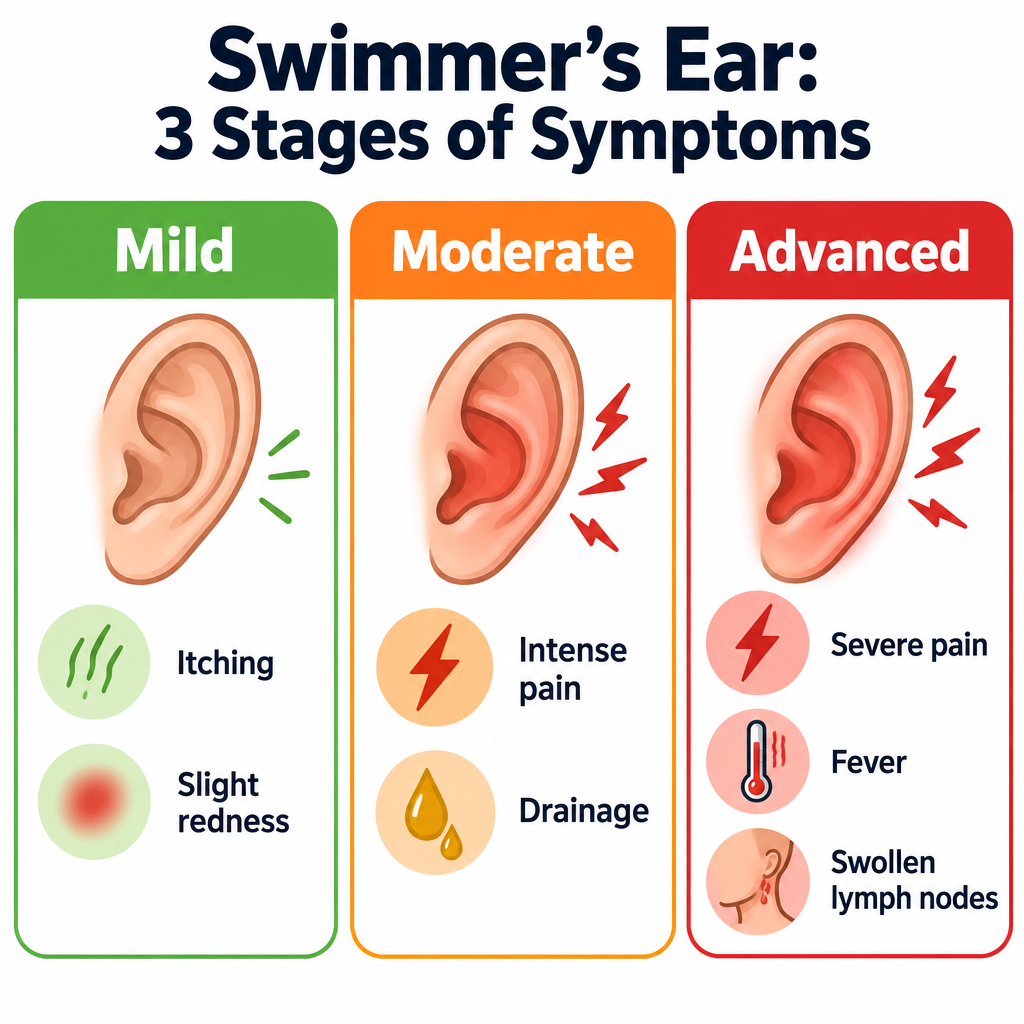
    Symptoms usually start mild and can build over a few days if you don’t treat them. Doctors often sort them into three stages.

    Mild symptoms

    • Itching inside the ear canal
    • Slight redness
    • Mild discomfort that gets worse when you pull on the outer ear or push on the tragus (the bump in front of the canal)
    • Some clear, odorless fluid

    Moderate symptoms

    • More intense itching and pain
    • Spreading redness
    • Heavier fluid drainage
    • A feeling of fullness, as if the ear is plugged
    • Partial blockage of the canal from swelling, debris or fluid
    • Decreased or muffled hearing

    Advanced symptoms

    • Severe pain that can spread to your face, neck or side of your head
    • A canal that is completely blocked
    • Redness or swelling of the outer ear
    • Swollen lymph nodes in your neck
    • Fever

    The muffled hearing comes from swelling and gunk physically blocking sound. It usually returns to normal once the infection clears. If your hearing drops suddenly, especially in one ear and without the pain and swelling of an infection, treat it as an emergency (more on that below).

    Sore ears after swimming: is it swimmer’s ear?

    Outer Ear Canal Anatomy Diagram

    Not every sore ear after swimming is an infection. A few other problems feel similar, and the details help you tell them apart.

    What you notice Swimmer’s ear Middle ear infection Trapped water Earwax blockage
    Pain when you tug the ear Yes, often sharp Usually no No No
    Where it starts Outer canal Behind the eardrum Outer canal Outer canal
    Common trigger Water, scratching Cold or sinus infection Swimming, showering Wax buildup, swabs
    Drainage Clear fluid, then pus Only if eardrum ruptures Water trickles out Rarely
    Fever Only in advanced cases Common, especially in kids No No
    Fullness or muffled hearing Yes Yes Yes, briefly Yes

    The tug test is the most useful clue. Gently pull your earlobe down or your outer ear up and back. If that sends a jolt of pain through the canal, an outer ear infection is likely. Middle ear infections hurt deeper and don’t usually change when you move the outer ear.

    Trapped water feels sloshy and annoying, but it doesn’t hurt much. It usually drains within a few hours. If it lingers for a day and starts to itch or ache, that’s when swimmer’s ear can begin.

    Drainage after a middle ear infection can mean the eardrum has torn. A perforated eardrum needs a doctor’s look before you put anything in your ear, including home drops.

    What causes swimmer’s ear

    Your ear has natural defenses: earwax that repels water, a slightly acidic surface that slows bacteria, and skin that sheds debris outward. Swimmer’s ear starts when something overwhelms those defenses.

    Common triggers include:

    • Moisture. Water left in the canal after swimming, showering or sweating softens the skin and gives bacteria a warm, damp place to grow.
    • Contaminated water. Lakes, rivers and poorly maintained pools and hot tubs can carry higher bacteria levels.
    • Scratches and scrapes. Cotton swabs, fingers, hairpins and fingernails can make tiny breaks in the skin.
    • Removing too much earwax. Cleaning your ears aggressively strips the protective coating.
    • Skin sensitivity. Hair dye, hairspray, shampoo and some earrings can irritate the canal skin.

    A single swim rarely causes it on its own. The combination of moisture plus damaged skin is what usually opens the door.

    Risk factors

    Swimmer's Ear Symptom Stages Chart

    Some people get swimmer’s ear more often than others. Your risk goes up if you:

    • Swim often, especially in lakes or rivers
    • Live in a hot, humid climate
    • Have narrow ear canals, which trap water more easily
    • Clean your ears with cotton swabs or other objects
    • Wear hearing aids, earbuds or earplugs for long stretches
    • Have eczema, psoriasis or seborrheic dermatitis affecting the ear
    • Have allergies to hair products or metals in jewelry
    • Have diabetes or a weakened immune system, which raises the risk of serious complications

    Children and teens who spend summers in pools get it often. Adults who wear in-ear devices all day are a large group that rarely gets mentioned, and we cover them in their own section below.

    When to see a doctor

    You can’t treat a true swimmer’s ear infection with over-the-counter products alone. Antibiotic eardrops require a prescription. Book a visit with your doctor, an urgent care clinic or a telehealth service if you have even mild symptoms that don’t settle within a day or two.

    Many primary care offices offer same-day appointments for ear pain. A telehealth visit can help you decide what to do, but a clinician usually needs to look inside the ear to confirm the diagnosis.

    See a professional

    Get same-day care for severe pain, fever, pus, swollen neck glands or redness spreading to your face. Sudden hearing loss in one ear is an emergency: go to an ER or call an ENT within 72 hours.

    Call your doctor sooner rather than later if you have diabetes or a weakened immune system. Infections can spread faster in these groups.

    Also go back if you started drops and you don’t notice improvement within 48 to 72 hours. That usually means the drops aren’t reaching the infection, the germ isn’t responding, or the problem is something else.

    Possible complications

    Most cases heal fully. When swimmer’s ear goes untreated or doesn’t respond, a complication can happen:

    • Temporary hearing loss. Muffled hearing usually returns once the swelling goes down.
    • Chronic otitis externa. Doctors use this term when the infection lasts longer than three months. It’s more likely with unusual bacteria, skin conditions or fungal infections.
    • Deep tissue infection. Rarely, the infection spreads into the surrounding skin and tissue (cellulitis).
    • Necrotizing otitis externa. This is the most serious complication. The infection spreads to the cartilage and bone at the base of the skull. It mainly affects older adults with diabetes or weakened immunity and needs urgent hospital treatment.

    Warning signs of a spreading infection include worsening pain despite treatment, pain deep in the head, facial weakness and fever. Don’t wait on any of these.

    How doctors diagnose and treat swimmer’s ear

    Diagnosis

    Your doctor will look inside your ear with an otoscope, a lighted scope. They’ll check for redness, swelling and debris, and try to see your eardrum. If they can’t see it because of swelling, they’ll treat you as though it could be damaged.

    If the infection is severe, keeps coming back or doesn’t respond to treatment, your doctor may take swabs of the discharge. A lab can identify the germ and show which antibiotic or antifungal works best. Some people get referred to an ear, nose and throat specialist. The American Academy of Otolaryngology’s ENThealth site is a solid source of patient information if you want to read more about specialist care.

    Cleaning the canal

    Drops can’t work if they can’t reach the skin. Your doctor may gently remove debris and discharge with suction or a small instrument. This step makes a big difference in how fast you heal.

    Prescription eardrops

    Eardrops are the first-line treatment for most cases. The American Academy of Otolaryngology–Head and Neck Surgery guideline recommends topical drops over oral antibiotics for uncomplicated swimmer’s ear. Common options include:

    • Antibiotic drops, such as ofloxacin, or ciprofloxacin with a steroid
    • Combination drops with an antibiotic and a steroid to calm swelling
    • Acidic drops that restore the ear’s normal pH
    • Antifungal drops if a fungus is the cause

    If your eardrum might be torn or you have ear tubes, your doctor will choose drops that are safe for the middle ear. Some antibiotics, such as neomycin, can damage hearing if they get past the eardrum, so tell your doctor about any past eardrum problems.

    Most people feel better in two to three days. Keep using the drops for the full course your doctor prescribes, which is typically 7 to 10 days.

    Ear wick

    If your canal is too swollen for drops to get in, your doctor may place a wick. This is a small piece of sponge or gauze that draws the medicine deeper. It usually falls out or gets removed after a few days.

    Oral antibiotics

    Pills are not usually needed. Doctors save them for infections that spread beyond the ear canal, or for people with diabetes or weakened immune systems.

    Pain relief

    Swimmer’s ear can be surprisingly painful. Over-the-counter pain relievers such as ibuprofen or acetaminophen help with mild to moderate pain. Your doctor may suggest something stronger for a few days if the pain is severe.

    How to use eardrops correctly

    Many treatment failures come down to technique. The drops have to reach the full length of the canal.

    How to put in eardrops

    1. Warm the bottle in your hands for a minute or two. Cold drops can make you dizzy.
    2. Lie on your side with the affected ear facing up.
    3. For adults, gently pull the outer ear up and back. For children, pull it down and back.
    4. Fill the canal with the number of drops your doctor prescribed.
    5. Press the tragus a few times to push the drops deeper.
    6. Stay lying down for 3 to 5 minutes.
    7. Wipe away any excess with a tissue. Don’t plug the ear tightly.

    If possible, have someone else put the drops in for you. It’s much easier to get the angle right.

    Home care while you heal

    Treatment works best when you protect the ear while it recovers.

    • Keep the ear dry. When you shower, place a cotton ball coated in petroleum jelly at the opening of your ear.
    • Skip swimming. Most doctors advise staying out of the water until symptoms clear, often 7 to 10 days. Ask your doctor before getting back in.
    • Don’t put anything in your ear. No cotton swabs, fingers or homemade remedies.
    • Pause in-ear devices. Leave out earbuds and hearing aids until the pain and drainage stop, unless your doctor says otherwise.
    • Follow up if needed. Return if you don’t feel better in two to three days or you get worse at any point.

    Some people notice ringing in the ear while the canal is swollen. It usually fades as the infection clears. If it keeps you up at night, a white noise maker for tinnitus can make the quiet less noticeable, but tell your doctor if the ringing continues after you’ve healed.

    7 ways to prevent swimmer’s ear

    You can prevent most cases with a few habits. These matter most if you swim often or have had swimmer’s ear before.

    1. Dry your ears after water. Use the steps below after every swim and shower.
    2. Wear a swim cap or earplugs. Well-fitted swim earplugs keep water out. Custom-molded plugs from an audiologist fit best if you swim a lot.
    3. Leave earwax alone. A normal amount of wax protects your canal. If wax causes a blockage, have a professional remove it.
    4. Never use cotton swabs inside the canal. Clean only the outer ear with a washcloth.
    5. Choose clean water. Avoid swimming in lakes or rivers after heavy rain or where water quality warnings are posted. Skip pools and hot tubs that look cloudy.
    6. Protect your ears from hair products. Put cotton balls in your ears before using hairspray or hair dye.
    7. Consider drying drops. Over-the-counter drops made of isopropyl alcohol and glycerin help water evaporate. Some doctors suggest a homemade mix of equal parts white vinegar and rubbing alcohol. Use either only if your eardrum is intact and you have no ear tubes, and never on an ear that’s already sore.

    Dry your ears after swimming

    1. Towel-dry the outside of each ear gently.
    2. Tilt your head to each side and pull your earlobe in different directions to let water drain.
    3. Set a hair dryer to the lowest heat and fan speed.
    4. Hold it several inches from your ear and move it back and forth for about 30 seconds.
    5. Never put a towel corner or swab into the canal.

    Hearing tip

    If you’ve had swimmer’s ear more than once, ask your doctor whether preventive drying drops make sense for you before swim season starts.

    Hearing aids, earbuds and swimmer’s ear

    Anything that sits in your ear canal for hours can raise your risk. In-ear devices trap heat and moisture, block airflow and can rub the skin. Sweat from a workout makes it worse.

    Some simple habits help:

    • Clean devices daily. Wipe earbud tips, hearing aid domes and earmolds with a dry cloth or the cleaning tool that came with them. Replace domes and wax filters on the schedule in your user guide.
    • Let your ears breathe. Take earbuds out between calls or playlists. If you wear hearing aids all day, remove them for a while during the evening.
    • Dry your devices overnight. A hearing aid drying box or dehumidifier pulls moisture out of the devices before you put them back in.
    • Don’t share earbuds. Sharing moves bacteria from one ear to another.
    • Don’t confuse water resistance with ear protection. A device rated IP68 can survive water. That says nothing about the moisture it traps against your skin.

    If you get swimmer’s ear often while wearing hearing aids, talk to your audiologist. A more open dome, a vented earmold or a different style can let more air in. When you get a new fitting, a real ear measurement helps confirm the device still delivers the right sound once the earmold changes.

    Never wear hearing aids or earbuds over an infected ear unless your doctor clears it. The device can push debris deeper, trap drainage and slow healing.

    FAQ

    How long does swimmer’s ear last?

    With prescription drops, most people feel better in two to three days. The infection usually clears in 7 to 10 days. Untreated, it can last much longer and get worse.

    Can swimmer’s ear go away on its own?

    Very mild irritation sometimes settles if the ear stays dry. A true infection usually needs antibiotic drops. Waiting it out risks a deeper or longer-lasting infection, so see a doctor if pain lasts more than a day.

    Is swimmer’s ear contagious?

    No. It doesn’t spread from person to person. Sharing earbuds or earplugs can still move bacteria around, so keep your own.

    What’s the difference between swimmers ears and a regular ear infection?

    Swimmer’s ear affects the outer canal and hurts when you move the outer ear. A regular ear infection usually means a middle ear infection behind the eardrum. It often follows a cold and doesn’t hurt more when you tug the ear.

    Can swimmer’s ear cause hearing loss?

    It often causes temporary muffled hearing from swelling and blockage. Hearing usually returns once the infection clears. Permanent hearing loss is rare. If your hearing doesn’t come back after treatment, see an audiologist.

    Why do I keep getting swimmer’s ear?

    Repeat infections usually come from moisture, cleaning habits, narrow canals, skin conditions or long hours wearing in-ear devices. A doctor can check for an underlying cause, such as eczema or a fungal infection, and suggest preventive drops.

    Can I fly with swimmer’s ear?

    Usually yes. Flying doesn’t directly affect the outer ear canal the way it can affect the middle ear. If you have severe pain or a possible perforated eardrum, check with your doctor before you travel.

  • Best White Noise Machines for Tinnitus Relief at Night

    Best White Noise Machines for Tinnitus Relief at Night

    Last updated: October 29, 2026

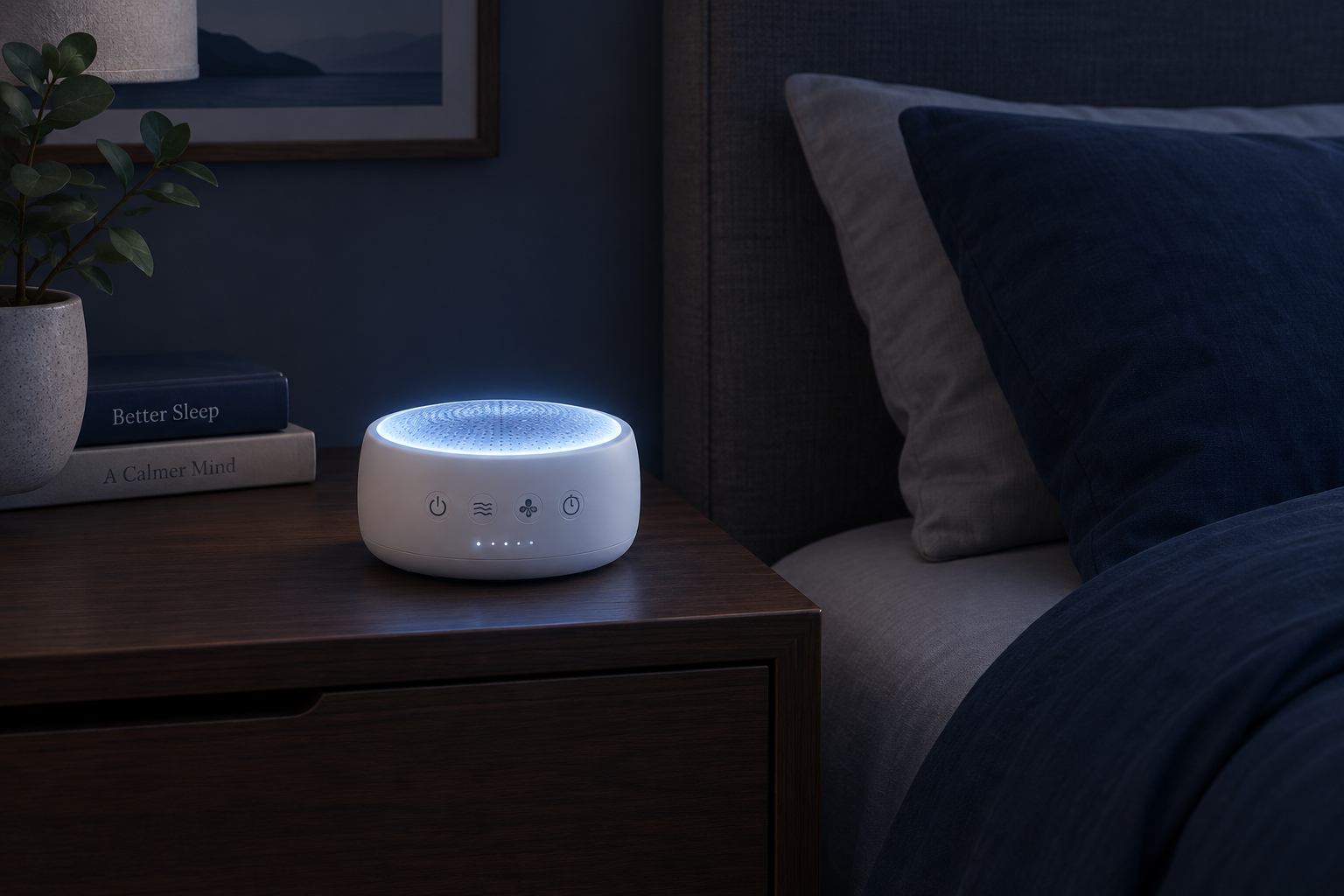
    A white noise maker for tinnitus works by filling the silence of your bedroom so the ringing stands out less, which helps many people fall asleep faster. For most people, the best choice is a non-looping machine with adjustable tone and a very quiet lowest volume. The LectroFan Classic is our top pick, and a real-fan machine like the Yogasleep Dohm suits you if digital noise sounds harsh. None of these devices cures tinnitus, but the right one can make nights much easier.

    Why Sound Helps Tinnitus at Night

    Tinnitus usually feels loudest when you lie down. Daytime noise from traffic, voices, the fridge and the TV partly covers the ringing. At night that background noise disappears, and your brain turns up its attention to the one sound left: the one it produces itself.

    Roughly 1 in 10 US adults reported tinnitus in the past year in a large national survey published in JAMA Otolaryngology in 2016. Trouble sleeping is one of the most common complaints in that group.

    Sound therapy targets that contrast. Steady background sound does three useful things:

    • It lowers the contrast between the tinnitus and the room, so the ringing feels less intrusive.
    • It gives your attention somewhere neutral to rest. A smooth, predictable sound is easy for the brain to ignore, and some of the ringing gets ignored along with it.
    • It supports habituation over time. This is the process of your brain learning to class tinnitus as unimportant. Tinnitus Retraining Therapy uses low-level sound for exactly this reason.

    The American Academy of Otolaryngology–Head and Neck Surgery’s clinical guideline on tinnitus lists sound therapy as an option for people with persistent, bothersome tinnitus. That is a modest endorsement, and an honest one. Sound helps many people cope, especially at bedtime, but research does not show it reduces tinnitus itself.

    When White Noise Isn’t the Right Tool

    The research on white noise and tinnitus has a skeptical side, and you should know about it before you buy anything.

    In 2018, researchers Mouna Attarha, James Bigelow and Michael Merzenich published a review in JAMA Otolaryngology–Head & Neck Surgery titled “Unintended Consequences of White Noise Therapy for Tinnitus–Otolaryngology’s Cobra Effect: A Review.” They argued that long, constant exposure to unstructured noise could encourage unhelpful changes in how the brain processes sound. This was a review built on animal research and theory. It did not include a clinical trial showing harm in people with tinnitus.

    Even so, it supports a sensible middle ground that most audiologists already recommend:

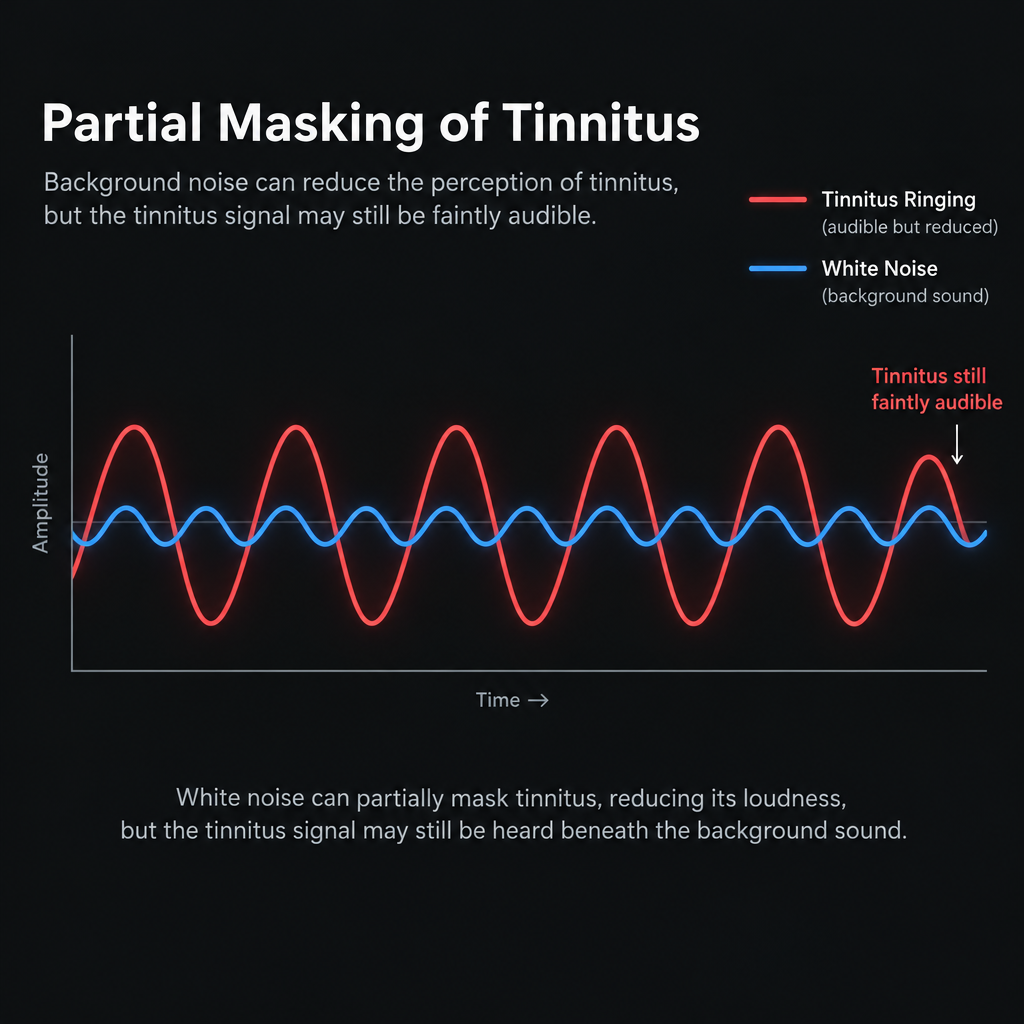
    • Keep the volume low. Set it so you can still faintly hear your tinnitus underneath. Audiologists call this partial masking, or finding the “mixing point.” Drowning the ringing out completely is not the goal.
    • Prefer gentler sounds over harsh hiss if both work for you. Pink noise, fan sounds, rain or ocean are easier to live with for hours.
    • Pair sound with other support. Sound therapy works best alongside good sleep habits and, for bothersome tinnitus, cognitive behavioral therapy (CBT). The AAO-HNS guideline recommends CBT more strongly than sound devices.

    See a professional

    Sudden hearing loss in one ear is a medical emergency, so get seen within a day or two. Also see a doctor if your tinnitus pulses with your heartbeat, affects only one ear, or comes with dizziness.

    Tinnitus that starts after an ear injury, such as a perforated eardrum, also needs a proper check before you rely on a sound machine to manage it.

    What to Look For in a White Noise Maker for Tinnitus

    Noise Color Comparison Chart

    Most sound machines are designed and marketed for babies and light sleepers. People with tinnitus need a few specific things that general reviews often skip.

    Non-looping sound

    Cheap machines play a short recorded clip on repeat. Once you notice the seam where the loop restarts, you can’t stop hearing it. That defeats the whole point, which is giving your brain something it can ignore. Look for machines that generate sound digitally in real time or use a real fan.

    Adjustable tone or noise color

    Tinnitus comes in different pitches. A high-pitched whine and a low hum respond differently to different noise. Machines that offer several noise colors, or let you shift the tone up and down, give you a much better chance of finding the sound that blends with your tinnitus.

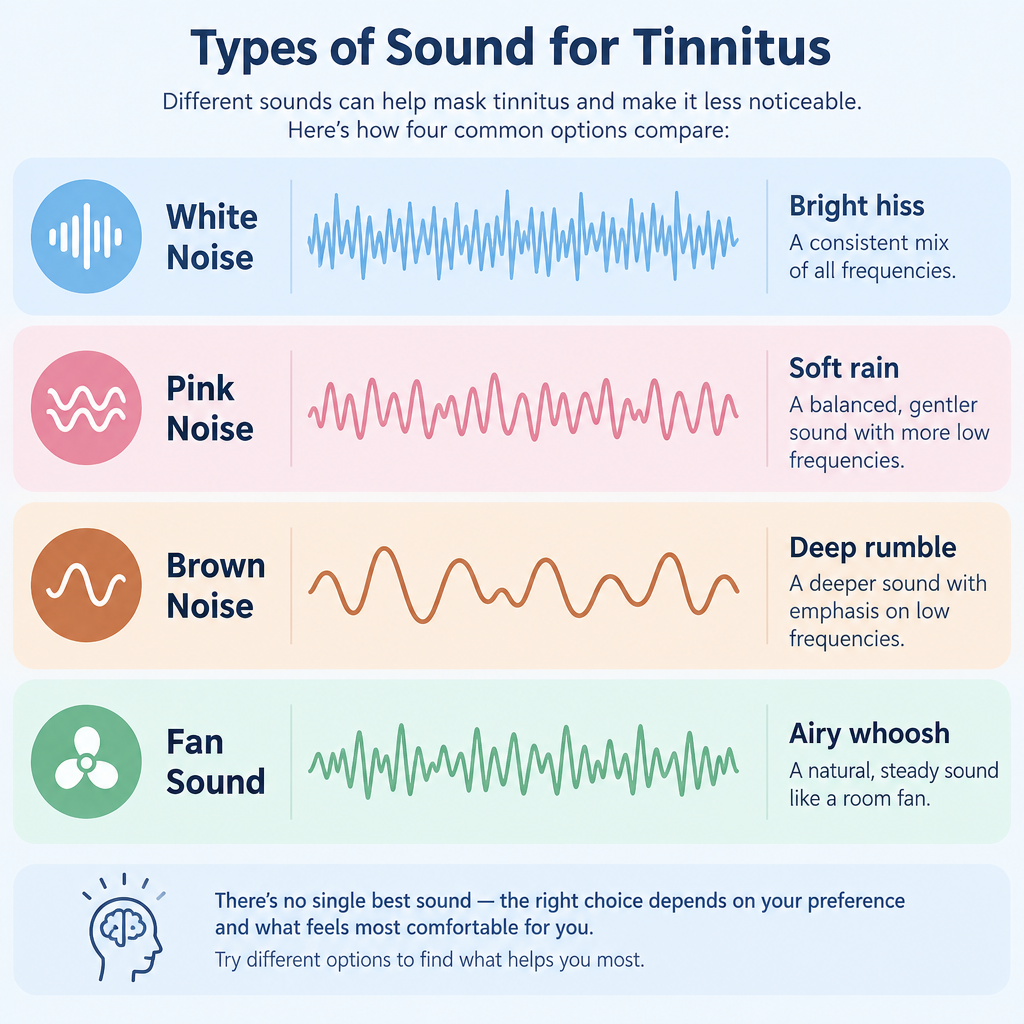
    Noise type How it sounds Where the energy sits Often suits
    White noise Bright hiss, like TV static Equal energy across all frequencies High-pitched ringing or whistling
    Pink noise Softer, like steady rain Energy falls 3 dB per octave Mixed or mid-pitched tinnitus, all-night use
    Brown (red) noise Deep rumble, like a waterfall Energy falls 6 dB per octave Low hums and buzzing; people who find hiss harsh
    Fan sound Airy whoosh with low-end body Varies by fan and speed People who already sleep with a fan
    Nature sounds Rain, surf, stream Varies, with natural variation Those who find pure noise boring or irritating

    These are starting points, not rules. Plenty of people with high-pitched tinnitus prefer brown noise because it feels calmer. Try each option for a few nights before you decide.

    A very quiet lowest setting

    This matters more than how loud a machine gets. With tinnitus you want sound just at or below the level of your ringing, which can be very soft. Some machines jump from silence straight to fairly loud. Check reviews for comments on the minimum volume.

    Timer or all-night play

    Opinions differ, so pick a machine that supports how you sleep. A timer helps if you only struggle to fall asleep. Continuous play helps if you wake at 3 a.m. and the silence makes the ringing roar back. Many people with tinnitus do better with all-night sound at a low level.

    Headphone or pillow speaker output

    If you share a bed, a headphone jack or Bluetooth output lets you send sound to a pillow speaker or sleep earbuds, so your partner sleeps in silence. Few dedicated machines offer this, so it narrows the field quickly.

    Power and portability

    Plug-in machines are fine at home. If you travel, a USB-powered or rechargeable model means you don’t face a silent hotel room. Silent rooms are often the worst nights for people with tinnitus.

    Our 6 Picks at a Glance

    Prices below are typical US retail as of late October 2026. Sound machines go on sale often, so treat these as ballpark figures.

    Pick Best for Typical price (Oct 2026) Sound source
    LectroFan Classic Best overall About $45 to $55 Digital, non-looping
    Yogasleep Dohm Classic Real fan sound About $45 to $55 Mechanical fan
    Snooz Original App control with a real fan About $100 Mechanical fan
    Hatch Restore 3 All-in-one bedside device About $170 Digital library
    LectroFan Micro2 Travel About $40 to $55 Digital, non-looping
    iPhone Background Sounds Free option Free Built into iOS
    Feature LectroFan Classic Dohm Classic Snooz Original Hatch Restore 3 LectroFan Micro2
    Non-looping Yes Yes (real fan) Yes (real fan) Varies by sound Yes
    Noise colors White, pink, brown Fan only Fan only Several White and others
    Tone control Via sound choice Twist collar Twist collar Via sound choice Via sound choice
    Timer 60-minute No In app In app No
    App control No No Yes Yes No
    Battery No No No No Yes, rechargeable

    1. LectroFan Classic: Best Overall

    TypeDigital sound machine
    PriceAbout $45 to $55
    Sounds20 non-looping options
    Best forMost people with tinnitus

    The LectroFan Classic from Adaptive Sound Technologies has stayed popular in tinnitus communities for years, for good reason. It offers 20 sounds: 10 fan sounds and 10 noise variations covering white, pink and brown noise. All of them are generated so they never loop.

    That range matters for tinnitus. You can step through the noise colors in small increments until one sits right on top of your ringing without fighting it. Volume adjusts in fine steps, so finding a soft setting near your mixing point is easy.

    It runs from USB or the included AC adapter and has a simple 60-minute timer. The design is plain. You get no app, no lights to dim and no subscription, which many people prefer for a bedside device.

    Drawbacks: No headphone output on this model, and no nature sounds. If you want ocean sounds, the LectroFan Evo adds them along with a headphone jack.

    Who it suits: Anyone who wants to experiment with noise colors to match their tinnitus, without spending much.

    2. Yogasleep Dohm Classic: Best for Real Fan Sound

    TypeMechanical fan machine
    PriceAbout $45 to $55
    ControlsTwo speeds, twist tone
    Best forPeople who dislike digital noise

    The Dohm (sold for decades under the Marpac name before the brand became Yogasleep) contains an actual fan inside a housing. It moves air you can hear but barely feel. Since the sound comes from a physical fan, it never loops and has a natural, slightly uneven texture.

    You get two speeds. You adjust the tone by twisting the cap and collar to open or close the air vents, which shifts the sound from a higher whoosh to a deeper rumble. That analog tone control works well for tinnitus because you can fine-tune by ear.

    Some people with tinnitus find digital white noise thin or harsh after a few hours. If that’s you, a real fan is worth trying.

    Drawbacks: Only two volume levels, and even the low setting may be louder than ideal in a very quiet room. You get no timer and it must be plugged in.

    Who it suits: Fan sleepers, and anyone bothered by the electronic quality of digital noise.

    3. Snooz Original: Best App-Controlled Fan

    TypeMechanical fan, app control
    Price$99.99
    ConnectivityBluetooth app
    Best forReal fan plus scheduling

    Snooz also uses a real fan, but it pairs with a phone app over Bluetooth. That adds finer volume control, timers and schedules. You can set it to start at bedtime and fade off at your wake-up time without touching the device in the dark.

    The tone adjusts with a rotating collar, much like the Dohm. Finer volume steps are the real advantage for tinnitus. You can bring a fan sound down to a soft background level that the two-speed Dohm can’t match.

    The company also sells a portable Snooz Go and a pricier Snooz Pro with more app features.

    Drawbacks: Costs roughly twice as much as a Dohm. App-dependent devices also rely on the company keeping its software updated.

    Who it suits: People who love fan sound but need quieter low settings or automatic schedules.

    4. Hatch Restore 3: Best All-in-One Bedside Device

    TypeSound machine and sunrise clock
    PriceAbout $170
    SubscriptionOptional Hatch+
    Best forBuilding a full sleep routine

    The Hatch Restore 3 combines a sound machine with a sunrise alarm clock, a reading light and guided wind-down routines. You can build a bedtime sequence: dim light and a calming sound, then a low noise for the night, then a gradual light-based wake-up.

    For tinnitus, the appeal is the structure. Many people find a consistent wind-down helps them stop focusing on the ringing at bedtime. The core sounds and features work without paying, while the optional Hatch+ subscription unlocks a larger library of sounds and content.

    Drawbacks: Expensive if you only want noise. The best content sits behind a subscription, and the device works best with its app.

    Who it suits: People whose tinnitus is tied to a broader sleep struggle and who would use the light and routine features.

    5. LectroFan Micro2: Best for Travel

    TypePortable sound machine
    PriceAbout $40 to $55
    PowerRechargeable battery
    Best forHotels and travel

    The Micro2 is a small, rechargeable version of the LectroFan. It offers a handful of non-looping fan, noise and ocean sounds and doubles as a Bluetooth speaker. It fits in a jacket pocket and charges over USB.

    For tinnitus sufferers, travel nights can be rough. Hotel rooms often have no fan or steady background noise, and unfamiliar surroundings add stress. A pocket machine fixes that cheaply.

    Drawbacks: The small speaker has less low-end depth than a full-size machine, so brown noise and fan sounds feel thinner. Battery life also depends on volume.

    Who it suits: Frequent travelers, or anyone who wants a backup machine in a bag.

    6. iPhone Background Sounds: Best Free Option

    Before you spend anything, try what’s already on your phone. Since iOS 15, iPhones include Background Sounds in the accessibility settings. Apple has expanded the list over time. It now includes Balanced Noise, Bright Noise and Dark Noise (roughly white, brighter and brown), plus rain, ocean, stream and several other ambient sounds.

    Background Sounds can keep playing under other audio, and you can choose whether they stop when the phone locks. That makes it a genuinely useful free test. You’ll find out which noise color suits your tinnitus before you buy a dedicated machine.

    Turn on Background Sounds on iPhone

    1. Open Settings and tap Accessibility.
    2. Tap Audio & Visual, then Background Sounds.
    3. Switch Background Sounds on and tap Sound to choose one.
    4. Adjust the Volume slider to just below your tinnitus.
    5. Turn off Stop Sounds When Locked for all-night play.
    6. Add the Hearing control in Control Center for quick access.

    Drawbacks: Phone speakers are small, and keeping your phone near your pillow can tempt you to scroll. You can pair it with a Bluetooth speaker or pillow speaker to solve both problems.

    Free Tinnitus Apps Worth Trying

    Partial Masking Volume Concept

    Several hearing aid companies offer free tinnitus apps, and most work without their hearing aids. These apps go beyond plain noise. Many include relaxation exercises and education designed around tinnitus specifically.

    App Made by Platforms What stands out
    ReSound Relief ReSound (GN) iOS, Android Mix your own soundscapes; breathing and relaxation exercises
    Widex Zen Widex iOS, Android Zen fractal tones, a chime-like alternative to noise
    Starkey Relax Starkey iOS, Android Simple tinnitus sounds and relaxation content
    myNoise Independent Web, iOS, Android Highly adjustable noise generators you can tune by frequency
    Background Sounds Apple iOS (built in) No download needed; noise and nature options

    The Widex Zen tones are worth a mention. They are gentle, random, chime-like tones rather than noise. Some people with tinnitus find them more relaxing than any hiss, while others find them distracting. Few machines offer anything similar, so an app is the easiest way to try them.

    Hearing tip

    Spend a week with free apps before buying a machine. Note which sound you still like on night five, because the one that sounds best in the first minute is not always the one you can sleep with.

    How to Set Up Your Machine for Better Sleep

    Where you put the machine and how loud you set it matter as much as which one you buy. These steps work for any of the picks above.

    Set up a sound machine for tinnitus

    1. Place it 1 to 2 meters from your head, not on the pillow.
    2. Sit in bed with the room quiet and start at zero volume.
    3. Raise the volume slowly until the ringing blends with the sound.
    4. Stop while you can still faintly hear your tinnitus underneath.
    5. Try each noise color or tone for at least three nights.
    6. Choose all-night play if waking in silence restarts the ringing.

    Keep the volume safe

    The volume needed for tinnitus relief is usually low, which also keeps your ears safe. Problems start when people turn machines up to fully drown out loud tinnitus. A 2014 study in Pediatrics measured infant sound machines and found some could exceed 85 dB at maximum volume. That is the workplace limit set by NIOSH for an 8-hour exposure. Running a machine that loud all night is a bad idea for anyone.

    Aim for a level quieter than a normal conversation. If you want a number, the free NIOSH Sound Level Meter app for iPhone lets you check your machine from your pillow.

    Skip the earplugs at night if they make things worse

    Many people with tinnitus find that sleeping in earplugs makes the ringing louder, because blocking outside sound raises the contrast. If you need earplugs for a snoring partner or street noise, our guide to types of earplugs explains which styles let some sound through. Pairing low-level noise with filtered plugs can be a reasonable compromise.

    Pillow Speakers and Sleep Earbuds for Shared Bedrooms

    A white noise machine works for the room. That’s a problem if your partner hates noise. You have two good workarounds.

    Pillow speakers are thin, flat speakers that slip inside a pillowcase. You hear the sound when your head is on the pillow, and someone beside you barely notices it. You connect one to a machine with a headphone jack, such as the LectroFan Evo, or to your phone.

    Sleep earbuds are small, low-profile buds built for side sleeping. Ozlo Sleepbuds, from a team that previously worked on Bose’s discontinued Sleepbuds, and Anker’s Soundcore Sleep line are two current options. Most can stream any audio from your phone, so you can play Background Sounds or a tinnitus app through them. Check how comfortable they are for side sleeping before you commit, and use the lowest volume that works.

    Hearing Aids With Built-In Tinnitus Sounds

    If you have hearing loss as well as tinnitus, and many people do, a white noise machine may not be your best first step. Hearing aids often reduce tinnitus during the day by restoring the outside sound your brain has been missing. Many prescription models also include a built-in tinnitus sound generator.

    Brand Tinnitus feature
    Phonak Tinnitus Balance sound generator
    Oticon Tinnitus SoundSupport
    ReSound Built-in tinnitus sound generator, controlled with the Relief app
    Widex Zen tinnitus program with fractal tones
    Signia Notch Therapy and tinnitus noise options
    Starkey Multiflex Tinnitus technology

    An audiologist fits these features and adjusts the sound to your tinnitus and hearing. Most people remove hearing aids at night, so these features mostly help during the day. Many people still use a bedside machine for sleep.

    If cost is a barrier, warehouse clubs sell prescription hearing aids at lower prices than many private clinics. Our piece on buying hearing aids at Costco covers what to expect. Over-the-counter hearing aids are another option for adults with perceived mild to moderate hearing loss, though tinnitus features on OTC models vary widely.

    See a professional

    If you notice trouble following conversations, turning the TV up, or ringing that started alongside hearing changes, book a hearing test with an audiologist before relying on a sound machine alone.

    Which White Noise Maker Should You Choose?

    Here is how to narrow it down quickly:

    • You want one solid machine and you don’t know your preferred sound yet: LectroFan Classic. The range of noise colors makes it the best tool for finding your match.
    • Digital noise sounds tinny or irritating: Yogasleep Dohm Classic, or Snooz Original if you need quieter settings and schedules.
    • Tinnitus is part of a bigger sleep problem: Hatch Restore 3, for its wind-down routines and wake light.
    • You travel often: LectroFan Micro2.
    • You share a bed with a light sleeper: A machine with a headphone jack, or your phone, paired with a pillow speaker or sleep earbuds.
    • You’re unsure sound will help at all: Start free with iPhone Background Sounds or ReSound Relief.

    People have been looking for ways to live with ringing ears for a long time. Beethoven described constant buzzing and humming in a 1801 letter to a friend, years before his hearing failed badly. The tools are far better now. Still, the most effective approach combines a comfortable sound, a sensible volume, and professional help when tinnitus starts affecting your mood, work or relationships.

    FAQ

    Does a white noise maker for tinnitus actually work?

    For many people it helps with sleep, because steady sound lowers the contrast between the ringing and a silent room. It does not cure tinnitus or make it permanently quieter. Clinical guidelines treat sound therapy as a reasonable option, and they rate CBT as better supported for reducing tinnitus distress.

    Is white, pink or brown noise best for tinnitus?

    No single color is best. White noise often blends well with high-pitched ringing, while pink and brown noise feel softer and suit low hums or people who find hiss harsh. Try each one for a few nights at a low volume and pick the one you can tolerate for hours.

    Should I leave my sound machine on all night?

    Leaving it on all night is fine and often helpful, because waking in total silence can make tinnitus feel louder. Keep the volume low, quieter than normal conversation, and avoid placing the machine right next to your head.

    Can white noise make tinnitus worse?

    There is no solid clinical evidence that low-level white noise worsens tinnitus. A 2018 review paper raised a theoretical concern about long-term constant noise, so many audiologists suggest keeping the volume below your tinnitus level and choosing gentler sounds. Very loud noise played all night can damage hearing, which could worsen tinnitus over time.

    Can I just use a fan instead of a sound machine?

    Yes, if it works for you. A household fan provides steady, non-looping sound for free. Dedicated machines are quieter mechanically, offer tone control, and won’t chill you on cold nights, but a fan is a fine first experiment.

    When should I see a doctor about tinnitus?

    See a doctor urgently if you have sudden hearing loss, especially in one ear. Book an appointment if your tinnitus is in one ear only, pulses in time with your heartbeat, comes with dizziness or ear pain, or is affecting your sleep and mood for more than a few weeks.

  • What a Perforated Eardrum Is and How It Usually Heals

    What a Perforated Eardrum Is and How It Usually Heals

    A perforated eardrum is a hole or tear in the thin membrane that separates your ear canal from your middle ear. Most heal on their own within a few weeks to a couple of months, with no lasting hearing loss. Some need a doctor’s help, especially if infection, dizziness or hearing changes don’t settle.

    Last updated: October 29, 2026. General information only, not a diagnosis.

    TypeEardrum injury
    Usual healingWeeks to 3 months
    Common causesInfection, pressure, trauma
    Hearing effectUsually temporary
    See a doctorAlways, to confirm

    What is a perforated eardrum?

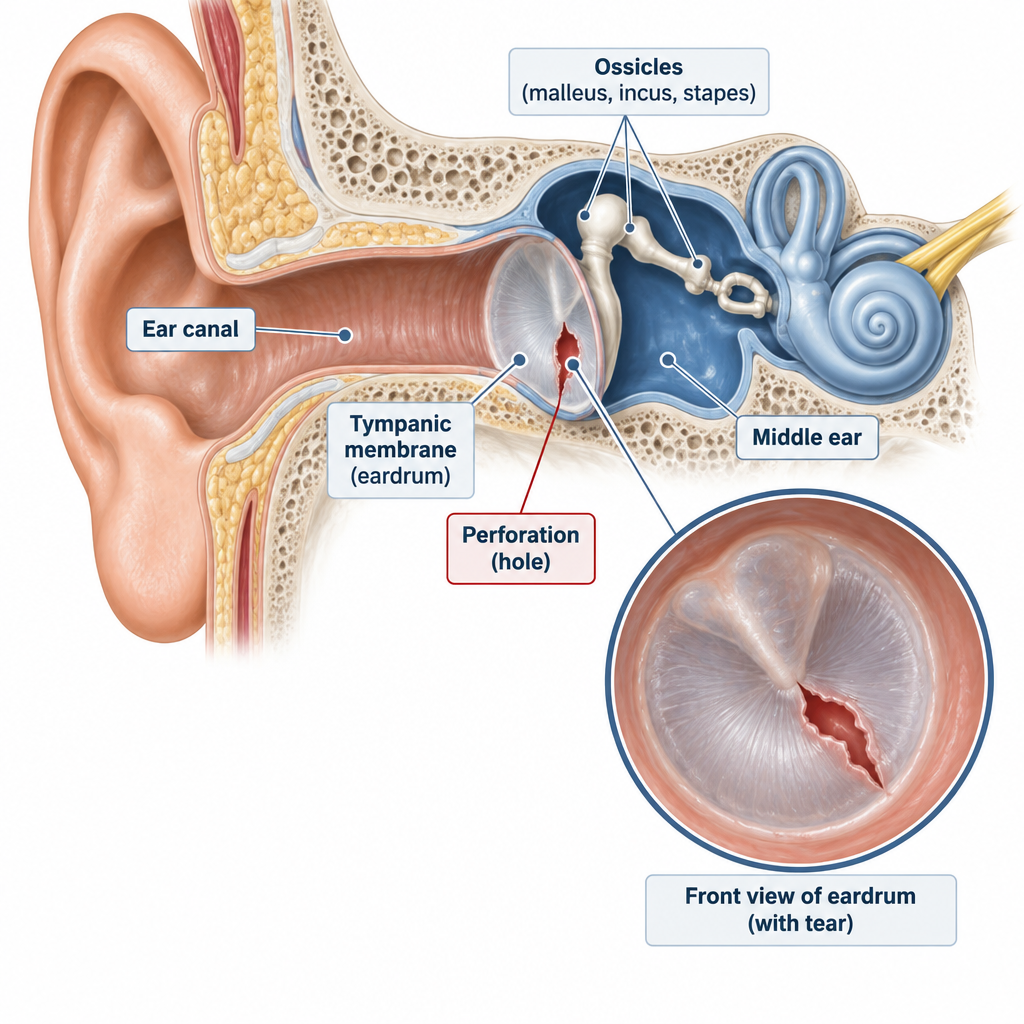
    Your eardrum is called the tympanic membrane. It is a small, cone-shaped disc about 8 to 10 millimetres across and roughly a tenth of a millimetre thick. It stretches across the end of the ear canal.

    The eardrum has two jobs. When sound waves hit it, it vibrates and passes those vibrations to three tiny bones in the middle ear, which carry them on to the inner ear. It also acts as a barrier, keeping water, bacteria and debris out of the middle ear.

    When that membrane gets a hole in it, doctors call it a tympanic membrane perforation, or eardrum perforation. The hole can be a pinprick or it can cover most of the drum. Size and location both affect how quickly it heals and how much your hearing changes.

    Ripped, popped, burst or punctured: are they the same thing?

    Mostly, yes. People search for the same injury under many names:

    • Ruptured or burst eardrum: common when a middle ear infection builds up pressure until the drum splits.
    • Punctured eardrum: usually used when an object, such as a cotton swab, pokes through.
    • Ripped or torn eardrum: describes a slit-shaped tear, often from a blow or blast.
    • Perforated ear: casual shorthand. “Perforated ear meaning” searches are almost always about the eardrum, since the ear itself can’t be perforated.

    One term causes real confusion. A “popped” ear often just means the normal click you feel when your Eustachian tube opens and equalises pressure, such as when you yawn on a plane. That is healthy and harmless. A popped eardrum, in the sense of a rupture, usually comes with sharp pain, then fluid or a sudden change in hearing.

    Symptoms of a perforated eardrum

    Some people notice almost nothing. Others feel it instantly. Typical signs include:

    • Ear pain that can be sharp, then ease off suddenly. When an infection causes the rupture, the pain often drops right after the drum gives way because the pressure is released.
    • Drainage from the ear. It may be clear, pus-like or tinged with blood.
    • Reduced hearing in the affected ear, often described as muffled or blocked.
    • Ringing or buzzing (tinnitus).
    • Spinning or dizziness (vertigo), sometimes with nausea or vomiting.
    • Itching or a feeling of fullness as the drum starts to heal.

    The hearing loss from a simple perforation is conductive. Sound isn’t being passed through the middle ear efficiently, but the inner ear is still working. That is why hearing usually recovers once the hole closes.

    See a professional

    Get same-day care if you have severe dizziness, sudden major hearing loss, a facial droop, or bloody discharge after a head injury. Sudden hearing loss without an obvious cause is a medical emergency.

    What causes an eardrum to perforate?

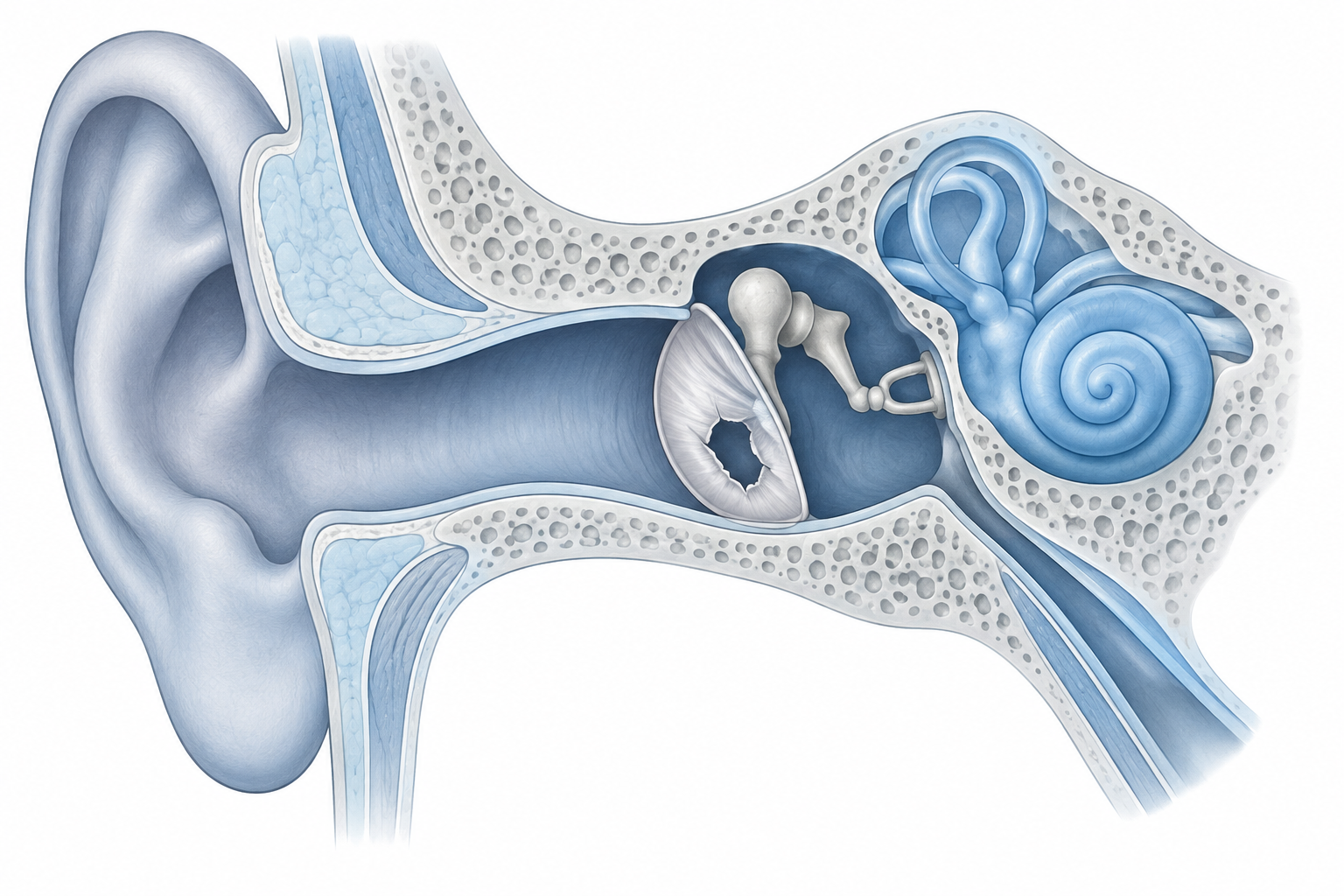
    Eardrum Anatomy Cross-Section

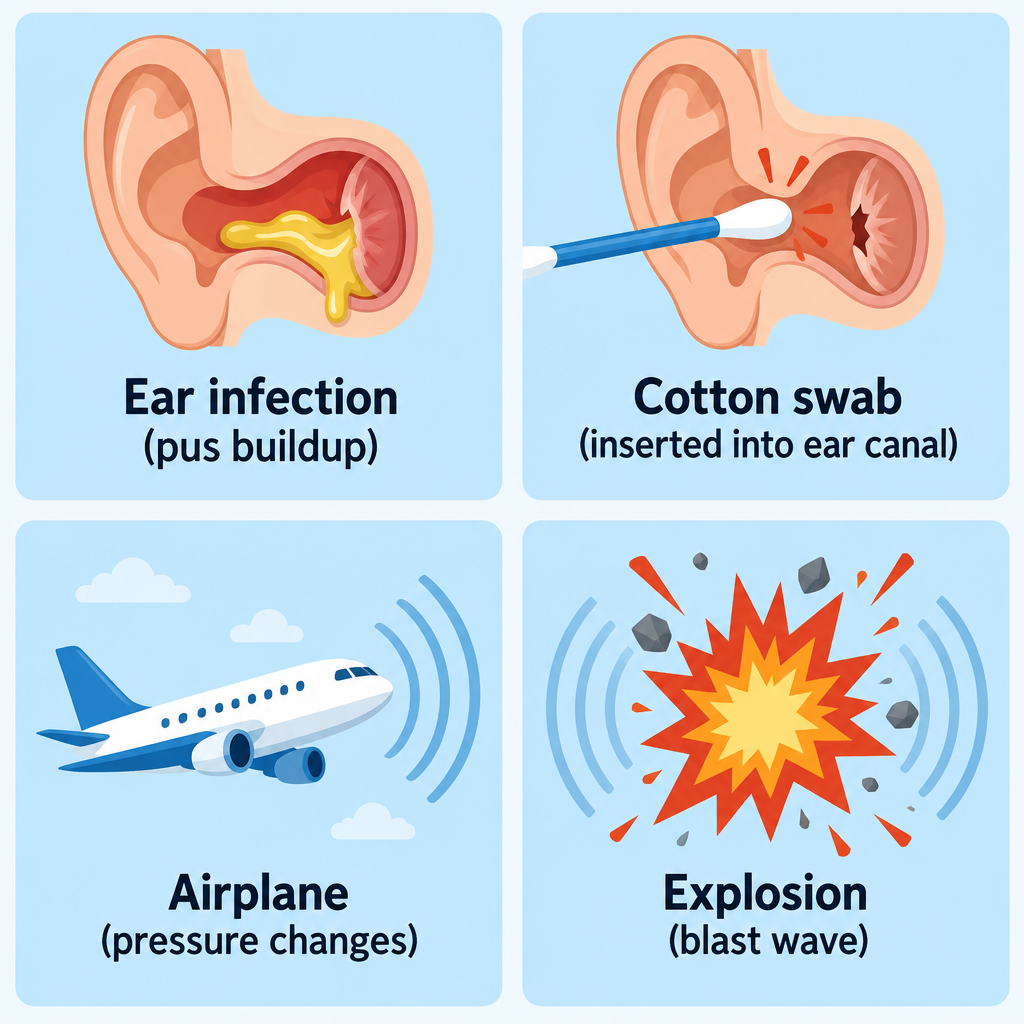
    Middle ear infection

    This is the most common cause, especially in children. Fluid and pus build up behind the eardrum during an infection (otitis media). The pressure stretches the membrane until it tears. Many parents first realise what happened when they see crusted discharge on a pillow.

    Pressure changes (barotrauma)

    Your eardrum needs equal pressure on both sides. Rapid changes can overwhelm it. Common triggers include:

    • Descending in a plane, particularly with a cold or blocked nose
    • Scuba diving without equalising properly
    • Driving down steep mountain roads
    • A direct blow that forces air into the canal, such as a slap with an open hand or a fall flat onto water

    Loud blasts (acoustic trauma)

    An explosion, gunshot or very close firework can tear the eardrum with sound pressure alone. Blast injuries often damage the inner ear too, so the hearing loss may be partly permanent even after the drum heals.

    Objects in the ear

    Cotton swabs are a classic culprit. So are bobby pins, pen caps and keys used to scratch an itch. Children sometimes push small toys into their ears. In clinics, a small number of perforations also happen during earwax removal, which is one reason you should never try to clean deep inside your own canal.

    Head injury

    A skull fracture or severe blow to the side of the head can tear the eardrum and damage the middle and inner ear structures. This always needs emergency assessment.

    Risk factors

    You are more likely to get a perforation if you:

    • Have frequent ear infections, or a child who does
    • Have Eustachian tube problems from allergies, colds or sinus issues
    • Fly or dive often, especially while congested
    • Clean your ears with swabs or other objects
    • Work around firearms, explosives or very loud equipment without protection
    • Play contact sports or water sports where the ear can be struck by water

    How a perforated eardrum is diagnosed

    Common Causes of Eardrum Perforation

    You can’t confirm a perforation at home. A GP, urgent care clinician or ear, nose and throat (ENT) specialist will usually:

    1. Look with an otoscope. This lighted scope lets them see the hole directly, although discharge sometimes has to be cleared first.
    2. Check for infection. If there is drainage, they may take a sample to identify the bacteria.
    3. Test your hearing. A tuning fork test can show whether the loss is conductive. An audiologist can run a full hearing test (audiogram) to measure how much you’ve lost and at which pitches.
    4. Run tympanometry. A small probe changes the air pressure in your canal to measure how the eardrum moves. A perforated drum gives a distinctive reading.

    If you have vertigo or the injury came from a blast or head trauma, you may be referred for balance testing or imaging.

    Treatment: how a perforated eardrum usually heals

    Watchful waiting

    Most small perforations close by themselves. The outer skin layer of the eardrum regrows across the gap, a bit like a cut on your hand. Your doctor will usually want to recheck the ear in a few weeks to confirm it has sealed.

    Antibiotic ear drops or tablets

    If the hole came from an infection, or there’s a risk of one, you may be prescribed antibiotic drops. Use only the drops your clinician prescribes. Some over-the-counter ear drops, and some older prescription drops, are not considered safe to put through an open eardrum because they can reach the inner ear. Oral antibiotics may be added for a bad infection.

    Pain relief

    Over-the-counter pain relievers such as acetaminophen or ibuprofen usually control the discomfort. A warm, dry cloth held against the outside of the ear can help too.

    Eardrum patch

    If a perforation isn’t closing, an ENT may place a patch over it in the clinic. They may first irritate the edges of the hole to stimulate growth, then apply a thin patch made of paper or a similar material. It works as scaffolding for new tissue. This sometimes needs to be repeated.

    Surgery (tympanoplasty)

    Larger holes, or ones still open after about three months, may need surgery. In a tympanoplasty, the surgeon takes a small piece of your own tissue, often from near the ear, and uses it to rebuild the drum. It is usually done as a day procedure. Most people go home the same day, with packing in the ear for a couple of weeks.

    Healing timeline

    Healing time varies with the cause, the size of the hole and whether infection is present. This is a typical pattern, not a guarantee.

    Stage What’s usually happening What you might notice
    First few days Pain eases, drainage slows Muffled hearing, possible ringing
    1 to 3 weeks Skin begins growing over small holes Itching, crackling or popping sounds
    3 to 8 weeks Many small perforations fully close Hearing gradually improves
    About 3 months Remaining holes assessed for repair Persistent hearing loss or discharge needs follow-up

    Perforations from infection or pressure tend to heal faster than large traumatic or blast injuries. Repeated infections slow everything down.

    Looking after your ear while it heals

    Keeping water out is the single most useful thing you can do. Water can carry bacteria straight into the middle ear.

    Keeping the ear dry

    1. Coat a cotton ball lightly with petroleum jelly.
    2. Place it gently in the outer ear before showering or washing your hair.
    3. Remove it once you’re dry, and never push it into the canal.
    4. Skip swimming until your doctor confirms the drum has closed.
    5. Blow your nose gently, one nostril at a time.

    Other habits that help:

    • Don’t use cotton swabs or put anything in the canal.
    • Avoid ear drops unless they were prescribed for this injury.
    • Ask your doctor before flying or diving. Flying is often possible, but diving is usually off the table until you’re fully healed.
    • Treat colds and allergies promptly so your Eustachian tubes keep working.

    Hearing tip

    While one ear is muffled, sit with your good ear towards the conversation and turn on closed captioning for TV and video calls. It reduces strain more than turning up the volume.

    Complications to know about

    Most perforations heal cleanly. Possible complications include:

    • Ongoing hearing loss. Usually temporary, but large holes, blast injuries or damage to the middle ear bones can leave a lasting loss.
    • Recurring infections. A chronic perforation lets bacteria in and can cause repeated drainage.
    • Cholesteatoma. Rarely, skin cells grow into the middle ear and form a cyst that can slowly damage bone. It needs surgery, so persistent smelly discharge or worsening hearing should always be checked.
    • Balance problems. Dizziness that lasts may point to inner ear involvement.

    Hearing aids and a perforated eardrum

    This is an angle most guides skip. If you already wear a hearing aid, ask your doctor before putting it back in a healing ear. A device that seals the canal can trap moisture and raise infection risk.

    For people living with a long-term perforation, hearing aids can still work well. An audiologist may choose a vented or open-fit style to let air circulate, and should verify the settings with real ear measurement, since a perforation changes how sound behaves in the canal. Over-the-counter hearing aids are meant for adults with perceived mild to moderate loss and no active ear problems. Ear drainage, pain or a known perforation is a reason to see a professional instead of buying OTC.

    Preventing another perforation

    You can’t prevent every injury, but you can lower the odds:

    • Get ear infections treated, and follow up if symptoms return.
    • Avoid flying or diving with a heavy cold. If you must fly, chewing, swallowing and yawning on descent help, and some people find filtered pressure-regulating earplugs useful.
    • Stop using swabs. Your ear canal cleans itself.
    • Protect your ears around loud noise. Shooting ranges need proper hearing protection. For concerts and noisy venues, musician-style filters or loop earplugs are a reasonable everyday option once your ear has fully healed.
    • Wear protective headgear in contact sports.

    When to see a doctor

    See a doctor whenever you suspect a perforated eardrum. Even mild cases benefit from confirmation, and a clinician can make sure there’s no infection. Seek urgent or emergency care for:

    • Sudden, significant hearing loss
    • Severe vertigo, vomiting or trouble walking
    • Facial weakness
    • Fluid from the ear after a head injury
    • High fever with ear pain

    Book a follow-up if your hearing hasn’t returned, discharge continues, or the ear still feels wrong after six to eight weeks.

    FAQ

    What is a perforated eardrum in simple terms?

    It’s a hole or tear in your eardrum, the thin membrane between your ear canal and middle ear. It can affect hearing and lets germs reach the middle ear until it heals.

    How long does a perforated eardrum take to heal?

    Small perforations often close within a few weeks. Most heal within about two to three months. If the hole is still open after three months, an ENT may suggest a patch or surgery.

    Can you hear with a burst eardrum?

    Yes, usually. Hearing tends to be muffled in the affected ear rather than gone. Total or near-total hearing loss, especially after a blast or head injury, needs urgent assessment.

    Is a popped eardrum the same as a perforated eardrum?

    Sometimes. If “popped” means pain followed by fluid or muffled hearing, it may well be a rupture. If it means the click you feel when pressure equalises, that’s normal and not an injury.

    Can I shower with a perforated eardrum?

    Yes, but keep water out of the ear. A cotton ball lightly coated with petroleum jelly in the outer ear works for most people. Avoid swimming until a doctor says the drum has closed.

    Does a perforated eardrum cause permanent hearing loss?

    Usually not. Most people’s hearing returns once the drum heals. Permanent loss is more likely after large tears, blast injuries, repeated infections or damage to the inner ear, which is why a hearing test after healing is worthwhile.