Category: Hearing Aids

  • OTC hearing aid prices in October 2026: deals and price drops

    OTC hearing aid prices in October 2026: deals and price drops

    We checked OTC hearing aid prices on October 30, 2026 for Jabra Enhance, Sennheiser, Apple, Lexie, Eargo, Sony, ELEHEAR, MDHearing and Audien. This month’s best deal is the AirPods Pro 3 at Amazon. Sony’s discontinued models are almost gone, and Jabra’s newer M series now heads its lineup. Each row shows the list price, the lowest credible price we found, where it was listed and when, followed by advice on when a lower price is worth taking.

    Last checkedOctober 30, 2026
    Price rangeAbout $98 to $2,950
    Biggest dropAirPods Pro 3, $199
    Top pickSennheiser All-Day Clear

    What changed in October 2026

    Four changes matter if you’re shopping now.

    • AirPods Pro 3 went back to $199 at Amazon. Amazon had been offering AirPods Pro 3 for approximately $198 last week before increasing the price toward Apple’s regular $249 MSRP on October 26, then the discount was restored on October 27. Amazon previously offered AirPods Pro 3 for $179 during its October Prime Day event, so $199 is good but not the lowest price yet.
    • Sony stock has nearly run out. In April 2026, HearingTracker reported that Sony OTC hearing aids are being discontinued and will no longer be listed on the Sony website. One of the last discounted listings is gone: Soundly listed the CRE-E10 at $698 and marked it sold out in October 2026.
    • The M series now leads Jabra Enhance’s lineup. Jabra Enhance’s current lineup includes the Select M1 ($1,195 per pair), Select M2 ($1,695 per pair), and Select M3 ($1,995 per pair). The older Select 500 is still sold at some retailers, and in at least one case it’s marked as clearance.
    • Lexie’s status is unclear. A comparison site says Lexie Hearing has gone out of business and the B2 Plus is no longer available. We could not confirm this with Lexie, and other review sites updated in the past two months still list Lexie prices. Treat it as unconfirmed, and check the company is still trading before you pay.

    October 2026 OTC hearing aid price table

    All prices are for a pair in US dollars. “Price seen” means the lowest price we could tie to an official store or a major retailer. The date shows when that price was reported. If no date was available, the table says so.

    Device List price Price seen Where Date reported
    Apple AirPods Pro 3 $249 $199 Amazon Oct 27, 2026
    Jabra Enhance Select M1 $1,195 $1,195 Jabra Enhance (direct) Oct 2026
    Jabra Enhance Select M2 $1,695 $1,695 Jabra Enhance (direct) Oct 2026
    Jabra Enhance Select M3 $1,995 $1,995 Jabra Enhance (direct) Oct 2026
    Jabra Enhance Select 500 $1,995 $1,795.99 (clearance) Best Buy Listing not dated
    Sennheiser All-Day Clear $999.95 $999.95 (promos reported lower) Retail list price Late Sep 2026
    Lexie B2 Plus $999 $899 Lexie (direct) May 2026
    ELEHEAR Beyond $399 $399 ELEHEAR (direct) Late Sep 2026
    Eargo Link $799 $799 Eargo (direct) 2026
    Sony CRE-E10 $1,299.99 at launch $698, now sold out Soundly Oct 2026

    Some sources disagree on price. For Jabra, SeniorLiving.org and NCOA both reported the M series prices in October. The Select 500 Best Buy listing showed Clearance $1,795.99, Save $199.01, Comp. Value: $1,995.00, but the listing had no date, so check it again before you plan around it. For Lexie, the newest direct price we could find is from May: in May of 2026, the Lexie B2 Plus is $899 on the company website.

    Eargo’s flagship isn’t in the table because current sources disagree too much. One review lists the Eargo model: Eargo 8. Price per pair: $2,699. A competing retailer’s guide says Eargo 8 at $2,950 per pair, Eargo 7 at $2,650, Eargo Link at $799, Eargo SE at $799. Check eargo.com on the day you buy.

    The 8 OTC hearing aids worth pricing right now

    We ranked these by value for money at October prices. That weighs price against independent lab results, the support included, and whether the brand looks likely to keep supporting the product.

    1. Sennheiser All-Day Clear (top pick)

    This month’s top pick is the Sennheiser All-Day Clear. The Sennheiser All-Day Clear is a self-fitting RIC hearing aid made by Sonova, the company behind Phonak and Unitron. That backing matters more now that one major OTC brand has left the market and another may have. HearingTracker rates it highly: its HearingTracker Score of 4.6/5 is the highest among the OTC picks on this page and ties the prescription Rexton Reach R-Li.

    The list price is $999.95 per pair before promotions. HearingTracker’s price box showed $850 to $900, but it didn’t name the seller, so we left that out of the table. If you see the All-Day Clear under $900 from Sennheiser or a major electronics retailer, it’s a good price.

    It has weaknesses. HearingTracker lists its limited fitting controls, basic charger, and weaker performance in noisy places as the main reasons to compare alternatives. It suits adults with mild loss who mostly need clearer speech in quiet rooms, on calls and in streamed audio.

    2. Jabra Enhance Select M series (best if you want an audiologist included)

    Jabra Enhance is pricier than most OTC brands, and the main reason is the remote care. According to SeniorLiving.org, all three include remote audiology care; the M3 is the brand’s most feature-rich option. SeniorLiving.org also ranks Jabra its top OTC brand thanks to its strong sound quality, 100-day trial, and three years of remote audiology care.

    Here’s how the M series is split up, according to NCOA. The M1 is the most affordable option with high-end features like Bluetooth LE and Auracast compatibility. The M2 includes advanced acoustics. The M3 is Jabra’s most discreet OTC model and the only one with TapControl. Auracast support on the cheapest model is a good sign it will last. If you want to know what that buys you in airports, theaters and lecture halls, our guide to Auracast broadcast audio explains it.

    The older Select 500 still sells in two packages on Jabra’s site. The $1,995 version is custom-programmed to your unique hearing needs. Plus, 3 years of professional hearing care, warranty and loss & damage protection. The $1,795 version is pre-programmed to fit, set up, and manage yourself out-of-the-box, and comes with No Audiology Team care or services. HearAdvisor’s lab gave the 500 an A grade with a SoundScore of 4.2/5.

    Jabra prices tend to drop late in the year. Camelcamelcamel’s Amazon tracker recorded a Select 500 low of $1,395.00 (Nov 20, 2025), against $1,995.00 (Aug 18, 2025) at its highest. Unless you need hearing aids now, wait for November before buying any Jabra Enhance model.

    3. Apple AirPods Pro 3 (best cheap option for iPhone owners)

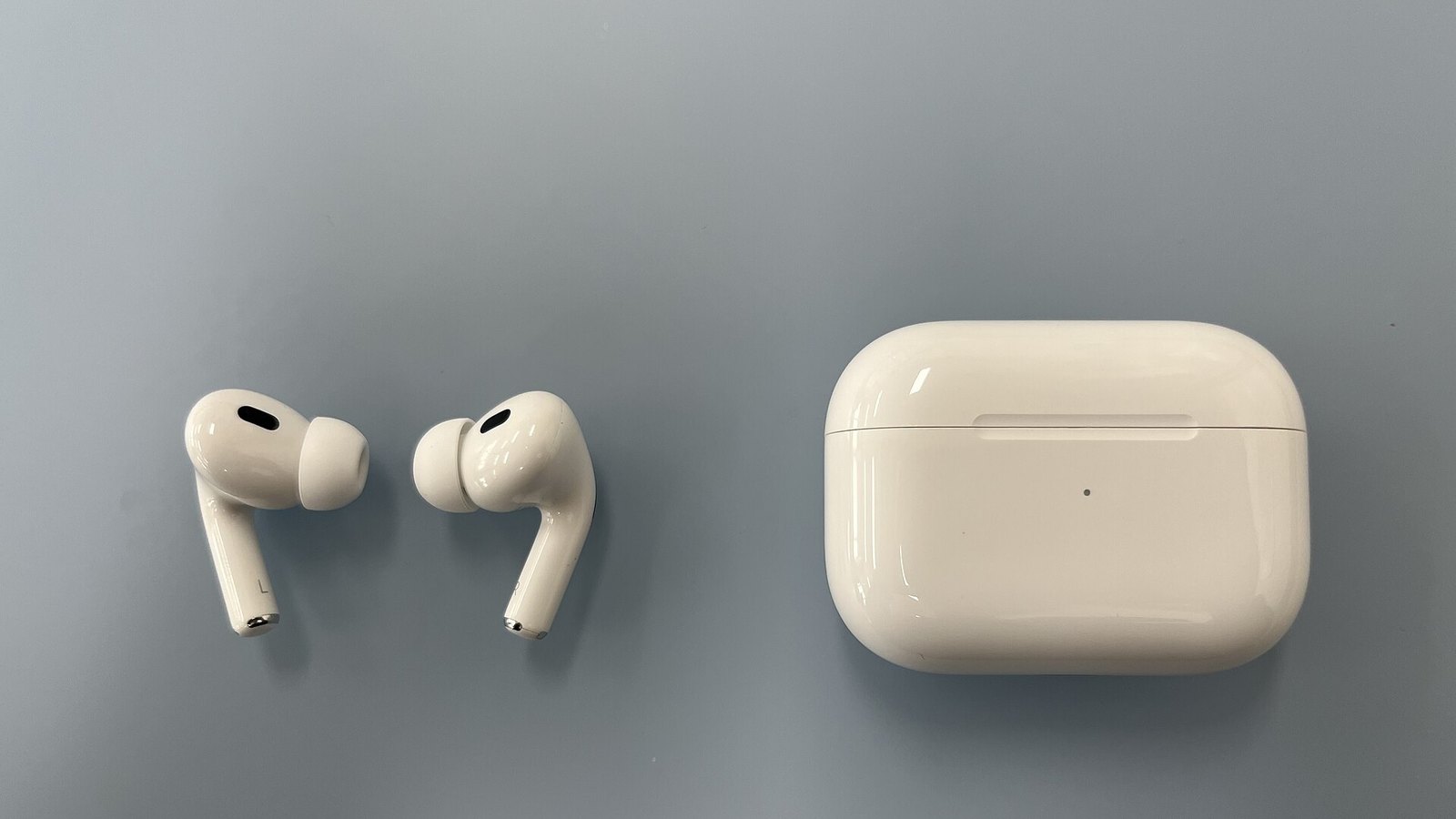
    At $199, AirPods Pro 3 are the cheapest way to try hearing amplification from a mainstream brand. Apple sells AirPods Pro 3 for $249, so Amazon’s current price represents a $50 savings, or approximately 20% off MSRP. No coupon or Prime membership is required to receive the advertised $199 price.

    The hearing features come free in the software. They use Apple’s FDA-authorized “Hearing Aid feature” to provide personalized, frequency-specific amplification based on the user’s hearing profile, which you create with Apple’s hearing test on your iPhone. Battery life is much better than on the previous model. The new buds will also be capable of 10 hours of battery life with Transparency mode enabled in Hearing Aid mode, compared with six hours on AirPods Pro 2.

    The downside shows up in lab results. HearAdvisor gave AirPods Pro 3 a B grade with a SoundScore of 3.3/5 in our lab testing, and it says the earbuds are best suited for budget-conscious listeners who prioritize audio entertainment over speech clarity. They also do not feature Auracast broadcast technology. They suit iPhone owners with mild loss who want help in restaurants, meetings or with the TV, but not all-day wear.

    4. ELEHEAR Beyond and Beyond 2 Pro (best mid-price value)

    HearingTracker picks the ELEHEAR Beyond as its top affordable OTC aid for its combination of speech performance, Bluetooth features, and included remote support. Elehear currently lists the standalone pair at $399, with accessory bundles priced separately.

    The newer Beyond 2 Pro costs more. SeniorLiving.org lists it from $799 per pair with a 45-day risk-free trial. At $399, the original Beyond costs less than half as much as the All-Day Clear. That makes it a sensible first purchase if you aren’t sure how much hearing aids will help you.

    5. Lexie B2 Plus Powered by Bose (good aid, uncertain support)

    On sound alone, the B2 Plus deserves a higher spot. The Lexie B2 Plus is a mid-priced OTC hearing aid that earns an A grade with a SoundScore of 4.4/5 in HearAdvisor’s lab testing, ranking #7 among 65 OTC devices. That’s a better lab score than both the Jabra Select 500 and AirPods Pro 3.

    It ranks fifth because of the reported closure. When a company stops trading, app updates, repairs and protection plans usually stop too. If you find a B2 Plus at a big discount, assume support could end, and only buy from a seller with a clear return policy. If Lexie confirms it’s still in business, the B2 Plus moves back up the list.

    6. MDHearing and Audien (cheapest options)

    These brands sell at the lowest prices. SeniorLiving.org lists the MDHearing NEO XS, a completely-in-canal model, at $297 per pair. The MDHearing VOLT 4, which costs $397, is designed for people who want straightforward hearing support without complicated smartphone apps or Bluetooth pairing.

    The Audien Atom ONE costs even less. It’s listed at $98 at Walmart, according to an October review by an independent blogger who wears hearing aids. That same reviewer warns that below about $98, you’re generally buying amplifiers, not hearing aids. We agree. Below that price, check that the product is sold as an FDA OTC hearing aid and not a personal sound amplifier.

    The survey data further down shows what you trade for the low price.

    7. Eargo 8 and Eargo Link (most discreet)

    Eargo charges the most of any brand here, and its lineup is the hardest to price because sources disagree. The constant is the range: Eargo hearing aids range from $799–$2,950 before discounts. At the top end you pay for an aid that sits deep in the ear canal, which few other OTC brands offer.

    The flagship has one limit to check before you buy. SeniorLiving.org’s spec list for the Eargo 8 includes Bluetooth streaming: No. The cheaper Link has an earbud style and does stream. Eargo has offered frequent discounts on its flagships, so don’t pay full price without checking for a sale first.

    8. Sony CRE-E10 (closeout only, and mostly gone)

    Sony’s OTC range performed well, and an October roundup says the Sony CRE-E10 posted the highest score of any OTC device in HearAdvisor’s lab. Production has ended, though. WS Audiology (WSA), the manufacturer of Sony hearing aids, told HT that warranty and service obligations will be honored for purchasers.

    The CRE-E10 launched at $1,299.99 a pair, so closeout prices under $700 were a real bargain while stock lasted. If you find new stock now, buy it from an authorized seller with a return window. Open-box listings from marketplace sellers often don’t allow returns, which defeats the point of a trial.

    Features compared

    Price alone won’t tell you which aid suits you. This table shows the features that affect daily use. Lab grades come from HearAdvisor or HearingTracker where they were published.

    Device Style Rechargeable Bluetooth streaming Independent score Care included
    Sennheiser All-Day Clear RIC Yes Yes, plus hands-free calls HearingTracker 4.6/5 Paid add-on
    Jabra Enhance Select 500 Mini RIE Yes, case gives 3 extra charges Yes, LE Audio and Auracast HearAdvisor A (4.2) 3 years on Premium package
    Lexie B2 Plus RIC Yes, USB-C case Phone calls HearAdvisor A (4.4) Protection plan extra
    Apple AirPods Pro 3 Earbud Yes, 10 hrs in Hearing Aid mode Yes, no Auracast HearAdvisor B (3.3) None
    Sony CRE-E10 Earbud Yes iPhone only Top HearAdvisor score Warranty honored
    Eargo 8 CIC Yes No Not published here Bundled support
    MDHearing VOLT 4 BTE Yes No app needed Not published here Basic

    A few of these entries need sources. Jabra’s Select 500 charging case provides up to three additional full charges for on-the-go convenience. The B2 Plus has a rechargeable case that uses a USB-C cable, and there is an companion app supported by Apple and Android. The Sony E10 offered Bluetooth streaming (iOS only) and a wired charging case.

    You may need a telecoil for church loops or theater systems. None of the main models above lists one, so if you rely on hearing loops, ask the seller before you buy.

    How we chose the models

    We used five criteria, in roughly this order:

    1. FDA OTC status. Every model above is sold as an OTC hearing aid or uses an FDA-authorized hearing aid feature. These are meant for adults ages 18 and older with perceived mild to moderate hearing loss.
    2. Independent testing. Lab grades from HearAdvisor and HearingTracker counted for more than marketing claims.
    3. Price you can verify. A price had to come from the brand’s own store or a major retailer. Marketplace and used listings were left out.
    4. Support and the company’s future. We moved Lexie and Sony down for this reason alone.
    5. Total cost. That means accessories, protection plans and paid care over three years, not only the price on the box.

    What people actually pay for hearing aids

    List prices don’t show what buyers really spend. HearingTracker’s 2026 buyer survey fills that gap. The survey was large, but the answers are self-reported, so treat the figures as a guide.

    Purchase channel Average price per pair
    All OTC purchases $502
    Without professional fitting (Amazon, Audien and similar) $922
    With professional fitting through online networks $2,643
    Traditional clinic, no insurance $4,727

    In the survey, OTC purchases averaged $502 per pair, with reported prices as low as $20. By comparison, buyers at traditional clinics who paid without insurance reported an average of $4,727 per pair. Buyers going through online networks with a professional fitting, through retailers like ZipHearing or Hear.com averaged $2,643 per pair, while purchases without professional fitting, including OTC devices from Amazon, Audien, and similar retailers, averaged just $922 per pair.

    The $502 OTC average is pulled down by very cheap devices. HearingTracker notes that OTC brands like Audien averaged just $150 per pair, though these devices typically lack professional fitting and advanced features found in prescription hearing aids. A full-featured self-fitting aid with Bluetooth and an app usually costs $800 to $2,000.

    Budget vs premium OTC: does paying more help?

    On the survey evidence, yes, though the sample is small. HearingTracker compared Jabra OTC buyers with people who bought OTC aids under $400.

    Segment Recommend the aids Helpful daily Satisfied Median price Respondents
    Jabra OTC 86% 86% 71% $1,695 7
    Budget OTC (under $400) 42% 42% 48% $110 50

    All the figures come from OTC: Jabra vs Budget Products in HearingTracker’s satisfaction data. Only seven Jabra buyers answered, so the 86% figure could move a lot with more responses. The budget result is more solid. Fewer than half of the 50 budget buyers said their aids helped every day.

    Our view: a $110 device can show you whether amplification helps at all, but it’s a poor test of OTC hearing aids in general. If a cheap pair disappoints you, try a lab-graded mid-price model before deciding hearing aids don’t work for you.

    The Costco option

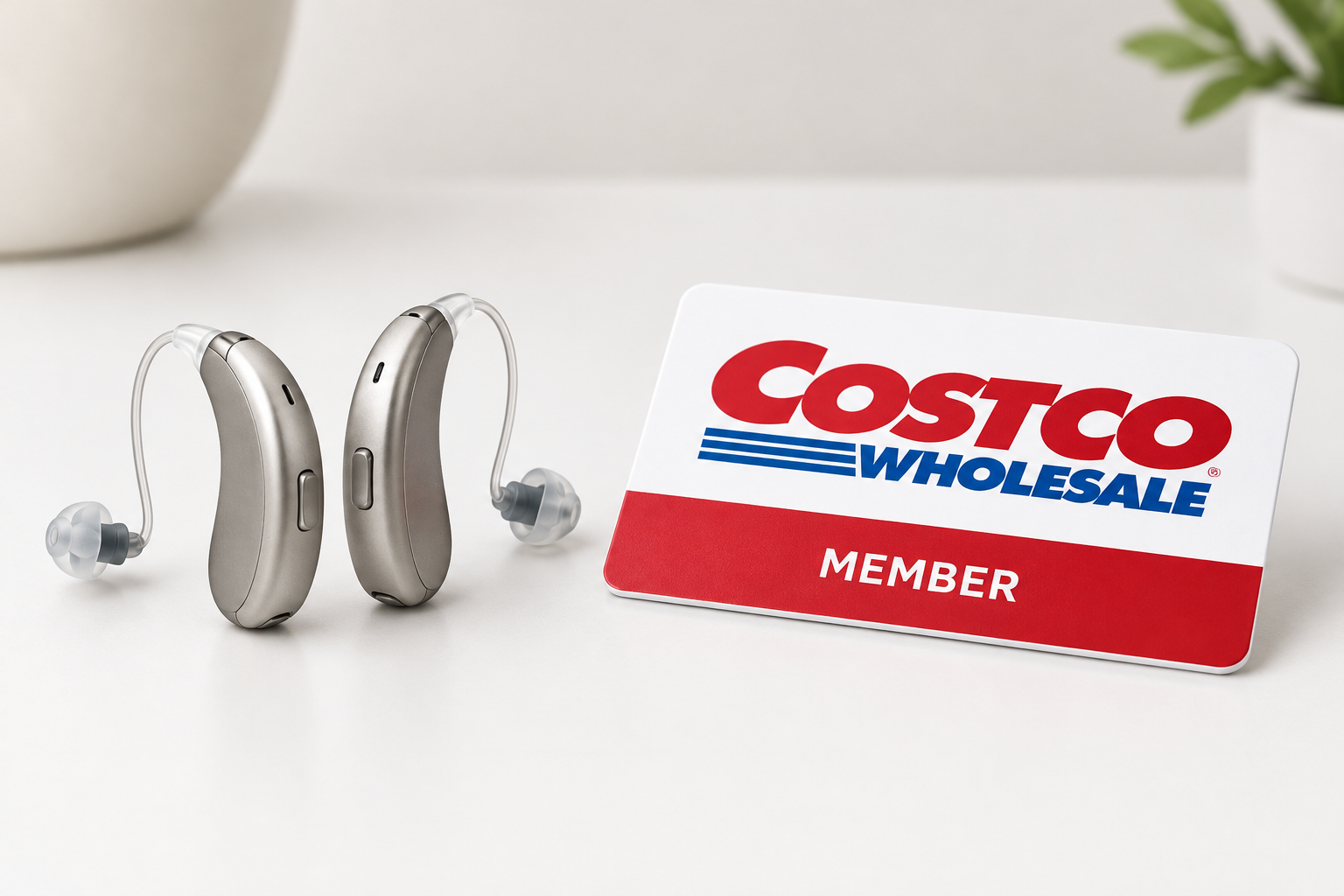
    Costco’s hearing centers are the main alternative to OTC for many buyers, and the price gap is smaller than people think. Jabra makes a model only for Costco: the Jabra Enhance Pro 30, a prescription hearing aid that NCOA lists at $1,599. It’s described as Jabra’s prescription hearing aid, only available at Costco. HearingTracker reported the same arrangement: Jabra Enhance Pro is available from Costco at $1,599 per pair.

    That price is below Jabra’s own M2 and M3, and it includes an in-person fitting by a licensed hearing aid dispenser. If you have a Costco membership and a hearing center nearby, compare that quote before ordering a premium OTC aid. Our guide to buying hearing aids at Costco covers the appointment, the trial and what’s included.

    When OTC is the wrong choice

    OTC prices only make sense if OTC suits your hearing. The FDA category is for perceived mild to moderate loss in adults. Self-fitting apps can’t diagnose anything, and they can’t confirm that the sound reaching your eardrum matches your hearing loss.

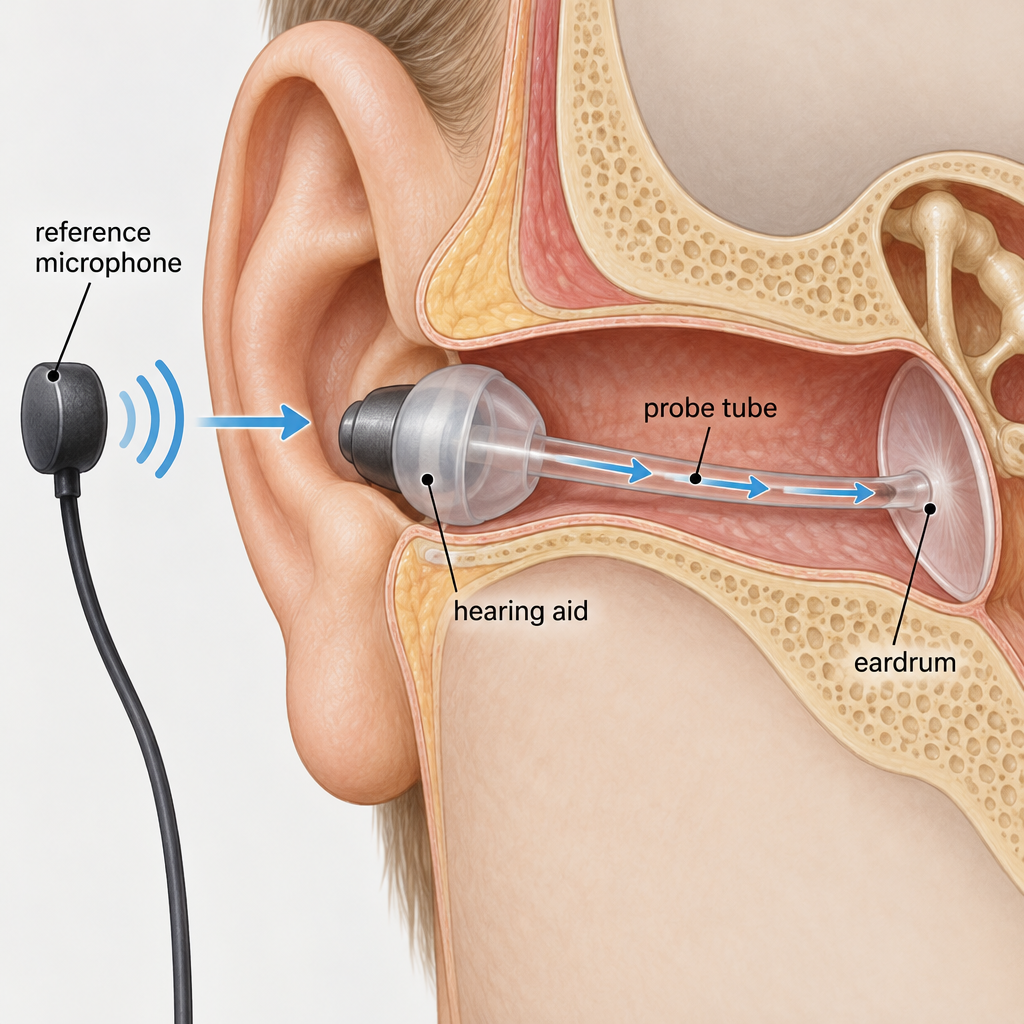
    Clinics can check that with real ear measurement. A small probe microphone in your ear canal measures what the hearing aid actually delivers, and the audiologist adjusts it to match your prescription. You won’t get that with OTC aids. That’s one reason why, for some people, a cheaper prescription aid fitted properly works better than an expensive OTC aid.

    If you’re unsure which way to go, our guide to over the counter hearing aids compares the two options in detail.

    See a professional

    Sudden hearing loss in one or both ears is a medical emergency, so see a doctor the same day. Also get checked for ear pain, drainage, dizziness, loss in one ear only, or trouble following speech even when it’s loud enough.

    Hearing aids for tinnitus can help some people by making outside sound easier to hear, which can make ringing less noticeable. They don’t cure tinnitus, and no OTC device on this list says it does. If tinnitus is your main problem, see an audiologist before spending $1,000 or more on OTC aids.

    How to save money on OTC hearing aids

    Waiting for the right month can save you more than haggling. Here’s what October’s prices tell us.

    Buy in November if you can. The lowest Amazon price recorded for the Jabra Select 500 came on November 20, 2025, at $1,395. That’s $600 below list. AirPods Pro 3 have already dropped to $179 during Prime Day this October. Holiday sales usually match or beat the Prime Day price.

    Compare Apple’s price with Amazon’s before buying AirPods. In the last week of October, Amazon’s AirPods Pro 3 price went from about $198 to $249 and back to $199 in three days. Check it on the day you buy.

    Choose the package carefully, not only the hearing aid. On Jabra’s Select 500, the $200 gap between Basic and Premium pays for three years of remote audiology care and a longer warranty. That’s cheap if you’ll use the care and wasted money if you won’t.

    Use pre-tax money. Hearing aids, including OTC models, are generally an eligible medical expense for HSA and FSA accounts. If your account resets on December 31, use any leftover balance before then. Don’t count on Medicare: most insurance plans, including Medicare Part A and Part B, do not cover the full cost of hearing aids. Medicare Advantage plans differ, so call yours before buying.

    Be wary of closeout bargains. A discontinued aid at half price is only a good deal if returns are allowed and the warranty is honored. Sony meets both conditions through authorized sellers. A brand that may have shut down might not.

    Price-check routine before you buy

    1. Note the list price on the brand’s own website and screenshot it with the date.
    2. Search the exact model number at Amazon, Best Buy and Walmart, and compare prices for the same package.
    3. Check that the price covers a pair and includes the charger and domes.
    4. Read the trial length and who pays for return shipping.
    5. Confirm the app is still updated on your phone’s app store.
    6. Look up the warranty and loss-and-damage terms before you check out.

    Hidden costs that change the real price

    The price you pay at checkout is only the start. Domes, wax guards and ear tips wear out. Consumer Reports estimates that for the Lexie B2 Plus, the appx cost of annual replacement accessories is $150, however prices may vary. Other RIC models cost about the same to run, so budget roughly $100 to $150 a year.

    Protection plans cost extra. For Lexie, HearingTracker reported the Protection Plan comes at an additional cost of $72, $96, and $180 for the Lumen, B1, and B2/Plus hearing aids, respectively. Jabra’s Premium packages and Eargo’s flagships include more of this, which partly explains their higher prices.

    Batteries also wear out. A rechargeable aid that lasts a full day now will last less after a few years, and replacing the battery or the whole aid can cost a lot. Over three years, a $999 aid with $150 a year in parts costs about $1,450. Compare that total, not the sticker price.

    Hearing tip

    Use the trial period fully. Wear the aids every day in the places that give you trouble, such as restaurants and family dinners. Testing them only in a quiet living room tells you very little.

    Which one should you buy?

    Your situation Our pick at October prices
    Mild loss, want a solid aid under $1,000 Sennheiser All-Day Clear
    Want an audiologist included without visiting a clinic Jabra Enhance Select M1
    iPhone owner with mild loss, part-time use AirPods Pro 3 at $199
    Tight budget but want app control ELEHEAR Beyond at $399
    Want something no one will see Eargo, after checking current pricing
    Have a Costco membership Get a Jabra Enhance Pro 30 quote first

    The bottom line

    October’s best deal is the $199 AirPods Pro 3 at Amazon, as long as you own an iPhone and need help some of the time rather than all day. For a dedicated hearing aid, the Sennheiser All-Day Clear gives the best mix of price, lab results and long-term support. Jabra Enhance costs more, but it’s worth it if you want an audiologist adjusting your aids remotely for three years. In either case, watch for November sales before paying full price.

    We’ll check these prices again next month.

    FAQ

    How much do OTC hearing aids cost in October 2026?

    Among the models we checked, prices ran from about $98 for the cheapest FDA OTC device to roughly $2,950 for Eargo’s top model. Most self-fitting aids with Bluetooth and an app cost $799 to $1,995 a pair. In HearingTracker’s survey, the average buyer paid $502, a figure pulled down by very cheap devices.

    Are AirPods Pro 3 a real hearing aid?

    The Hearing Aid feature on AirPods Pro 3 is FDA-authorized for adults with perceived mild to moderate hearing loss. You set it up with Apple’s hearing test on an iPhone. In lab testing they scored below dedicated OTC aids on speech clarity, so they work best for part-time use.

    Can I still buy Sony OTC hearing aids?

    New stock is scarce. Sony and WS Audiology discontinued the range in April 2026, and one well-known closeout listing sold out in October. WSA says it will honor warranty and service for buyers. Only buy from authorized sellers that accept returns.

    Is Lexie out of business?

    One comparison site reports that it is, but Lexie hasn’t confirmed it and other reviewers still list its prices. Until that’s resolved, only buy a Lexie aid from a seller with a firm return policy, and check that the Lexie app is still available for your phone.

    Should I wait for Black Friday to buy hearing aids?

    If your hearing isn’t getting rapidly worse, yes. Jabra’s Select 500 reached its lowest recorded Amazon price on November 20 last year, and AirPods discounts usually peak around the holidays. If your hearing changed suddenly, don’t wait for a sale. See a doctor right away.

    Do I need a hearing test before buying OTC hearing aids?

    No, you can legally buy OTC aids without one. A test from an audiologist is still worth it, because it confirms your loss is in the mild-to-moderate range OTC aids are made for. It can also find problems an app can’t, such as earwax blockage or loss in one ear only.
  • Over the Counter Hearing Aids and How They Differ From Prescription

    Over the Counter Hearing Aids and How They Differ From Prescription

    Over the counter hearing aids are FDA-regulated devices that adults 18 and older with perceived mild to moderate hearing loss can buy without an exam, prescription or fitting appointment. Prescription hearing aids are fitted by an audiologist or hearing instrument specialist, cost more, and handle a much wider range of hearing loss. The right choice depends on how much hearing you’ve lost, how comfortable you are with self-setup, and how much support you want afterwards.

    Last updated: October 30, 2026

    TypeOTC hearing aid
    Who can buyAdults 18 and over
    Hearing lossPerceived mild to moderate
    Prescription neededNo
    FittingDone by you

    What counts as an over-the-counter hearing aid

    The OTC category is new. Congress passed the Over-the-Counter Hearing Aid Act in 2017. The FDA finalized the rule in August 2022, and it took effect on October 17, 2022. Before that, every hearing aid in the US went through a licensed professional, and many states required a medical evaluation or a signed waiver first.

    The rule created a separate class of hearing aids you can buy in a pharmacy, big-box store or online. To be sold as OTC, a device has to meet FDA requirements on safety and labeling, including:

    • An output cap. Maximum sound output is limited to 111 dB SPL, or 117 dB SPL for devices with input-controlled compression and a volume control you can adjust. This limit is designed to protect your remaining hearing.
    • User control. You must be able to adjust the device yourself, usually through buttons, presets or a phone app.
    • Clear labeling. The box has to list “red flag” symptoms that mean you should see a doctor rather than self-treat. It also has to state that the device is for adults with perceived mild to moderate loss.

    “Perceived” is the important word. Nobody checks your hearing before you buy. The device is aimed at people who notice trouble in specific situations, like noisy restaurants, group conversations or the TV, and who still do fine in quiet one-on-one talks.

    OTC hearing aids are not the same as PSAPs

    Personal sound amplification products (PSAPs) are sold for people with normal hearing who want a boost in certain settings, such as birdwatching or hunting. They aren’t regulated as medical devices and can’t legally be marketed to treat hearing loss. Some cheap “hearing amplifiers” sold online are really PSAPs with misleading packaging.

    A real OTC hearing aid will say “OTC hearing aid” on the packaging. If a $30 product doesn’t, treat it as an amplifier, not a hearing aid.

    Hearing aid software in earbuds

    OTC hearing doesn’t always come in a dedicated device anymore. In September 2024, the FDA authorized Apple’s hearing aid feature for AirPods Pro 2. This was the first over-the-counter hearing aid software to run on consumer earbuds. Apple also supports the feature on AirPods Pro 3. You take a hearing test on your iPhone, and the earbuds apply a personalized profile to the sounds around you, as well as to music and calls.

    This route makes sense if you already own compatible AirPods and have mild to moderate loss. The trade-off is battery life and comfort. Earbuds aren’t designed to be worn all day, every day, the way a small behind-the-ear aid is.

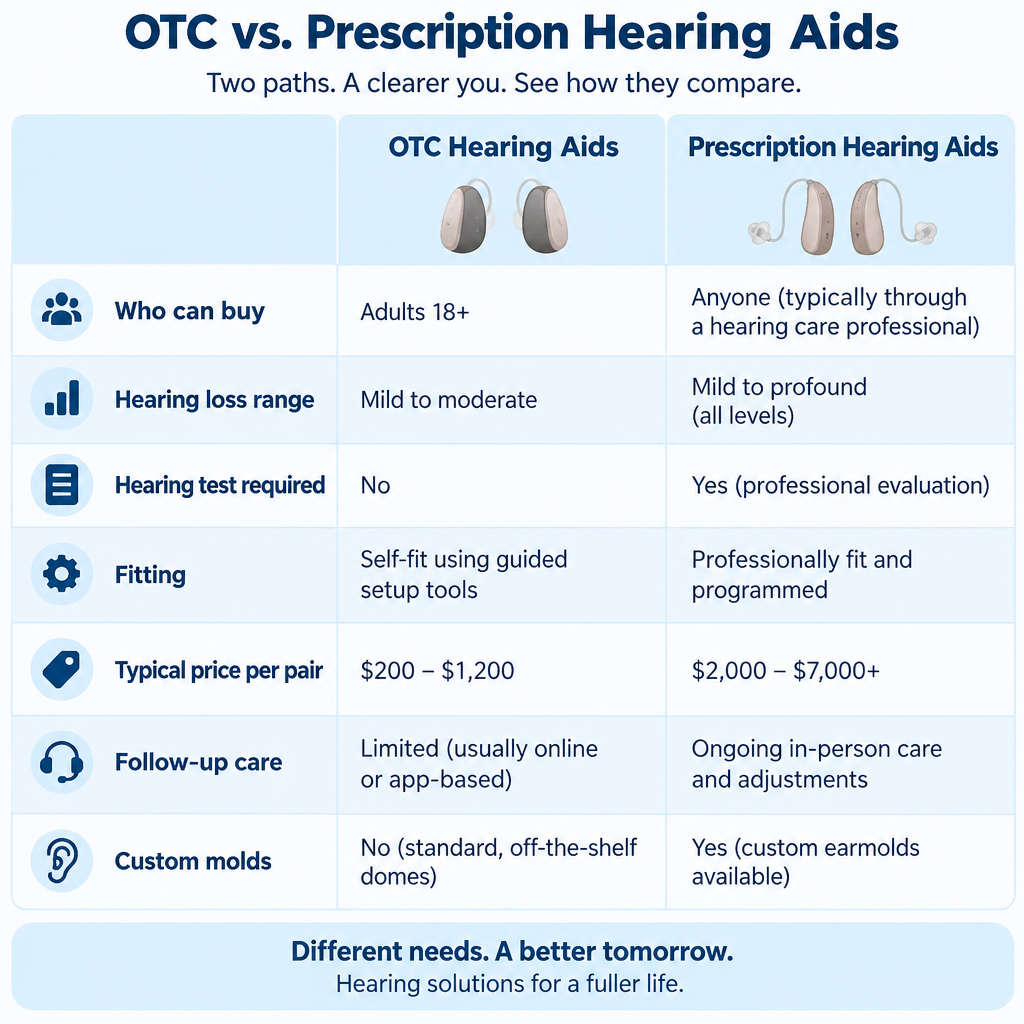
    OTC vs prescription hearing aids: the 7 key differences

    OTC hearing aids Prescription hearing aids
    Who can buy Adults 18+ Any age, through a professional
    Hearing loss range Perceived mild to moderate Mild to profound
    Hearing test required No Yes
    Fitting Self-fit with presets or app Professional fitting and verification
    Typical price per pair Hundreds to about $2,000 About $2,000 to $7,000+
    Follow-up care Phone, chat or app support In-person adjustments, cleanings, repairs
    Custom molds Rare Common
    1. The range of hearing loss covered. OTC devices are capped for mild to moderate loss. Severe or profound loss needs more power and finer control than the OTC rules allow.
    2. Who fits them. With OTC, you’re the fitter. Prescription devices are programmed to your audiogram, often across many separate frequency channels.
    3. Verification. A good audiologist confirms the fit with real ear measurement. A tiny microphone in your ear canal checks that the aid is actually delivering the prescribed sound levels. OTC devices skip this step entirely.
    4. Age. OTC is for adults only. Children and teens need a professional, because their hearing needs and ear canals change quickly.
    5. Cost and bundling. Prescription prices often bundle the device with years of appointments. OTC prices cover the hardware and whatever remote support the brand offers.
    6. Physical fit. Prescription aids can use custom earmolds made from impressions of your ear. Most OTC aids come with a few sizes of silicone domes.
    7. Ongoing care. With prescription aids, you can walk into a clinic for a re-program, a deep clean or a repair. OTC support happens mostly by phone, video or app, and repairs usually mean mailing the device back.

    What OTC hearing aids cost compared with prescription

    OTC vs Prescription Comparison Table

    Prices change often, so treat these as typical ranges as of October 2026, not quotes.

    Option Typical price per pair What’s usually included
    Basic OTC hearing aids About $200 to $600 Preset programs, limited app control
    Mid to premium OTC hearing aids About $600 to $2,000 App fitting, rechargeable case, remote support
    Earbuds with hearing aid software Price of the earbuds Hearing test and profile through your phone
    Warehouse-club prescription aids Around $1,500 to $2,000 Hearing test, fitting, follow-ups
    Clinic prescription aids About $2,000 to $7,000+ Exam, fitting, verification, multi-year care

    Warehouse clubs sit in an interesting middle ground. You get a professional test and fitting at a price closer to premium OTC. If that appeals to you, our guide to hearing aids Costco shoppers buy explains how their hearing centers work.

    Are you a good candidate for OTC hearing aids?

    OTC devices tend to work well if most of these describe you:

    • You’re 18 or older.
    • You hear fine in quiet rooms but struggle in restaurants, meetings or the car.
    • People seem to mumble, especially women and children, whose voices are higher-pitched.
    • You turn the TV up louder than others in the room like.
    • You can follow a phone call, though you sometimes ask people to repeat themselves.
    • Your hearing changed gradually, over years rather than days.

    OTC is usually the wrong choice if you can’t follow conversation even in a quiet room, rely heavily on lipreading, or have trouble hearing loud speech. Those are signs of moderately severe loss or worse.

    See a professional

    Sudden hearing loss in one or both ears is a medical emergency, so get to a doctor or urgent care the same day. Also see a doctor for ear pain, drainage, dizziness, loss in only one ear, or a feeling of blockage.

    The FDA labeling for OTC aids lists these same red flags. Sudden sensorineural hearing loss responds best to treatment started quickly, often within days. Don’t wait it out with an amplifier.

    Before you buy an OTC hearing aid: what to check

    OTC Hearing Aid in Pharmacy Setting

    Get a hearing test anyway

    You don’t need a test to buy OTC, but one is still worth getting. An audiologist can give you an audiogram without selling you anything, and you can then use that result to set up an OTC device. Some OTC apps even let you enter your audiogram numbers directly. A test also rules out simple problems. Earwax buildup, for example, can mimic hearing loss and is easily treated.

    If cost is the barrier, many OTC apps and phone platforms include a self-test. These are less precise than a sound booth, but they’re far better than guessing.

    Pick a style you’ll actually wear

    • Behind-the-ear (BTE) or receiver-in-canal (RIC): A small body sits behind your ear, and a thin wire or tube runs to a dome in your canal. This is the most common OTC style. It handles feedback well and fits larger batteries.
    • In-the-canal / completely-in-canal: Small and discreet, but harder to handle and usually shorter on battery and features.
    • Earbud style: Looks like wireless earbuds and often streams audio well. It’s bulkier in the ear and more obvious in social settings.

    If you have arthritis or limited dexterity, avoid the tiniest models. Fiddly charging contacts and dome changes become a daily annoyance.

    Read the return policy before the spec sheet

    The return window may be the most important number on the page. It takes time for your brain to adjust to amplified sound, and you won’t know if a device works for you after one afternoon. Look for at least 30 days, a full refund with no restocking fee, and clear warranty terms. Some brands offer longer trials.

    Hearing tip

    Write the return deadline on your calendar the day the box arrives, and wear the aids daily from then on. You need real-world use in noisy places to judge them fairly before the window closes.

    Features worth paying for

    Feature What it does Who needs it
    App-based fitting Tunes sound to your test results Almost everyone
    Rechargeable battery Charges in a case overnight Anyone who hates tiny batteries
    Directional microphones Focus on voices in front of you Restaurant and meeting goers
    Noise reduction Softens steady background noise City dwellers, commuters
    Bluetooth streaming Calls, music, TV straight to the aids Phone and podcast users
    Telecoil Picks up hearing loop signals Theater, church and transit users
    Auracast support Receives broadcast audio streams Early adopters, frequent travelers
    Feedback cancellation Reduces whistling Open-fit dome users

    Rechargeable models usually advertise a full day of use on a charge. Real battery life drops with heavy streaming, so check the stated hours both with and without streaming.

    Telecoils are less common in OTC devices than in prescription ones. If you regularly attend venues with hearing loops, look for a telecoil before you buy. Newer devices are starting to add Bluetooth LE Audio, and our explainer on Auracast broadcast audio covers why that could matter in airports, gyms and lecture halls over the next few years.

    After you buy: setting up and adjusting

    Most OTC hearing aids follow a similar setup flow. Exact menus vary by brand, so use the steps below as a general guide.

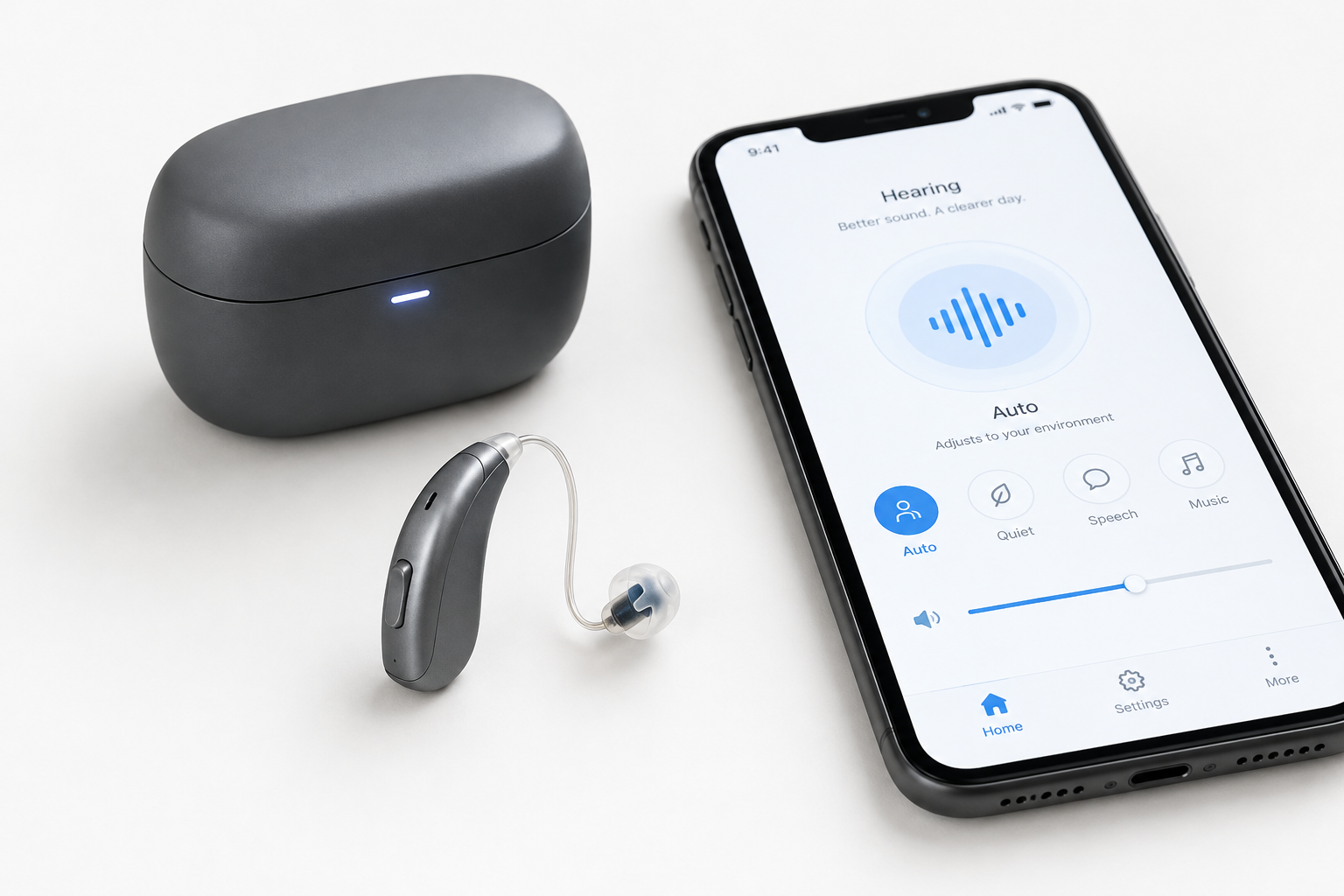
    Setup steps

    1. Charge the aids fully in their case before first use.
    2. Install the brand’s app and create an account.
    3. Pair the aids through the app, not your phone’s Bluetooth menu, unless instructed otherwise.
    4. Run the in-app hearing test in a quiet room, or enter your audiogram.
    5. Try each dome size and choose the one that seals comfortably without pain.
    6. Start at the recommended volume and wear the aids for a few hours a day.
    7. Increase daily wear over the first two weeks.

    If you’re using AirPods Pro with a supported iPhone, Apple’s path is built into Settings.

    AirPods hearing aid setup

    1. Update your iPhone and AirPods to the latest software.
    2. Put your AirPods in and open Settings.
    3. Tap your AirPods name near the top of Settings.
    4. Under Hearing Health, tap Take a Hearing Test.
    5. When finished, open Hearing Assistance and turn on Hearing Aid.

    Expect an adjustment period

    Your brain has gotten used to a quieter world. At first, amplified sound can seem tinny, sharp or overwhelming. Your own voice may sound strange, and the hum of your fridge may suddenly feel loud. That’s normal. Most people settle in over a few weeks of consistent use.

    Resist the urge to crank the volume. Start low, wear the aids daily, and make small adjustments. If speech still sounds muffled after two or three weeks, contact the brand’s support team. If problems continue, get a professional hearing test before your return window closes.

    Care and cleaning

    Wipe the aids daily with a dry cloth, and change wax guards and domes as the manual recommends. Store them in the charging case. Keep them out of the bathroom while you shower, because moisture and earwax cause most hearing aid failures.

    When prescription hearing aids are the better choice

    Choose prescription if you have more than moderate loss, if your two ears are very different, or if a doctor has found a medical cause like otosclerosis. Prescription is also the better route for children and teens.

    It’s also a good choice if you tried OTC aids and couldn’t get comfortable. Some people simply do better with a professional handling the fine-tuning. That isn’t a failure. Often an OTC trial is how you learn what you need.

    If you’re buying prescription hearing aids

    Ask these questions before you sign anything:

    • Is the price bundled or unbundled? Bundled pricing includes years of visits. Unbundled pricing is cheaper upfront, but you pay per appointment.
    • Do you perform real ear measurement? Clinics that verify fittings this way consistently deliver more accurate results. Our explainer on real ear measurement covers what happens during the test.
    • What’s the trial period? Many states require a trial window for prescription aids. Ask for the terms in writing.
    • Who owns the programming? Some aids are “locked” to the original clinic, which makes switching providers harder later.

    Paying for OTC and prescription hearing aids

    Medicare. Original Medicare (Parts A and B) doesn’t cover hearing aids, although it can cover a diagnostic hearing exam ordered by a doctor. Many Medicare Advantage plans include some hearing aid benefit. Check your plan’s details, because some benefits only apply through specific providers.

    Private insurance. Coverage varies widely, and some states mandate hearing aid coverage for children. Call your insurer and ask specifically whether OTC devices count, since some plans only reimburse prescription aids.

    HSA and FSA. Hearing aids, including OTC models, are generally eligible medical expenses. Keep the receipt and packaging that shows “OTC hearing aid.”

    Veterans. Eligible veterans can often get hearing aids through the VA. If you served, it’s worth checking before you pay out of pocket.

    OTC hearing aids and tinnitus

    Many people with ringing in their ears also have some hearing loss. Amplifying outside sounds can make tinnitus less noticeable. Some devices also include a sound generator that plays soft background noise. Neither approach cures tinnitus, and results vary from person to person. Our guide to hearing aids for tinnitus walks through what the research supports.

    If your tinnitus is only in one ear, pulses with your heartbeat, or came on suddenly, see a doctor before you buy anything.

    FAQ

    Do I need a prescription for OTC hearing aids?

    No. Adults 18 and older can buy OTC hearing aids in stores or online without a prescription, exam or fitting appointment. A hearing test is still a smart first step, even though the law doesn’t require it.

    Are non-prescription hearing aids as good as prescription ones?

    For mild to moderate loss, a well-fitted OTC device can work very well, especially in everyday situations. Prescription aids pull ahead with more severe loss, unusual hearing patterns, and in tough settings where professional fine-tuning and verification make a difference.

    Can OTC hearing aids damage my hearing?

    The FDA caps OTC output to limit that risk, and following the labeling keeps it low. Keep the volume at a comfortable level. If you notice pain, worsening hearing or new ringing, stop using the aids and see a professional.

    Can teenagers use OTC hearing aids?

    No. The OTC category is limited to adults 18 and older. Anyone younger should be evaluated and fitted by an audiologist.

    Does Medicare pay for over the counter hearing aids?

    Original Medicare doesn’t. Some Medicare Advantage plans offer an allowance that may apply to OTC or prescription aids. Check your specific plan’s benefits.

    Can AirPods really work as hearing aids?

    Yes, with limits. AirPods Pro 2 and AirPods Pro 3 support Apple’s FDA-authorized hearing aid feature for perceived mild to moderate loss. You need a compatible iPhone and current software. They’re best for part-time use rather than all-day wear.

    How long do OTC hearing aids last?

    Most hearing aids last several years with good care. Rechargeable batteries gradually lose capacity over time. Check the warranty length and whether the brand offers battery replacement before you buy.

  • Hearing Aids for Tinnitus and How They Help Reduce Ringing

    Hearing Aids for Tinnitus and How They Help Reduce Ringing

    Hearing aids help many people with tinnitus, especially when the ringing comes with hearing loss. Most hearing aid users with tinnitus report at least some relief, and roughly one in five report major relief. They do not cure tinnitus. They make it quieter, less intrusive and easier for your brain to ignore.

    Last updated: October 29, 2026

    TypeSound therapy via amplification
    Guideline statusRecommended with hearing loss
    Typical resultPartial relief, not cure
    Best forTinnitus plus hearing loss

    Do hearing aids actually help with tinnitus?

    Yes, for the right person. If you have measurable hearing loss and bothersome tinnitus, a properly fitted hearing aid is one of the most practical first steps you can take. The American Academy of Otolaryngology–Head and Neck Surgery (AAO-HNS) clinical practice guideline on tinnitus recommends a hearing aid evaluation for people with persistent, bothersome tinnitus and documented hearing loss. That puts hearing aids among a small group of approaches the guideline actively supports, alongside cognitive behavioral therapy.

    The honest framing is relief, not removal. Most people who get a hearing aid for ringing in the ears still hear their tinnitus at times, particularly in quiet rooms or after taking the devices out at night. What changes is how much of your attention the sound grabs and how much it bothers you. For many people, that shift is the difference between tinnitus running the day and tinnitus fading into the background.

    If your hearing tests as normal, a standard hearing aid has little to amplify and is unlikely to help much. That is a separate situation covered later in this guide.

    Why tinnitus and hearing loss show up together

    Tinnitus is the perception of sound, such as ringing, hissing, buzzing or whooshing, that has no outside source. It is common. A 2022 meta-analysis in JAMA Neurology estimated that about 14% of adults worldwide experience tinnitus, and about 2% have a severe form.

    The large majority of people with tinnitus also have some degree of hearing loss, often high-frequency loss from aging or noise exposure. Many don’t realize it because the loss is mild or affects pitches they rarely think about, like birdsong, the “s” and “f” sounds in speech, or a microwave beep.

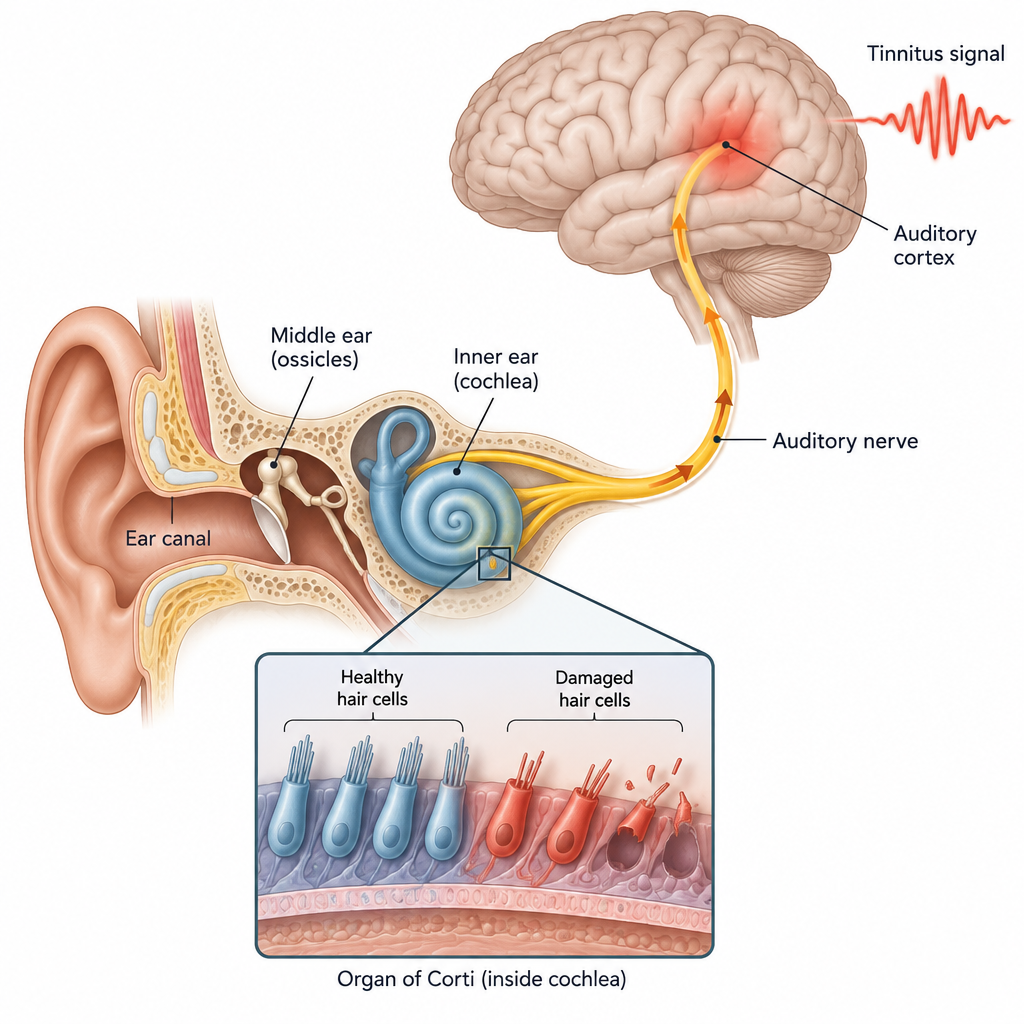
    The leading explanation for the link sits in the brain rather than the ear. When damaged hair cells in the inner ear stop sending normal signals for certain frequencies, the auditory system doesn’t simply go quiet. Neurons in the auditory pathway turn up their sensitivity to compensate, a process researchers often call increased central gain. That extra “volume” can produce activity the brain interprets as sound. In plain terms, the brain fills in the gap where input used to be.

    This is why tinnitus pitch often matches the region of hearing loss. Someone with a dip around 4,000 Hz from years of loud concerts or power tools frequently hears a tone in that same range. It also explains why quiet makes tinnitus louder. With less outside sound coming in, the internal signal has less competition.

    Ludwig van Beethoven described exactly this pattern in an 1801 letter, complaining that his ears buzzed day and night as his hearing declined. Anyone who has asked whether Beethoven was deaf will find that tinnitus was part of his story from the early years of his hearing loss.

    How hearing aids reduce ringing in the ears

    How Hearing Aids Reduce Tinnitus – Mechanism Diagram

    Hearing aids work on tinnitus through several overlapping mechanisms. None is magic on its own, but together they explain why so many users report feeling better.

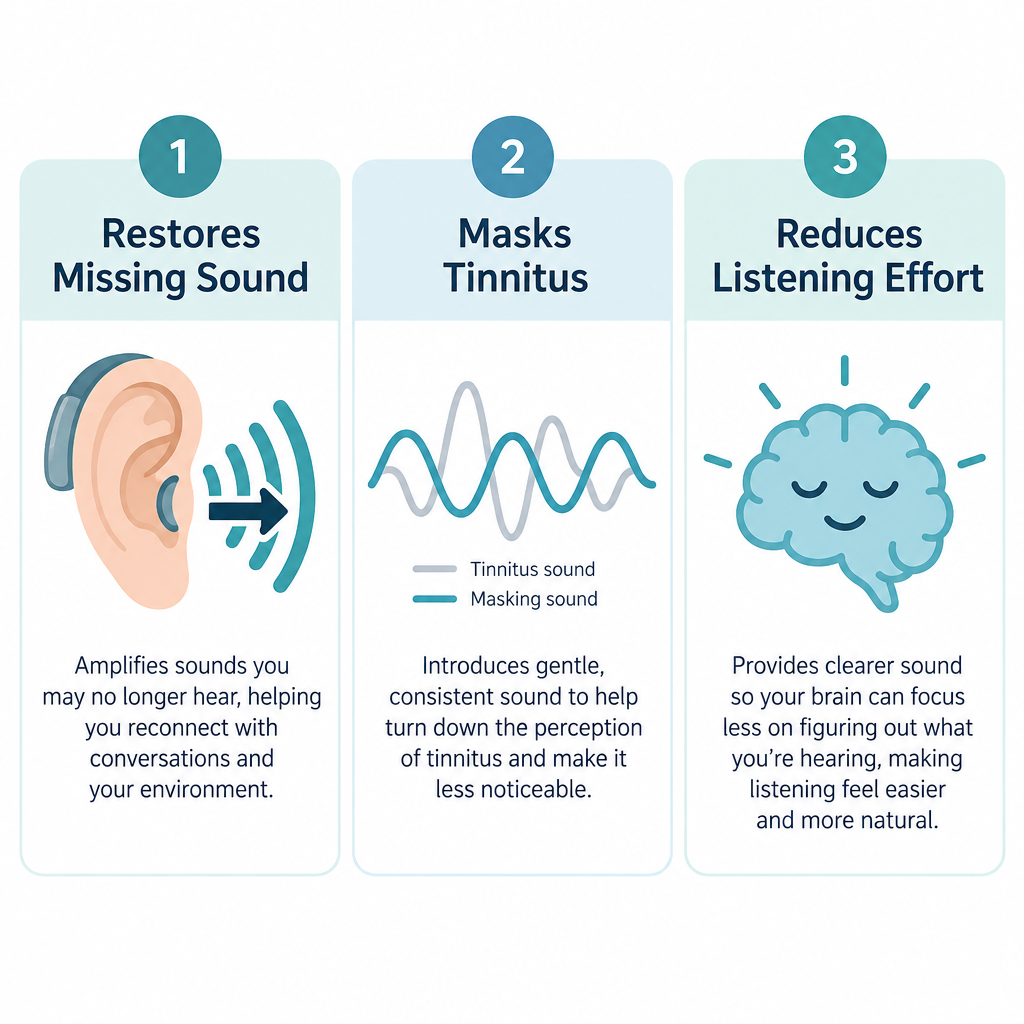
    They restore the missing sound

    Amplifying the frequencies you’ve lost gives your auditory system real input again. With more normal signal arriving, the brain has less reason to keep its internal gain cranked up. Over weeks and months, many people notice their tinnitus becoming less prominent even when they aren’t actively listening for it.

    This works best when the hearing aid can reach the frequencies involved. Many modern hearing aids deliver useful amplification up to roughly 8,000 to 10,000 Hz. If your loss and tinnitus sit above what the device can amplify, this particular benefit shrinks.

    They mask the tinnitus with everyday sound

    When you can hear the hum of a refrigerator, traffic outside or the rustle of your own clothes, those sounds partially cover the tinnitus. Audiologists generally aim for partial masking rather than full masking. You should still faintly hear your tinnitus underneath the background sound. Complete masking can bring short-term relief, but partial masking appears to better support habituation, the gradual process in which your brain learns to treat the tinnitus as unimportant.

    They reduce listening effort and stress

    Straining to follow conversation is tiring. People with untreated hearing loss often end the day exhausted and tense, and stress reliably makes tinnitus more noticeable. Hearing speech clearly lowers that effort. It also redirects your attention outward, toward voices and the world around you, and away from the sound inside your head.

    This attentional effect matters more than many people expect. Tinnitus distress is driven heavily by how much focus the sound commands and the emotional reaction it triggers. Hearing aids give your attention somewhere better to go.

    Many include built-in sound generators

    Most prescription hearing aids from major manufacturers, and some over-the-counter models, include a tinnitus program that plays a gentle sound through the hearing aid itself. Options typically include white, pink or brown noise, ocean-like sounds, or tonal patterns. You or your audiologist can set the volume, and many apps let you switch sounds during the day. Some people use the generator only in quiet settings, such as reading or working alone, and rely on regular amplification the rest of the time.

    What the research says

    Evidence for hearing aids and tinnitus is encouraging but not airtight. Large surveys show high rates of self-reported relief. Formal clinical trials are fewer and smaller, which is common in tinnitus research.

    Source What it found
    MarkeTrak VIII survey (Kochkin, Tyler & Born, 2011) About 60% of hearing aid users with tinnitus reported some relief; about 22% reported major relief
    AAO-HNS Clinical Practice Guideline: Tinnitus (2014) Recommends hearing aid evaluation for persistent, bothersome tinnitus with hearing loss
    Same guideline Recommends cognitive behavioral therapy; recommends against routine medications and dietary supplements for tinnitus
    Cochrane review of sound therapy (Sereda et al., 2018) No clear difference between hearing aids, sound generators and combination devices; overall evidence quality rated low
    JAMA Neurology meta-analysis (Jarach et al., 2022) Tinnitus affects about 14% of adults; about 2% have severe tinnitus

    Two things stand out. First, a majority of users report benefit, which is a strong signal even from survey data. Second, the Cochrane finding suggests the specific delivery method matters less than getting appropriate sound therapy at all. That’s useful when choosing a device: a hearing aid with a solid tinnitus program is valuable, but the fitting and consistent daily use matter at least as much as the brand.

    Manufacturers also publish their own studies. Oticon, for instance, reports that users of its hearing aids with Tinnitus SoundSupport experienced a significantly reduced impact of tinnitus. Company-funded research is worth reading, but weigh it below independent trials.

    Tinnitus features by hearing aid brand

    Tinnitus and Hearing Loss Connection

    Every major manufacturer offers a tinnitus feature, though each takes a slightly different approach. The table below covers the main prescription brands and how their tinnitus tools work. Feature availability varies by model and technology tier, so confirm the specific device with your provider.

    Brand Tinnitus feature How it works App control
    Oticon Tinnitus SoundSupport Broadband noise and nature sounds, including ocean-like options Oticon Companion app
    Phonak Tinnitus Balance Broadband noise generator; can also stream relaxing audio myPhonak app
    Signia Notch Therapy, plus noise and ocean sounds Notch Therapy reduces amplification at the tinnitus pitch for tonal tinnitus Signia app
    ReSound Tinnitus Sound Generator Built-in noise and nature sounds; pairs with the free ReSound Relief app ReSound Smart 3D and ReSound Relief
    Widex Zen Fractal “Zen” tones and noise designed to be calm and non-repetitive Widex Moment app
    Starkey Multiflex Tinnitus Customizable noise stimulus shaped to your hearing profile My Starkey app

    Signia’s Notch Therapy deserves a separate mention because it works differently. Instead of adding a sound, it slightly reduces amplification in a narrow band centered on your tinnitus pitch. The idea is to calm overactive neurons in that region over time. It is intended for tonal tinnitus with a clear, identifiable pitch, so it isn’t the right fit for hissing or broadband tinnitus.

    Widex Zen tones are another distinctive option. The fractal tones play in a chime-like, non-repeating pattern, which some people find more relaxing than static noise. Others prefer plain noise. Trying both during a fitting is the only way to know.

    Hearing tip

    Try each tinnitus sound for at least a few days before deciding. A sound that seems annoying in the clinic often feels different at home in a quiet room.

    Prescription, OTC or earbuds: which route makes sense

    Since the FDA’s over-the-counter hearing aid rule took effect on October 17, 2022, adults 18 and older with perceived mild to moderate hearing loss can buy hearing aids without a prescription or exam. That opened new, cheaper routes. For tinnitus specifically, though, the right path depends on how much your tinnitus bothers you and how complex your hearing is.

    Route Typical price range (pair) Tinnitus programs Professional fitting
    Prescription, independent clinic Roughly $2,000 to $7,000, often bundled with follow-up care Standard on most current models Yes, with ongoing adjustments
    Prescription, warehouse club Roughly $1,500 to $2,500 Varies by model Yes, in-store hearing test and fitting
    OTC hearing aids Roughly $200 to $1,500 for most models Some models include one; many don’t Self-fit, sometimes with remote support
    Earbuds with a hearing aid feature (e.g., AirPods Pro 2 and 3) About $249 No built-in tinnitus generator Self-fit using a hearing test in the app

    Prices vary widely by region, technology level and what’s included, so treat these as broad ranges rather than quotes.

    When prescription aids are the better choice

    Go prescription if your tinnitus is moderate or severe, if it affects your sleep or mood, or if your hearing loss is more than mild. You get a full hearing test, a verified fitting, a professionally tuned tinnitus program and someone to adjust it as your needs change. Tinnitus support often needs several visits to get right, and that follow-up is what bundled clinic pricing pays for.

    Warehouse clubs are a reasonable middle ground. If you’re weighing hearing aids at Costco, ask specifically whether the model you’re offered includes a tinnitus sound generator and whether staff will adjust it, since this varies.

    When OTC can work

    OTC devices can suit mild hearing loss with mild, occasional tinnitus. Check the product listing for a named tinnitus feature rather than assuming one exists. The FDA requires OTC labels to list warning signs that call for a medical evaluation first, and tinnitus or hearing loss in only one ear is one of them.

    Where earbuds fit

    Apple’s FDA-authorized hearing aid feature on AirPods Pro 2 and AirPods Pro 3 provides amplification for perceived mild to moderate loss. It doesn’t include a tinnitus generator, but the amplification itself can bring the restoring and masking benefits described above. You can pair it with the iPhone’s Background Sounds feature, covered below, for quiet moments.

    How to choose a hearing aid for tinnitus

    Start with a hearing test from an audiologist. Knowing the shape of your hearing loss and the pitch and loudness of your tinnitus drives every decision that follows. Then use this checklist when comparing devices:

    • A built-in tinnitus sound generator with several sound options and independent volume control.
    • App control so you can switch sounds and adjust tinnitus volume on your phone without a clinic visit.
    • Bluetooth streaming for music, podcasts or relief sounds sent directly to your ears.
    • Wide frequency range, especially if your loss and tinnitus sit in the high pitches.
    • Rechargeable batteries, which make all-day wear easier. Most current rechargeable models are rated for a full day of use, though heavy streaming shortens it.
    • Receiver-in-canal (RIC) style with open fitting where your hearing allows it. Open fittings let natural sound in and reduce the plugged feeling that can make tinnitus stand out.
    • A trial period long enough to judge tinnitus benefit. Ask for at least 30 days.
    • Follow-up visits included, since tinnitus programs often need adjusting after a few weeks of real-world use.

    Ask the provider directly how they set up tinnitus programs and whether they offer tinnitus counseling. Hearing aid providers vary a lot here. Some fit the devices and switch the tinnitus program on at a default setting. Others tune it carefully and teach you how to use it. You want the second kind.

    Getting the fitting right

    A great hearing aid fitted poorly will disappoint you. Three details make the biggest difference for tinnitus.

    Verified amplification. Ask for real ear measurement, a test that uses a tiny microphone in your ear canal to confirm the hearing aid delivers the amplification your hearing loss actually needs. Without it, many fittings under-amplify the high frequencies, which are exactly the frequencies most linked to tinnitus.

    Avoiding occlusion. When an earpiece fully blocks the ear canal, outside sound drops and your own body sounds get louder. Both can make tinnitus more noticeable. Open or vented domes avoid this for many people with mild to moderate loss.

    Full-time wear. Hearing aids help tinnitus most when you wear them during all your waking hours. The brain adapts to consistent input, and wearing devices only for social events limits that adaptation. Put them in when you get up and take them out at bedtime.

    Setting up a tinnitus program with your provider

    1. Describe your tinnitus: pitch, loudness, one or both ears, steady or pulsing.
    2. Ask for real ear measurement to verify the amplification.
    3. Try two or three relief sounds in the clinic.
    4. Set the tinnitus volume just below your tinnitus level.
    5. Confirm you can adjust it in the brand’s app.
    6. Book a follow-up for two to four weeks later.

    What to expect in the first eight weeks

    Most people expect hearing aids to bring immediate relief. Some get it. Many experience a more gradual curve, and knowing that ahead of time keeps you from giving up too early.

    Days 1 to 7. Everything sounds loud, sharp or tinny. Your own voice may sound strange. Some people notice their tinnitus less right away because the world is suddenly full of sound. Others notice no change yet. Both are normal.

    Weeks 2 to 4. Your brain starts adjusting to amplified sound. This is the best time for a follow-up visit, because you now know which situations still bother you. Report when your tinnitus is most noticeable so your provider can adjust the program or add a dedicated quiet-room setting.

    Weeks 4 to 8. Many users report that they “forget” about tinnitus for longer stretches. The ringing may sound the same when you deliberately listen for it, but it captures your attention less often. That reduced intrusiveness is the real goal of sound therapy.

    Beyond two months. Habituation continues for many months. If you’ve worn the aids consistently and see no benefit at all by the end of your trial, talk to your provider about changing the tinnitus program or adding counseling-based treatment rather than writing off sound therapy entirely.

    A small number of people find their tinnitus briefly seems louder when they remove their hearing aids. This contrast effect is common and usually fades as habituation progresses.

    The nighttime gap: managing tinnitus after the aids come out

    Bedtime is when many people with tinnitus struggle most. The hearing aids come out, the room goes quiet, and the ringing takes center stage. It’s also the moment most hearing aid guides skip.

    You can’t sleep in most hearing aids, so plan a separate nighttime sound source. Good options include a bedside fan, a dedicated sound machine, a pillow speaker or soft sleep earbuds. Keep the volume low, below the level of your tinnitus, for the same partial-masking reason that applies during the day.

    If you use an iPhone, the built-in Background Sounds feature plays steady noise or nature sounds without needing a separate app. The sound options include Balanced Noise, Bright Noise, Dark Noise, Ocean, Rain and Stream, with more added in later iOS versions.

    Turn on Background Sounds on iPhone

    1. Open Settings.
    2. Tap Accessibility, then Audio & Visual.
    3. Tap Background Sounds and switch it on.
    4. Tap Sound and choose a sound.
    5. Set Volume below your tinnitus level.
    6. Turn off Stop Sounds When Locked for sleep.

    You can also add a Hearing button to Control Center to start and stop Background Sounds quickly. Android users can find similar noise options in free apps, including the ReSound Relief app, which is available whether or not you own ReSound hearing aids.

    Hearing tip

    A sleep timer that fades sound out after you’ve fallen asleep works well for some people. Others sleep better with sound running all night. Try both for a week each.

    When hearing aids are unlikely to help

    Hearing aids for tinnitus work best within a specific profile. Set your expectations differently in these situations.

    Normal hearing. If your hearing test shows no loss, a hearing aid has nothing meaningful to amplify. Standalone sound generators, which look like hearing aids but only produce relief sounds, are an option here, as are counseling-based treatments.

    Very high-pitched loss and tinnitus. If your hearing loss and tinnitus sit above the frequency range a hearing aid can reach, the restoring effect is limited. Sound generators and masking can still help.

    Severe or profound loss. Hearing aids may provide too little benefit. Cochlear implants often reduce tinnitus for people who qualify, though they’re a major decision made with an implant team.

    Tinnitus driven mainly by other causes. Tinnitus linked to jaw problems, neck issues, medications, earwax or blood vessel conditions needs its cause addressed. Amplification won’t fix it.

    Sound sensitivity alongside tinnitus. If everyday sounds feel painfully loud (hyperacusis), amplification must be set very carefully. Tell your provider before the fitting.

    See a professional

    Sudden hearing loss in one or both ears is a medical emergency; get seen the same day. Also see a doctor promptly for tinnitus in one ear only, pulsing tinnitus that beats with your heart, or tinnitus with dizziness or ear pain.

    Pulsatile tinnitus, a rhythmic whooshing that matches your heartbeat, deserves special mention because it can signal a blood vessel issue that needs imaging. One-sided tinnitus with uneven hearing can occasionally point to a growth on the hearing nerve, which a doctor will want to rule out. These are reasons to see an ENT physician before buying any device.

    Other tinnitus treatments to know

    Hearing aids are one tool among several. For bothersome tinnitus, combining approaches often works better than any single one. This table summarizes the main options and how strongly the evidence supports them, based mainly on the AAO-HNS guideline and later FDA actions.

    Treatment What it involves Evidence and status
    Cognitive behavioral therapy (CBT) Structured therapy that changes how you respond to tinnitus; available in person, online or by app Recommended in the AAO-HNS guideline; strongest evidence for reducing distress
    Hearing aids Amplification plus optional built-in sound generators Recommended when hearing loss is present
    Sound therapy Noise generators, sound machines, apps Listed as an option; low-cost and low-risk
    Tinnitus Retraining Therapy (TRT) Directive counseling plus long-term low-level sound Used widely; evidence mixed but supportive for some people
    Progressive Tinnitus Management (PTM) A stepped program developed through the U.S. Department of Veterans Affairs Structured education and sound use, widely used in VA care
    Lenire bimodal neuromodulation Sound through headphones paired with mild electrical stimulation of the tongue Granted FDA De Novo authorization in March 2023; prescribed through clinics
    Medications and supplements Includes ginkgo, melatonin and zinc No drug is FDA-approved for tinnitus; guideline recommends against routine use

    Cognitive behavioral therapy deserves more attention than it gets. It doesn’t change the sound itself. It changes the anxiety, frustration and sleep disruption tied to it, and those are what make tinnitus feel unbearable for many people. Pairing CBT with hearing aids targets both the sound and your reaction to it.

    Protecting your remaining hearing matters too. Noise exposure is a leading cause of the hearing loss behind most tinnitus, and loud events can trigger temporary spikes. High fidelity earplugs reduce volume evenly across frequencies, so music and speech stay clear while the risk drops. They’re worth carrying to concerts, sporting events and noisy workplaces.

    Key takeaways

    • Hearing aids help many people with tinnitus, particularly when hearing loss is also present. About 60% of users report some relief in large survey data.
    • They work by restoring missing sound, partially masking the tinnitus, easing listening effort and, in most current prescription models, playing built-in relief sounds.
    • They reduce how intrusive tinnitus feels. They don’t cure it.
    • Fitting quality and full-time wear matter as much as the brand. Ask for real ear measurement and an open fitting where possible.
    • Plan for nighttime separately, since tinnitus often peaks once the aids come out.
    • Combine hearing aids with CBT if tinnitus affects your mood or sleep.
    • Sudden hearing loss, one-sided tinnitus and pulsing tinnitus need a doctor first.

    FAQ

    Can a hearing aid stop tinnitus completely?

    No. A hearing aid can make tinnitus much less noticeable and less bothersome, and some people say they rarely notice it while wearing their devices. The ringing usually remains in quiet settings or when the aids are out. No hearing aid cures tinnitus.

    How long does it take for hearing aids to help with tinnitus?

    Some people notice relief on the first day because the world gets louder around them. For most, meaningful improvement builds over several weeks of full-time wear as the brain adjusts. Give it the full trial period before judging.

    Do OTC hearing aids help with tinnitus?

    They can, if you have mild to moderate hearing loss, because amplification alone brings some masking and attention benefits. Fewer OTC models include a dedicated tinnitus sound generator, so check the listing carefully. If your tinnitus is moderate to severe or affects only one ear, see an audiologist or doctor first.

    Will hearing aids help if I have tinnitus but normal hearing?

    Usually not much. Standard hearing aids need hearing loss to correct. With normal hearing, standalone sound generators, sound apps and counseling-based approaches like CBT are typically better fits.

    Which hearing aid brand is best for tinnitus?

    There’s no single winner. Oticon, Phonak, Signia, ReSound, Widex and Starkey all offer tinnitus programs, and research suggests the delivery method matters less than consistent use and a good fitting. Signia’s Notch Therapy can suit tonal tinnitus with a clear pitch, while Widex Zen tones appeal to people who dislike static noise.

    Can hearing aids make tinnitus worse?

    Rarely, and usually because of a fitting problem. Over-amplification, a fully blocked ear canal or a tinnitus sound set too loud can increase discomfort. Tell your provider right away so they can adjust the settings. Tinnitus that seems louder only when you take the aids out is a common contrast effect that tends to fade.

    Does insurance cover hearing aids for tinnitus?

    Coverage varies widely by plan. Original Medicare doesn’t cover hearing aids, while many Medicare Advantage plans offer a hearing benefit with limits. Some private plans and state Medicaid programs provide coverage, and the U.S. Department of Veterans Affairs provides hearing aids to eligible veterans. Check your plan documents and ask the provider for an itemized quote.

  • Buying Hearing Aids at Costco: What to Know Before You Go

    Buying Hearing Aids at Costco: What to Know Before You Go

    Costco is one of the cheapest places in the US to buy prescription-grade hearing aids. Members get a free hearing test, a professional fitting, follow-up care and a 180-day return window. Most pairs cost well under typical private-clinic prices. Before you book, you should understand what the warehouse model does well and where it falls short.

    Last updated: October 29, 2026

    TypePrescription-grade hearing aids
    PriceRoughly $1,500 to $3,000 a pair
    Test and fittingFree for members
    Return window180 days
    Best forMild to moderate-severe loss

    How Costco Hearing Aid Centers work

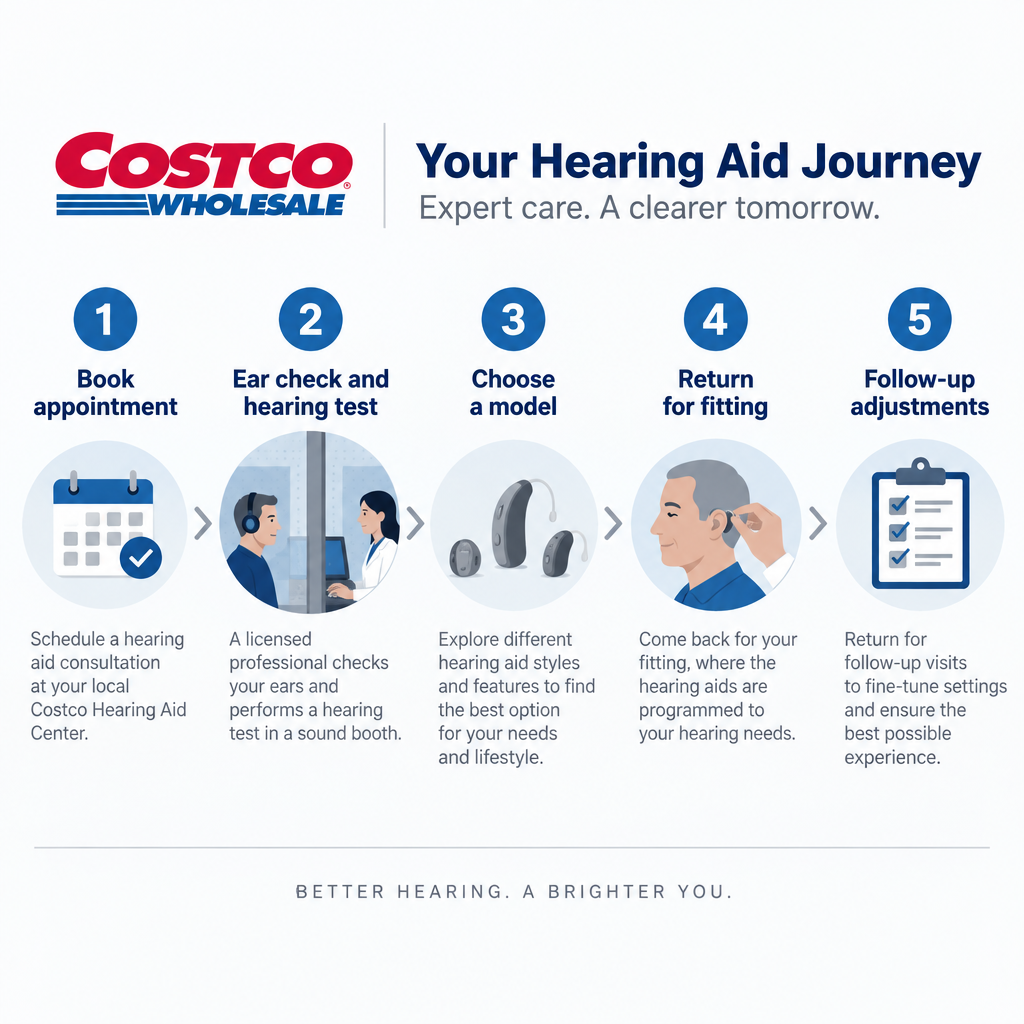
    The hearing aid center sits inside the warehouse, usually near the pharmacy and optical department. Licensed hearing aid specialists run most centers. Some are staffed by audiologists. Either way, the process follows the same steps.

    1. You book appointments by phone, online or at the counter.
    2. A specialist checks your ears and runs a hearing test in a sound booth.
    3. If aids would help, you choose a model and come back for a fitting.
    4. Follow-up visits for adjustments, cleaning and checks are included.

    You need a paid membership to buy, but the hearing test is generally available to non-members as well. Costco sells hearing aids directly, so there’s no separate clinic bill.

    One benefit gets less attention than it should: you can get service at any Costco Hearing Aid Center in the country. That suits people who travel, split the year between two homes or move.

    Brands available at Costco

    Costco carries a short list of brands, and the lineup changes as new technology arrives. Recently it has included:

    • Kirkland Signature, Costco’s own brand, manufactured by Sonova (the parent company of Phonak)
    • Jabra Enhance Pro, from GN
    • Philips HearLink, made by Demant
    • Rexton, from WS Audiology

    The Kirkland Signature line is the big draw. The KS 10.0 launched in 2021 at $1,399.99 a pair, a price that undercut almost every comparable premium aid, but it was discontinued in late 2022 when Sonova ended its supply agreement with Costco. Check what your warehouse stocks now, because models and prices change faster than this article can.

    What Costco hearing aids cost

    Costco vs. Clinic Hearing Aid Price Comparison
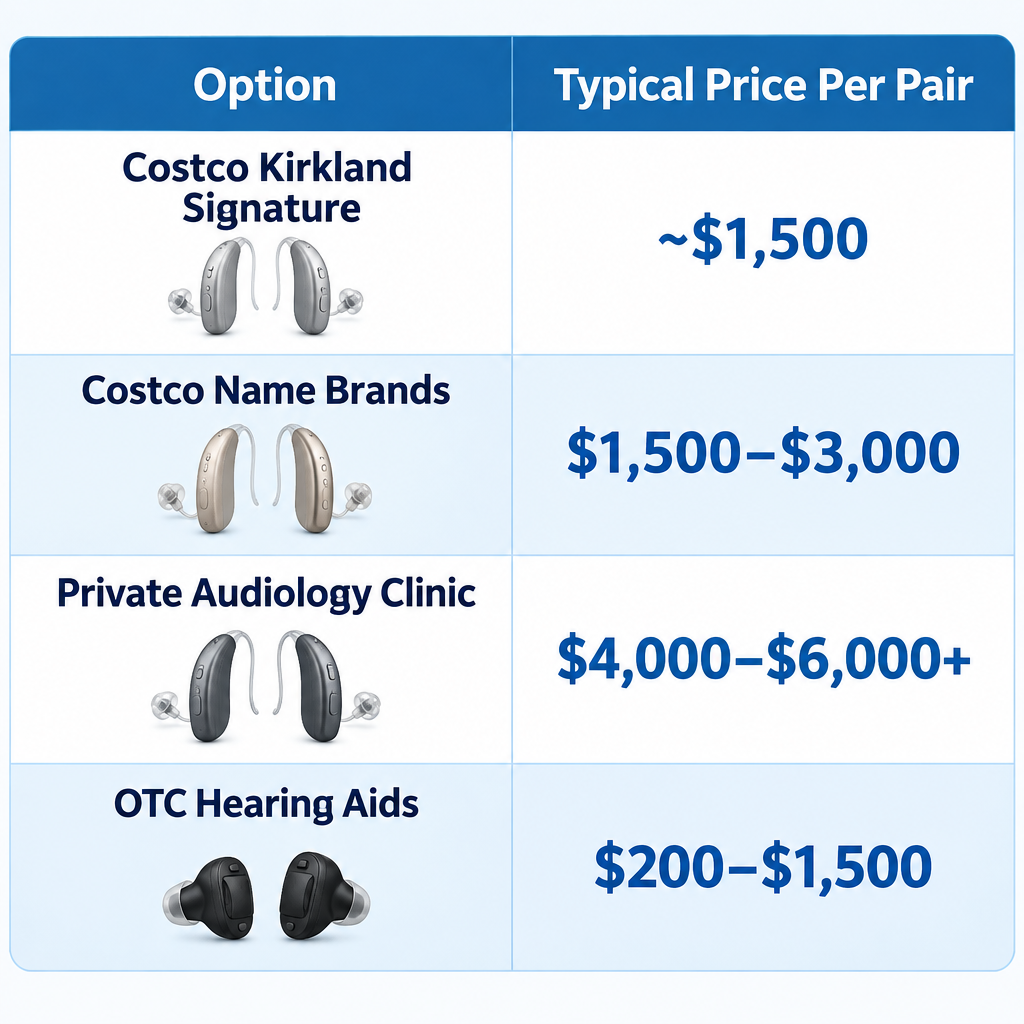
    Option Typical price per pair What’s included
    Costco, Kirkland Signature Around $1,500 Test, fitting, follow-ups
    Costco, name brands About $1,500 to $3,000 Test, fitting, follow-ups
    Private audiology clinic Often $4,000 to $6,000+ Usually bundled care
    OTC hearing aids About $200 to $1,500 Self-fitting, no in-person care

    Costco generally doesn’t bill insurance directly. Ask for an itemized receipt so you can file for reimbursement yourself. Hearing aids are an eligible expense for HSA and FSA funds.

    Features to compare

    Most current Costco models share a core set of smart features. The differences show up in sound processing, size and accessories.

    Feature What to check
    Bluetooth Streaming from iPhone, Android or both
    Rechargeable Battery hours per charge, charger type
    Telecoil Not every model has one. Ask if you use hearing loops
    App control Volume, programs and remote adjustments
    Accessories TV streamers, remote mics, cases

    Hearing tip

    Ask whether the specialist will do real ear measurement during your fitting. It verifies the sound actually reaching your eardrum and makes a noticeable difference in how well the aids work.

    Pros and cons

    Hearing Aid Fitting Process Steps

    Pros
    – Prices far below most clinics, especially for Kirkland Signature
    – The 180-day return window gives you time to test aids in real life
    – Free follow-up care at any US location
    – Warranties are included. Check the length and whether loss and damage are covered

    Cons
    – Appointments can book out weeks at busy warehouses
    – Your specialist may not be an audiologist, which matters for complex cases
    – The brand choice is narrower than at an independent clinic
    – Other clinics may decline to adjust Costco aids, or they may charge for it
    – Costco staff can’t diagnose medical ear problems

    See a professional

    Sudden hearing loss in one or both ears is a medical emergency, so see a doctor within days, not weeks. Ear pain, drainage, dizziness or a suspected perforated eardrum also need a doctor before any hearing aid fitting.

    Who Costco suits, and who should look elsewhere

    Costco is a strong fit for adults with age-related or noise-related loss in the mild to moderate-severe range. It also works well if you want professional fitting without clinic pricing.

    You should look elsewhere in a few situations: profound loss, a possible need for a cochlear implant, uneven loss between ears with no clear cause, or a child who needs hearing aids. An audiologist or ENT should guide those cases.

    If your loss is mild and you’re comfortable with apps, OTC aids are worth comparing. They cost less but come with no in-person support.

    How to get started

    Getting started at Costco

    1. Confirm your membership is active.
    2. Book a hearing test at your nearest warehouse with a hearing aid center.
    3. Bring a list of medications and any past hearing test results.
    4. Bring a family member to help judge sound during the fitting.
    5. Wear the aids daily during the trial and note problem situations.
    6. Book follow-ups for fine-tuning before the 180 days run out.

    Hearing aids won’t solve everything. If phone calls are still hard, look at captioned phones, telecommunications relay service or a ringer light for the telephone alongside your new aids.

    FAQ

    How much do hearing aids cost at Costco?

    Most pairs fall between about $1,500 and $3,000. The Kirkland Signature line was discontinued in late 2022, and its last model, the KS 10.0, sold for $1,399.99 a pair. The price includes fitting and follow-up care, while the hearing test is free and separate from the purchase.

    What are the best hearing aids to buy at Costco?

    Kirkland Signature was long the value pick, but the line has been discontinued since late 2022, when Sonova ended its supply agreement with Costco. Name brands like Philips, Jabra Enhance Pro and Rexton make sense if a specific feature or fit matters to you. Your specialist can match a model to your test results and lifestyle.

    Is it worth buying hearing aids from Costco?

    Yes, for most adults with common types of hearing loss. You get professional fitting, free follow-ups and a long return window at a much lower price. Complex or medical cases belong with an audiologist or ENT.

    Is it cheaper to get hearing aids at Costco?

    In most cases, yes. Comparable aids at private clinics often cost twice as much or more. OTC aids are cheaper still, but they don’t include in-person testing or fitting.

  • Real Ear Measurement Explained and Why It Matters for Fitting

    Real Ear Measurement Explained and Why It Matters for Fitting

    Real ear measurement is a short test that checks how much sound your hearing aids actually deliver at your eardrum, using a thin probe tube and a microphone. It is the only way to confirm that your hearing aids match a prescription built from your hearing test, and it often reveals that the manufacturer’s default settings fall short, especially in the high pitches that carry speech clarity.

    TypeHearing aid verification test
    TimeAbout 15 to 30 minutes
    DiscomfortNone to minimal
    Done byAudiologist or hearing aid specialist
    Best forEvery new fitting

    What Real Ear Measurement Means

    Real ear measurement (REM), also called probe-microphone measurement, records sound inside your own ear canal while your hearing aid is in place and working. A soft silicone tube, about as thin as a strand of cooked spaghetti, sits a few millimetres from your eardrum. It carries sound to a microphone that sits on a small headset or ear hook just outside your ear.

    A speaker in front of you plays speech or a speech-like signal at set loudness levels. The equipment compares what reaches your eardrum with what your hearing loss calls for. Your audiologist then adjusts the hearing aid until the two line up.

    The reason this matters is simple. Every ear canal has a different size and shape, and that changes how loud and how bright sound becomes by the time it reaches the eardrum. A hearing aid set to “50 dB of gain” in the fitting software can deliver noticeably more or less than that in your specific ear. REM measures the result instead of trusting an estimate.

    What REM is not

    It is not a hearing test. Your hearing test (the audiogram) measures what you can hear. REM measures what the hearing aid produces. You do not need to respond to any sounds or press any buttons. You just sit still and stay quiet.

    It also does not diagnose anything. It verifies a device. If your hearing has changed suddenly or you have ear pain or drainage, that is a medical issue for a doctor, not a fitting issue.

    See a professional

    Sudden hearing loss in one or both ears is a medical emergency. See a doctor or go to urgent care within 24 to 48 hours, because treatment works best when started early.

    The Terms You Will See on the Screen

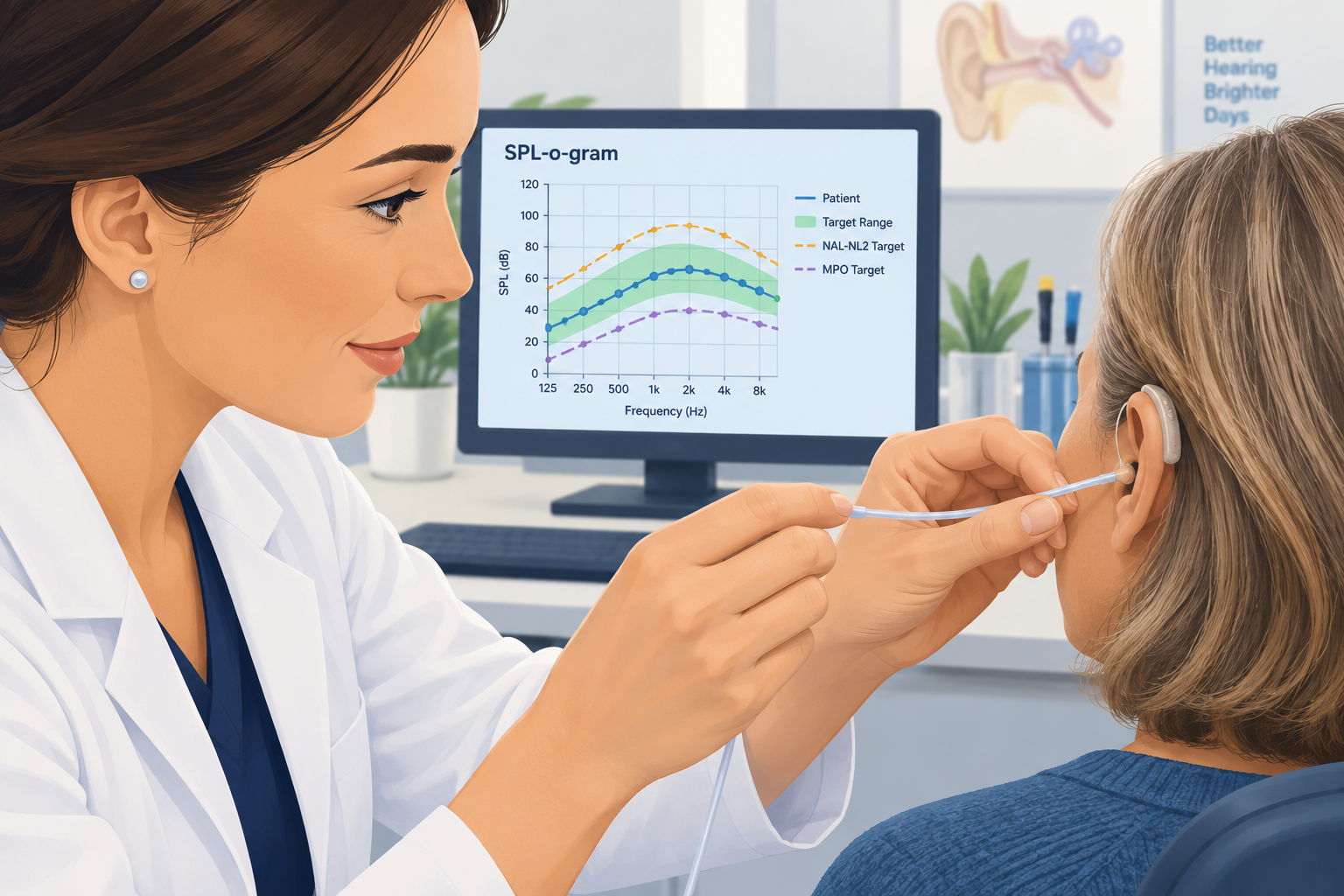
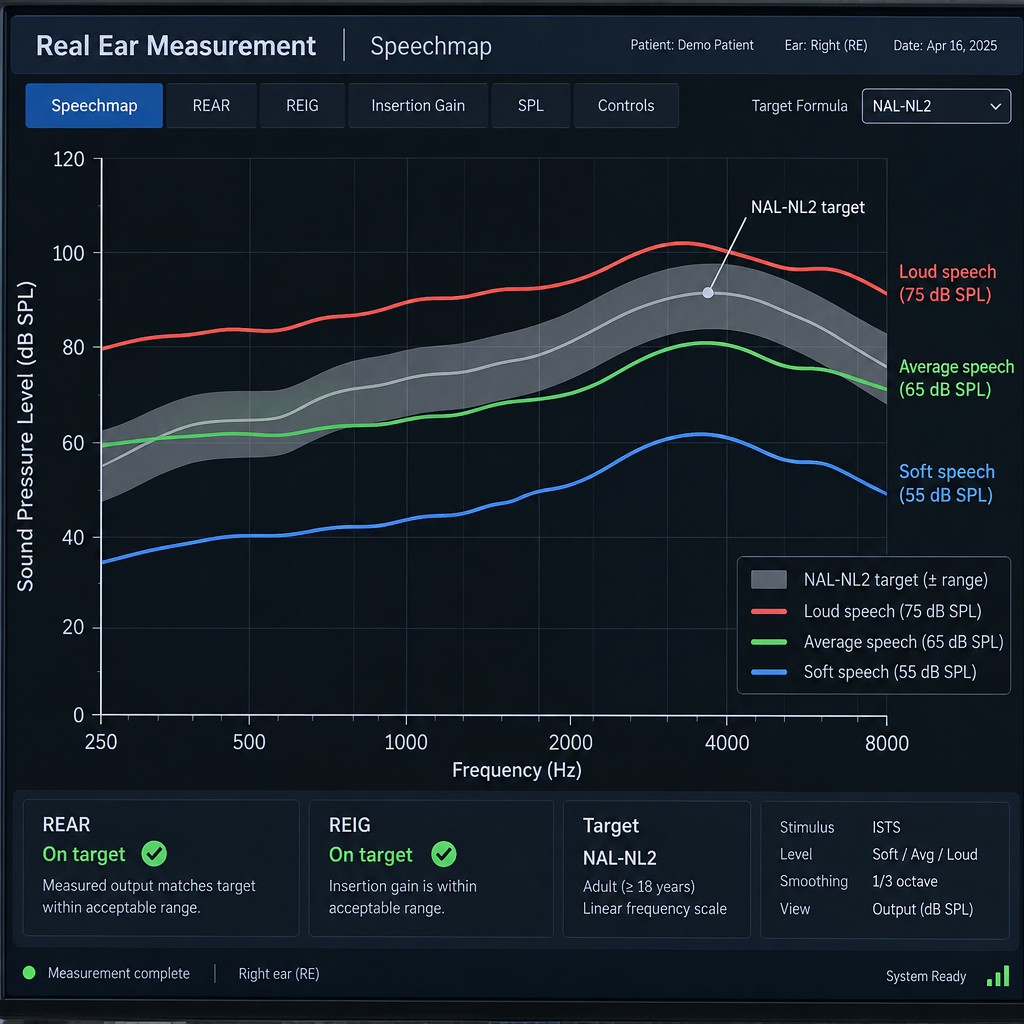
    REM software throws a lot of acronyms at you. You do not need to memorise them, but knowing a few helps you understand what your audiologist is showing you. Most modern clinics display results as an “SPL-o-gram” or “speechmap,” which plots your hearing thresholds, your prescription targets and the aided sound on one graph.

    Term Full name What it shows
    REUR / REUG Real-ear unaided response / gain How your open ear naturally boosts sound, with no hearing aid in
    REOR Real-ear occluded response Sound at the eardrum with the hearing aid in but switched off or muted
    REAR Real-ear aided response Sound at the eardrum with the hearing aid on, at a given input level
    REIG Real-ear insertion gain The difference between aided and unaided responses (REAR minus REUR)
    RESR / MPO Real-ear saturation response / maximum power output The loudest sound the hearing aid can produce in your ear
    RECD Real-ear-to-coupler difference How your ear differs from a standard test cavity, used heavily with children
    SII Speech Intelligibility Index An estimate (0 to 100) of how much speech information is audible

    The two most common ways to work are insertion gain (REIG) and aided response (REAR). Older protocols used insertion gain. Most current systems favour aided response shown as sound pressure level at the eardrum, because it sits neatly on the same graph as your hearing thresholds. Both are valid. What matters is that the fitting is checked against a target in your ear.

    Why REM Is the Gold Standard for Fitting

    REM SPL-o-gram / Speechmap Display

    Professional bodies in audiology have recommended probe-microphone verification for decades. The American Academy of Audiology and the American Speech-Language-Hearing Association both list it in their best-practice guidance for adult hearing aid fitting, and pediatric guidelines treat verification as essential. The British Society of Audiology publishes its own REM guidance for the same reason.

    Prescriptions and targets

    Your audiologist does not pick hearing aid settings by feel. Validated prescriptive formulas turn your audiogram into a target for how much sound you need at each pitch and loudness level. The two big ones are:

    • NAL-NL2, from the National Acoustic Laboratories in Australia, widely used for adults. It aims to maximise speech intelligibility while keeping overall loudness comfortable.
    • DSL v5, the Desired Sensation Level method developed at Western University in Canada, standard in pediatric fitting and also used for adults.

    Each formula produces separate targets for soft, average and loud speech. Soft speech gets more boost than loud speech, because modern hearing aids use compression to squeeze the wide range of everyday sound into your narrower range of usable hearing.

    The “first fit” problem

    When a hearing aid is connected to the manufacturer’s software, it offers a “first fit” or “initial fit” setting. Many fittings stop there. The trouble is that first-fit settings are a prediction. They assume an average ear canal, an average fit of the dome or earmold, and in many cases a manufacturer’s own proprietary formula rather than NAL-NL2 or DSL.

    Research has repeatedly found that first-fit settings miss prescriptive targets, usually by giving too little high-frequency sound. That is a real problem, because the consonants that make speech clear (s, f, th, sh, t, k) live mostly above 2,000 Hz. Miss the highs and people sound like they are mumbling, which is exactly the complaint that sent many people to the audiologist in the first place.

    What the research shows

    Study Journal Key finding
    Aazh and Moore, 2007 Journal of the American Academy of Audiology Only about 36% of hearing aids set with manufacturer first-fit came within 10 dB of NAL-NL1 targets across frequencies; after REM-based adjustment, most did
    Abrams and colleagues, 2012 Journal of the American Academy of Audiology Adults fitted with REM verification reported better outcomes on a standard benefit questionnaire than with first-fit settings
    Sanders and colleagues, 2015 The Hearing Journal Manufacturer first-fit settings tended to under-amplify high frequencies relative to NAL-NL2 targets
    Valente and colleagues, 2018 Journal of the American Academy of Audiology Adults wore REM-verified NAL-NL2 and first-fit settings in a blinded trial; most preferred the verified fitting and reported better outcomes

    Taken together, these studies point the same way: a verified fitting is more likely to be audible, more likely to be accurate, and more likely to leave you satisfied. That is why REM is called the gold standard, and why skipping it puts the burden on you to notice something is wrong.

    Why So Many Clinics Skip It

    Despite the guidance, routine REM use has never been universal. Surveys going back more than a decade, including a widely cited 2010 survey published in The Hearing Journal, found that only somewhere between a third and two-fifths of hearing aid fitters used probe-microphone measures routinely. Awareness has grown since then, but plenty of people still get hearing aids without it.

    The common reasons:

    • Time. REM adds roughly 15 to 30 minutes to a fitting appointment. In a busy schedule that feels expensive.
    • Equipment cost. Dedicated systems from makers such as Audioscan, Interacoustics, Natus Otometrics and MedRx represent a significant investment for a small practice.
    • Training and confidence. Placing a probe tube well and interpreting the graph takes practice. Clinicians who did not learn it thoroughly may avoid it.
    • Trust in the software. Some fitters assume modern “in-situ” or “feedback calibration” routines in the manufacturer software do the same job. They do not. Those routines estimate the acoustic properties of your ear and tubing; they do not measure the result against a validated target.
    • Patients don’t ask. Most people have never heard of REM, so there is no pressure to provide it.

    None of these reasons benefits you. Time and equipment are business costs. If a clinic chooses not to verify, you are effectively the test instrument, reporting back over weeks of follow-ups whether things sound “okay.”

    Hearing tip

    When you book a hearing aid fitting, ask on the phone: “Do you use real ear measurement to verify every fitting?” A clinic that does will say yes without hesitation.

    What You Need Before the Test

    Probe Tube Anatomy Diagram

    REM needs very little from you, but a few things make it faster and more accurate. Here is what should be in place.

    Prerequisites:

    1. A recent, accurate audiogram. Ideally from within the last year, including air and bone conduction thresholds. The prescription targets are only as good as the hearing test.
    2. Clear ear canals. Earwax can block the probe tube or change the reading. Your audiologist will look in your ears first. If you know you build up wax, have it cleared a week or so before the fitting rather than on the day.
    3. Your hearing aids, programmed and fitted physically. The domes or earmolds need to be the size and style you will actually wear, because the vent and seal change the low-frequency response a lot.
    4. A quiet room and a calibrated system. The clinic’s job, but worth knowing: REM equipment needs regular calibration and a reasonably quiet space.
    5. Twenty to thirty minutes of sitting still. You will need to face a speaker, stay quiet and avoid moving your jaw much while measurements run.

    If you wear glasses, keep them on unless asked otherwise. If you have a medical condition affecting your ear canal (recent surgery, an active infection, a perforated eardrum), tell your audiologist before anything goes into your ear.

    How a Real Ear Measurement Works, Step by Step

    Protocols vary slightly between clinics and equipment, but a typical adult fitting follows this order.

    Real ear measurement steps

    1. Look in both ears with an otoscope to check for wax and canal health.
    2. Enter or import your audiogram so the system calculates prescription targets.
    3. Calibrate the probe tube against the reference microphone.
    4. Insert the probe tube to the correct depth, near the eardrum.
    5. Optionally measure your open ear (unaided response).
    6. Insert the hearing aid beside the tube and measure aided responses at soft, average and loud levels.
    7. Adjust the hearing aid until it matches targets, then check maximum output.

    Step 1: Otoscopy

    Your audiologist looks into each ear with a lit otoscope. They are checking that the canal is clear and healthy, and getting a sense of its shape and bends so they can place the probe tube safely. If there is significant wax, it needs to come out first, because a tube pressed against wax will give a muffled, inaccurate reading.

    Step 2: Load the audiogram and choose a prescription

    Your hearing thresholds go into the REM system, usually imported directly from the clinic’s database (often through Noah, the industry-standard software platform). The audiologist picks a prescription, most commonly NAL-NL2 for adults or DSL v5 for children, and sets details such as whether you are a new or experienced user, which affects how much gain you start with.

    Step 3: Calibrate the probe tube

    The tube itself slightly changes the sound passing through it. To correct for that, the audiologist holds the tube tip next to the reference microphone and runs a quick calibration. It takes a few seconds. Skipping it is one of the easier ways to get a misleading result.

    Step 4: Place the probe tube

    This is the step that takes skill. The tube needs to sit within about 5 mm of the eardrum, close enough to capture high-frequency sound accurately but not touching the eardrum.

    Many audiologists use a rule of thumb: measure along the tube from the tip and mark it so that it extends roughly 28 mm (for many women) to 30 mm (for many men) past the intertragal notch, the little dip at the bottom of the opening of your ear. Others use otoscopy to watch the tube tip move into position, or play a tone and watch for a characteristic dip in the response to judge depth.

    You may feel a light tickle or hear a faint scratching sound. It should not hurt. If it does, say so immediately and the tube will be repositioned.

    Step 5: Measure the open ear (optional)

    Some protocols start by measuring your open, unaided ear. Your outer ear and canal naturally boost sound around 2,500 to 3,000 Hz by roughly 15 to 20 dB. This open-ear resonance matters because putting a hearing aid in partly blocks it, and the hearing aid has to make up for what it takes away. Insertion-gain protocols need this measurement. Aided-response protocols can skip it.

    Step 6: Measure aided response at three levels

    The hearing aid goes in, carefully placed beside the probe tube so the tube does not move. The speaker plays a calibrated speech signal, often the International Speech Test Signal (ISTS), a standardised recording built from several languages so that it sounds like speech without being understandable. Some clinics also use real recorded speech or live voice.

    The signal plays at three levels, each producing a curve on the screen:

    Input level Represents What the audiologist checks
    About 50 to 55 dB SPL Soft speech, a quiet voice across the room Is soft speech audible above your thresholds?
    About 65 dB SPL Average conversational speech Does the curve match the target closely, especially 1,000 to 4,000 Hz?
    About 75 to 80 dB SPL Loud speech, a raised voice Is loud speech comfortable and on target, not overamplified?
    85 to 90 dB SPL pure-tone sweep Very loud sounds Maximum output stays below your discomfort level

    Step 7: Adjust and recheck

    Now the audiologist adjusts gain, compression and output in the fitting software, rerunning measurements until the aided curves sit on or near the targets. This is where REM earns its keep. Without it, adjustments are guesses. With it, every change is visible immediately.

    The final check is maximum power output. A loud sweep tone confirms that the hearing aid never pushes sound above a level that would be uncomfortable or potentially harmful to you. Once both ears are done, many audiologists save the curves to your file so future adjustments can be compared against them.

    Reading the Results: What a Good Match Looks Like

    The expected result is a set of aided curves that track the prescription targets closely across the speech frequencies, with soft speech audible and loud sounds kept comfortable.

    Common tolerances

    A widely used clinical tolerance, reflected in British Society of Audiology guidance, is:

    • Within ±5 dB of target from 250 to 2,000 Hz
    • Within ±8 dB of target at 3,000 and 4,000 Hz

    Above 4,000 Hz, matching gets harder, both because hearing aids run out of power there and because the measurement itself gets less precise. Many fittings will fall below target at 6,000 Hz and beyond, and that can be acceptable if your hearing in that range is very poor.

    When “close enough” is the right answer

    Targets are a starting point, not a commandment. Experienced audiologists sometimes deliberately set gain a few decibels under target for a brand-new user who finds full amplification overwhelming, with a plan to step up over several weeks. Some manufacturers build this “acclimatisation” into the software automatically.

    The difference is that with REM, the deviation is a choice you can see and track. Without it, nobody knows how far off the fitting is or in which direction.

    What the Speech Intelligibility Index tells you

    Many systems also show an aided SII, a score estimating how much of the speech signal is audible. If your unaided SII at average conversation is 35 and your aided SII is 70, the hearing aids are making a large share of speech audible that was missing before. A high SII is not the same as understanding speech perfectly, because your brain’s ability to process sound also matters, but it is a useful check that the basics are in place.

    Common Mistakes and Troubleshooting

    REM is reliable when done properly, but certain errors crop up often. Knowing them helps you judge whether your test was done carefully.

    Problem What causes it How it shows up Fix
    Probe tube too shallow Tube not inserted far enough False dip in the high frequencies, often around 4,000 to 6,000 Hz Reinsert deeper, toward the eardrum
    Tube pinched or blocked Wax, or the hearing aid pressing on the tube Very low or erratic readings Clean canal, re-route tube, recalibrate
    Tube moved when aid inserted Hearing aid pushes the tube in or out Aided curves look inconsistent with unaided Mark the tube depth and check it after insertion
    Skipped calibration Probe tube not calibrated Systematic error across frequencies Recalibrate before measuring
    Feedback (whistling) during test Gain set high with an open dome Spike or ripple in the curve, audible squeal Run feedback management, change dome, reduce gain slightly
    Patient talking or moving Natural restlessness Jumpy, noisy curves Re-run the measurement in silence
    Speaker in wrong position Patient turned away or too far Unexpected level differences between ears Reposition at the standard distance and angle
    Noise reduction or features active Adaptive features reacting to test signal Gain drops partway through Use a speech-like signal or temporarily disable for verification

    Open fittings and venting

    With open domes, low-frequency sound passes straight through the vent, and low-frequency amplification leaks back out. It is normal for open fittings to fall below target below about 750 Hz. That is a physical limit, not a mistake, and many people with good low-frequency hearing do not need much boost there anyway. If you have significant low-frequency loss and the curve is far below target, a closed dome or custom earmold is often the fix.

    Feedback limits high-frequency gain

    Feedback management systems in modern hearing aids sometimes reduce high-frequency gain to stop whistling. REM makes this visible: you will see the high-frequency curve stuck below target even after the audiologist raises gain in the software. Solutions include a tighter dome, a different receiver, a custom mold or changing the feedback manager’s settings.

    Going Beyond the Basic Fit: Verifying Features

    Matching targets for speech is the core of REM. Good clinics also use it to check that the features you are paying for actually work in your ear.

    Maximum power output

    Already covered in the steps, but worth repeating. Output that is too high risks discomfort and further damage. Output that is too low makes loud speech sound flat and squashed. REM is the only way to confirm the setting in your own canal.

    Frequency lowering

    Many hearing aids can move high-pitched sounds into a lower range you can still hear. Brands use different names: Phonak calls it SoundRecover2, Oticon uses Speech Rescue, Signia offers Frequency Compression and ReSound has Sound Shaper. Some REM systems include test signals designed for this, such as filtered speech bands centred on the “s” and “sh” sounds. The audiologist can confirm that those sounds land in an audible region, and that the setting is strong enough to help without making speech sound distorted.

    Directional microphones

    Directional processing focuses on sound from in front of you and turns down sound from behind. Some systems can test this by playing a signal from the front and then from the side or back, showing how much the hearing aid reduces the rear sound. It is a useful check that the microphones are clean and the program is set up correctly.

    Noise reduction

    Digital noise reduction is harder to verify with a single measurement, because it reacts to signal type over time. Some systems play speech with steady background noise and show how gain changes. At minimum, REM confirms that noise reduction is not secretly cutting speech gain below target.

    Bluetooth and streaming

    Streamed audio from phones and TVs goes straight into the hearing aid and bypasses the microphones, so it is not measured by standard REM. Streaming volume and tone are adjusted separately in the fitting software or in the manufacturer’s app. If streamed calls sound thin or quiet, mention it at your follow-up.

    REM for Children

    Verification matters even more for children, who cannot always say whether speech sounds clear and who need full access to speech to develop language. Pediatric fittings commonly use the DSL v5 prescription.

    Because children’s ear canals are smaller, the same hearing aid produces more sound at a child’s eardrum than at an adult’s. Their canals also change as they grow. That is why the real-ear-to-coupler difference (RECD) is so useful. The audiologist measures, once, how the child’s ear differs from a standard test cavity called a coupler. After that, much of the fine-tuning can happen in a test box using that correction, with the hearing aid connected to the coupler instead of the child’s ear. That makes it practical for babies and toddlers who will not sit still for 20 minutes.

    The RECD needs to be remeasured as the child grows and whenever earmolds are replaced, which happens often in the first years of life.

    OTC Hearing Aids and Real Ear Measurement

    Since the FDA’s over-the-counter hearing aid rule took effect on October 17, 2022, adults with perceived mild to moderate hearing loss can buy hearing aids without seeing a professional. OTC devices are designed to be fitted by the user, typically with an in-app hearing check or a set of presets.

    That convenience comes with a trade-off: OTC self-fitting does not include probe-microphone verification. The app estimates your needs and sets the device, but nobody measures what actually reaches your eardrum.

    Factor OTC hearing aids Prescription hearing aids
    Who can buy Adults 18+ with perceived mild to moderate loss Anyone, through a licensed professional
    How settings are chosen Self-fitting app or presets Professional fitting from your audiogram
    REM verification Not included Recommended best practice; ask for it
    FDA output limit 111 dB SPL, or 117 dB SPL with input-controlled compression and user volume control Set by professional for your hearing
    Suits Mild to moderate loss, no red-flag symptoms All degrees of loss, including severe and complex cases

    Some audiologists will verify OTC devices with REM for a fee, though how much you can adjust depends on whether the device lets a professional reach its settings. If you have bought OTC hearing aids and speech still sounds unclear after a few weeks of daily wear, a professional evaluation is the sensible next step. It may show that your loss is more significant than the OTC category is designed for.

    See a professional

    Skip OTC devices and see a doctor or audiologist if you have hearing loss in only one ear, ear pain, drainage, dizziness, or a sudden or rapidly worsening change.

    Questions to Ask Your Audiologist

    You have every right to understand how your hearing aids are being fitted. These questions help you gauge the quality of care without sounding confrontational.

    1. “Do you verify every fitting with real ear measurement?” The answer should be yes, routinely, not “only if there’s a problem.”
    2. “Which prescription are you fitting to?” You want a recognised formula such as NAL-NL2 or DSL v5, not only the manufacturer’s proprietary target.
    3. “Can you show me my results on the screen?” A good audiologist will happily walk you through where your thresholds, targets and aided curves sit.
    4. “How close are we to target, and where are we deliberately below it?” This tells you whether gaps are a plan or a limitation.
    5. “Did you check maximum output?” It confirms that loud sounds are kept at a safe, comfortable level.
    6. “Will you re-run REM if we make big changes later?” Major adjustments, a new dome or a new earmold all change the acoustics and justify remeasuring.
    7. “Is REM included in the fitting price?” In bundled pricing it usually is. In unbundled clinics it may be listed separately, so ask before you commit.

    If a clinic says the manufacturer software “already accounts for your ear,” that is a sign they are relying on the first fit. You can politely ask for verification or look for another provider.

    What to Expect After a Verified Fitting

    A well-verified fitting usually sounds brighter and sharper on day one than you expect. Paper rustles. Your own voice sounds different. The fridge hums. The clinking of cutlery seems absurdly loud. That is normal: your brain has been missing those sounds, sometimes for years, and needs a few weeks of consistent daily wear to settle.

    What you should notice over the first few weeks is easier conversation in quiet rooms, fewer requests for people to repeat themselves and less effort following speech on TV. Noisy restaurants will still be harder than quiet ones, because no hearing aid fully separates speech from competing voices.

    Plan for at least one follow-up visit about two to four weeks after the fitting. Bring notes on specific situations: “my grandson’s voice is still hard to catch,” “the car is too loud,” “my own voice sounds boomy.” Those details guide fine-tuning far better than “it’s mostly fine.”

    Hearing aids are one tool among several

    Even a perfectly verified fitting does not solve every listening situation. Phone calls can remain difficult, especially with background noise. Many people combine hearing aids with captions on TV and streaming services (closed captioning has improved a lot on most platforms), captioned phone apps, or a telecommunications relay service for calls where clarity matters. Using those tools alongside your hearing aids is smart practice, not a sign the fitting failed.

    When to come back for re-verification

    Ask for REM again if:

    • Your hearing test shows a meaningful change
    • You switch dome size or style, or get a new earmold
    • You get new hearing aids, even the same model
    • Something sounds noticeably different and adjustments in the app have not helped

    FAQ

    Is real ear measurement accurate?

    Yes, when it is done properly. With the probe tube tip within about 5 mm of the eardrum, measurements are typically accurate to within a couple of decibels up to about 6,000 Hz. Most errors come from poor tube placement, skipped calibration, wax or movement during testing, all of which a careful clinician controls. It is far more accurate than relying on manufacturer first-fit predictions.

    What does real ear measurement mean?

    It means measuring sound inside your own ear canal while you wear a hearing aid, using a thin probe tube connected to a microphone. The results show exactly how much sound reaches your eardrum at different pitches and loudness levels, so your audiologist can adjust the hearing aid to match a prescription built from your hearing test.

    How long does a real ear measurement take?

    Usually about 15 to 30 minutes for both ears, including probe placement, measurements at several loudness levels and adjustments. It can take longer for complex fittings, feature checks such as frequency lowering, or young children. It is normally done during your hearing aid fitting appointment, not as a separate visit.

    How many inches deep is your ear?

    An adult ear canal is roughly 2.5 cm long, just under an inch, from the opening to the eardrum, with an S-shaped curve and two bends. During REM, the probe tube typically extends about 28 to 30 mm (around 1.1 to 1.2 inches) past the notch at the bottom of the ear opening, which places the tip close to the eardrum without touching it. Children’s canals are shorter. Never insert anything into your own ear canal to check its depth.

    Does real ear measurement hurt?

    No. Most people feel a slight tickle or hear a soft scratching as the tube goes in. If you feel any pain, tell your audiologist straight away so they can reposition it.

    Can I ask for REM if my clinic doesn’t offer it?

    You can ask, but a clinic without the equipment cannot provide it. If verification matters to you, and the evidence says it should, look for an audiologist or hearing aid specialist who uses REM routinely and is willing to show you the results.

    Last updated: October 29, 2026. This article provides general information about hearing aid fitting and is not a substitute for advice from an audiologist or doctor.