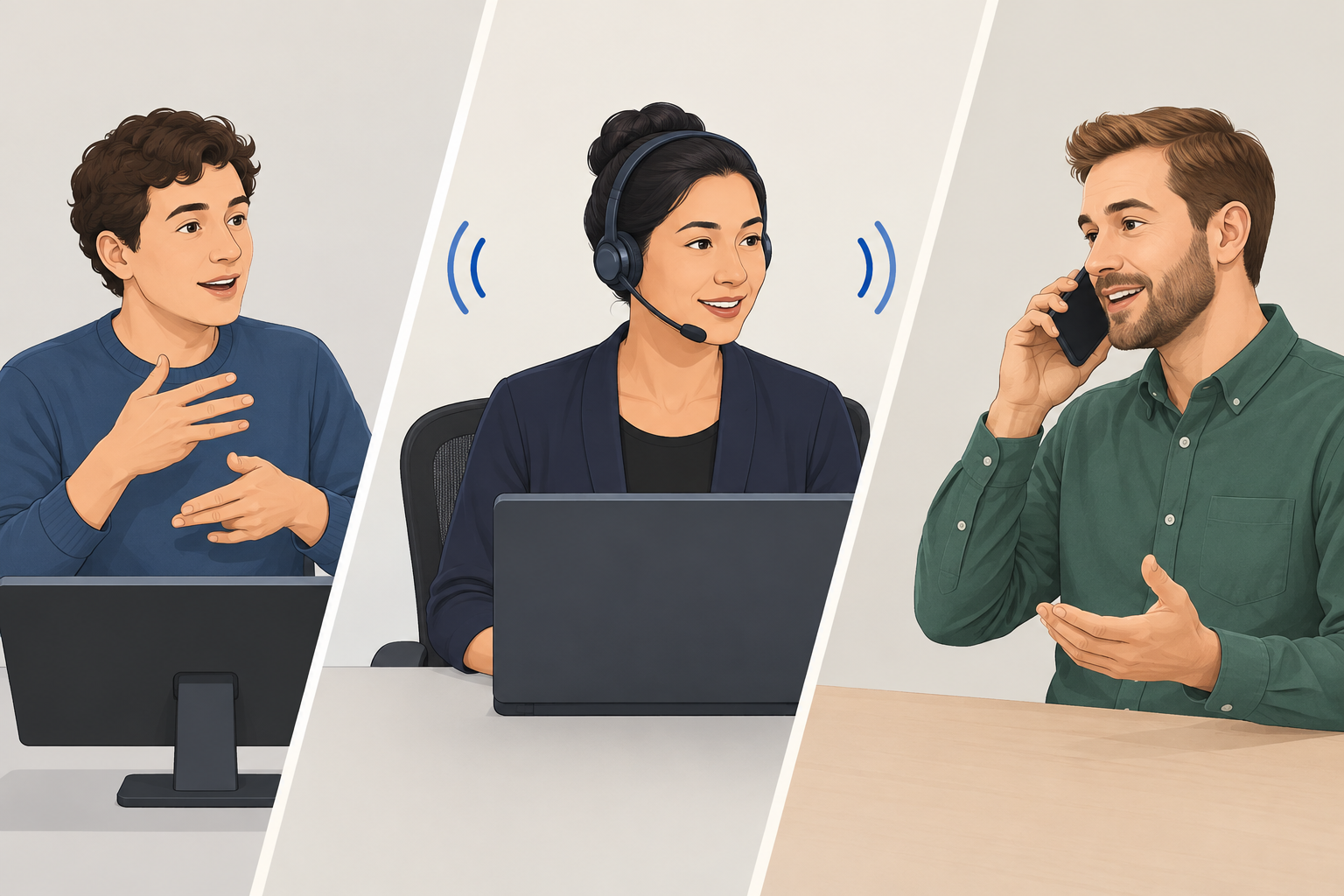
A telecommunications relay service (TRS) lets people who are Deaf, hard of hearing, DeafBlind or who have a speech disability make phone calls through a trained communications assistant. The assistant converts text, captions, speech or sign language into a form the other caller can use. In the United States, relay is free to use, available 24 hours a day, and you can reach traditional relay by dialing 7-1-1.
Last checked: October 29, 2026
What a relay service actually does
A relay service places a person in the middle of the call. That person is a communications assistant (CA), sometimes called an operator, and their job is to pass your words along as accurately as possible.
Here is a basic example. You type, “Hi, I’d like to book a table for two at 7.” The CA reads it aloud to the restaurant. When the host answers, the CA types the reply back to you. The call moves in turns, and many users type “GA” (go ahead) to signal that it’s the other person’s turn.
Title IV of the Americans with Disabilities Act created the nationwide telephone relay services system in 1990. The FCC sets the rules. Interstate and internet-based relay is paid for by a federal fund, and each state runs its own local relay program for calls within the state.
The 8 main types of relay service
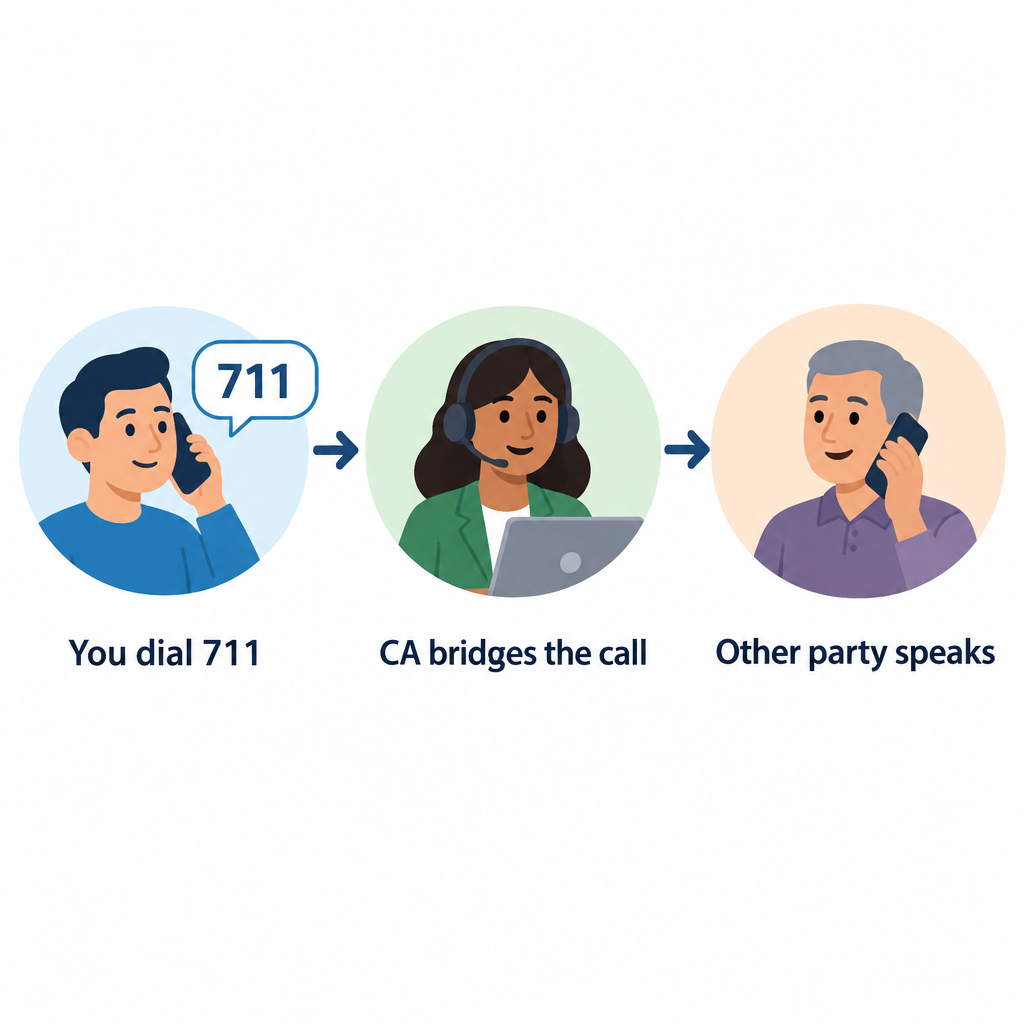
Phone relay service is a family of services. The right one depends on how you hear, speak and prefer to communicate.
| Relay type | How you communicate | Typical equipment |
|---|---|---|
| TTY (text-to-voice) | You type, CA voices and types replies | TTY or computer |
| Voice Carry Over (VCO) | You speak, read the other side’s replies as text | VCO phone or TTY |
| Hearing Carry Over (HCO) | You type, listen to the other person directly | TTY plus listening |
| Speech-to-Speech (STS) | CA repeats your speech clearly for the listener | Any phone |
| Captioned Telephone (CTS) | You talk and listen, read captions of replies | Captioned phone, such as CapTel |
| Internet Protocol Captioned Telephone (IP CTS) | Same as CTS, over the internet | App or captioned phone |
| IP Relay | Text relay through a web browser or app | Computer or smartphone |
| Video Relay Service (VRS) | You sign with an interpreter on video | Videophone, app, or computer |
Federal rules also require interstate relay in Spanish, and many states offer it locally.
Captioned telephone and CapTel
Captioned telephone is the most common choice for people with acquired hearing loss who still speak clearly. You talk normally and hear what you can, while captions of the other person’s words appear on a screen. CapTel is a well-known brand of captioned phone, and IP CTS apps put the same feature on smartphones and tablets. To get IP CTS, you have to certify that you have a hearing loss that makes captions necessary. Free equipment programs usually also ask for a signature from a hearing professional.
Video Relay Service and ASL
VRS connects you by video to a qualified American Sign Language interpreter. You sign, and the interpreter speaks to the hearing party, then signs their reply back to you. For many Deaf people whose first language is ASL, this is far faster and more natural than typing in English. VRS users get a standard ten-digit phone number, so hearing people can call them like anyone else.
How to make a relay call with 7-1-1
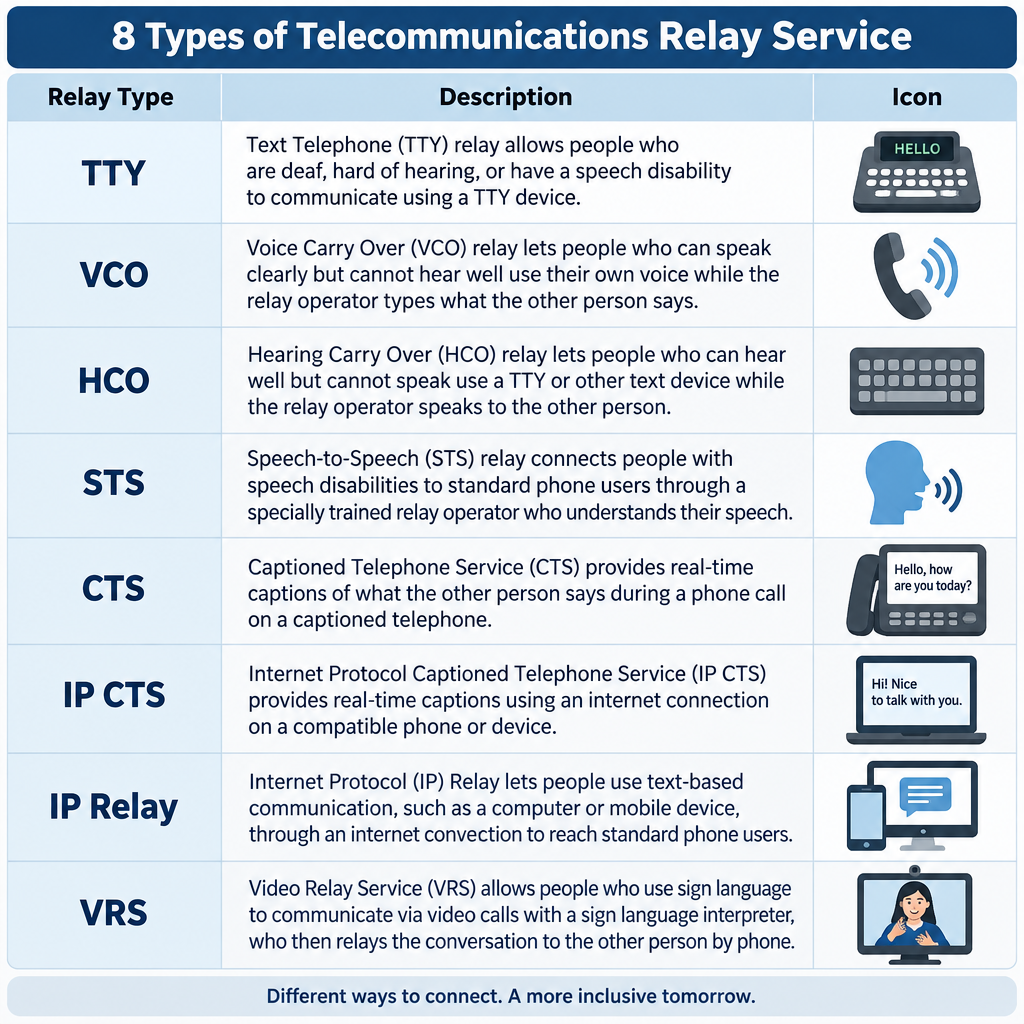
Any hearing person can call a relay user. You do not need special equipment.
Calling through 711
- Dial 711 from any landline or mobile phone in the US.
- Tell the CA you want to place a relay call.
- Give the phone number of the person you’re calling.
- Speak directly to that person, using “you” rather than “tell her.”
- Say “go ahead” when you finish each turn.
- Stay patient during pauses while the CA types or relays.
To reach someone who uses VRS, just dial their ten-digit number. The call routes to an interpreter automatically.
Hearing tip
Don’t hang up when a relay call starts with a short introduction about relay. Legitimate businesses lose real customers this way, especially at reservation desks and doctor’s offices.
Rules that protect relay users
FCC rules give relay callers real protections:
- Confidentiality. CAs cannot share the content of calls or keep records after the call ends.
- Verbatim relay. CAs must pass along everything said, without editing or adding opinions.
- Speed standards. Traditional TRS must answer 85% of calls within 10 seconds, and CAs must type at least 60 words per minute.
- No extra cost. You should never pay more for a relay call than for the same voice call.
- Any call, any purpose. Relay handles calls to banks, doctors and employers, as well as conference calls and long distance numbers.
Emergencies and 911
You can call 911 through VRS, IP Relay and IP CTS, and these services are required to route you to the right emergency center. A direct TTY call to 911, or text-to-911 where your area supports it, is often faster than going through 711.
See a professional
If your hearing drops suddenly in one or both ears, treat it as a medical emergency and get seen the same day. Ongoing changes in hearing are worth an audiologist visit before you choose captioned phone equipment.
Finding your state’s relay program
Each state has its own relay provider, customer care line and often a free equipment distribution program for TTYs, amplified phones and captioned phones. Your state’s commission for the deaf and hard of hearing, or its public utility commission, will list the current provider and how to request equipment.
FAQ
What is a relay service in simple terms?
It’s a phone service where a trained assistant helps two people talk when one of them can’t hear or speak on a standard call. The assistant turns speech into text, captions or sign language and back again.
Is telecommunications relay service free?
Yes. The relay itself costs you nothing, and you pay no more for the call than a hearing person would. VRS and IP CTS apps are free to download, though you need your own internet or data plan.
Can a hearing person use relay to call a Deaf person?
Yes. Dial 711 for text-based relay, or call a VRS user’s ten-digit number directly.
Does the operator listen to my private calls?
The CA does hear or read the call in order to relay it. However, the CA is legally bound to keep it confidential and cannot keep a record of what was said after the call ends.
Can I use relay for work conference calls?
Yes. VRS and captioning services can join conferencing calls. Ask your provider how to add an interpreter or captions before a long meeting so the session isn’t interrupted.