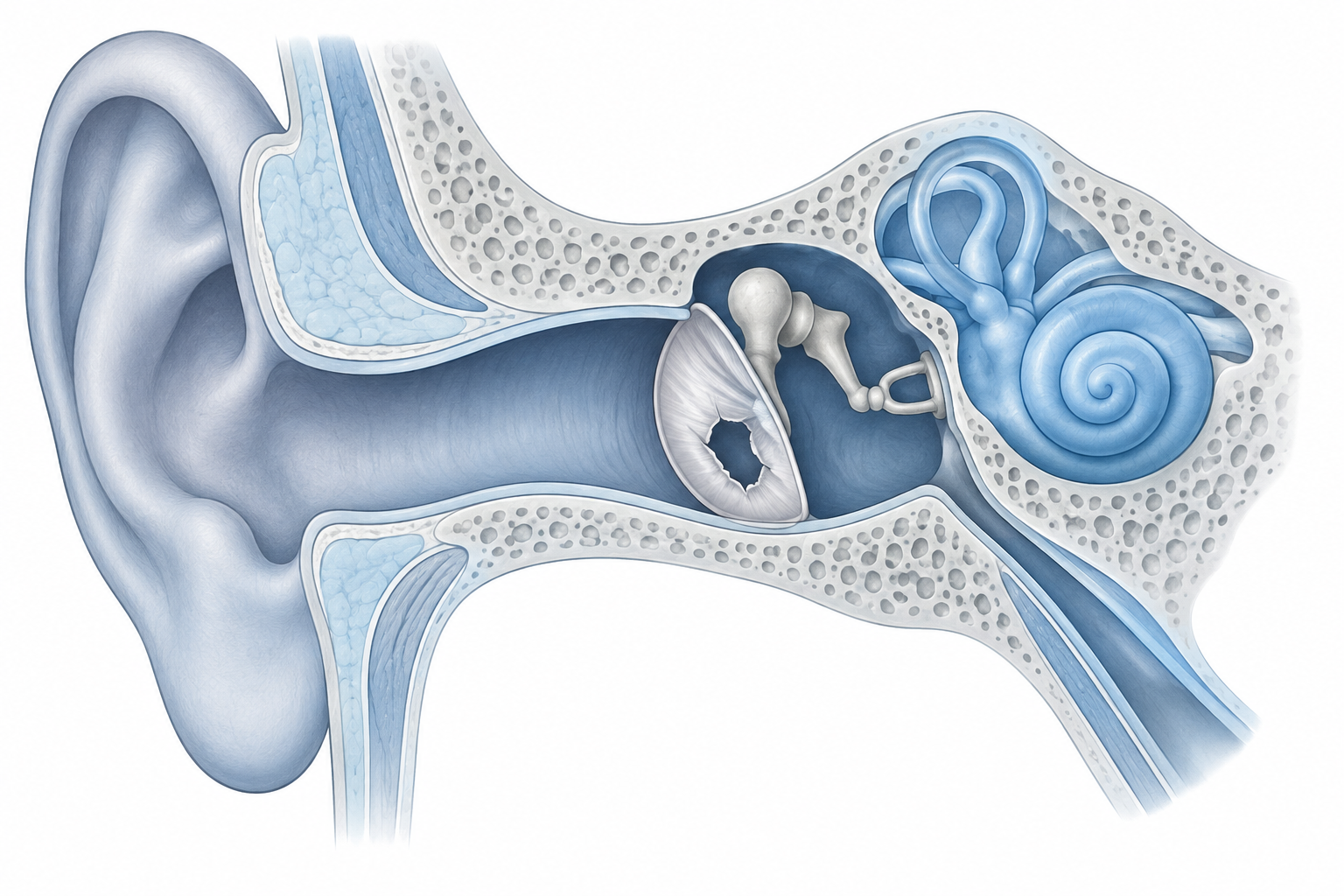
A perforated eardrum is a hole or tear in the thin membrane that separates your ear canal from your middle ear. Most heal on their own within a few weeks to a couple of months, with no lasting hearing loss. Some need a doctor’s help, especially if infection, dizziness or hearing changes don’t settle.
Last updated: October 29, 2026. General information only, not a diagnosis.
What is a perforated eardrum?
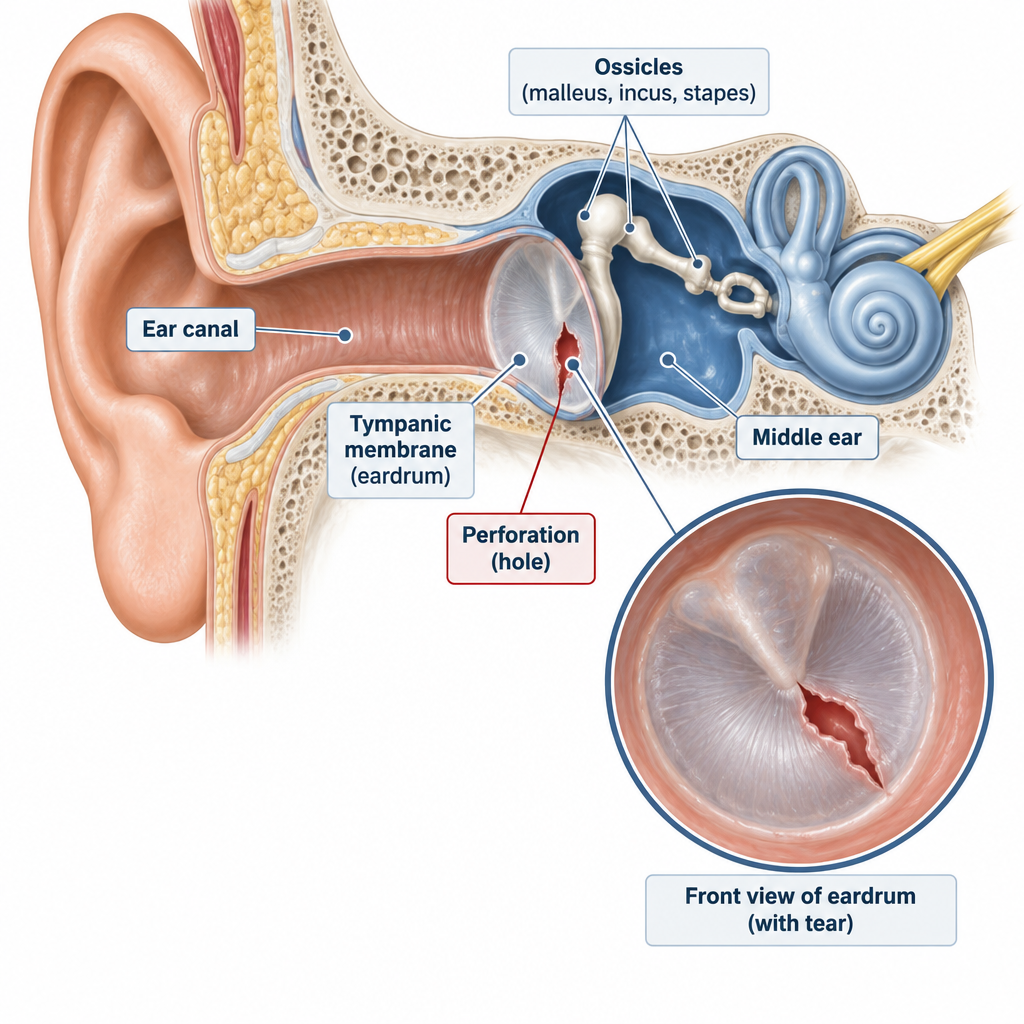
Your eardrum is called the tympanic membrane. It is a small, cone-shaped disc about 8 to 10 millimetres across and roughly a tenth of a millimetre thick. It stretches across the end of the ear canal.
The eardrum has two jobs. When sound waves hit it, it vibrates and passes those vibrations to three tiny bones in the middle ear, which carry them on to the inner ear. It also acts as a barrier, keeping water, bacteria and debris out of the middle ear.
When that membrane gets a hole in it, doctors call it a tympanic membrane perforation, or eardrum perforation. The hole can be a pinprick or it can cover most of the drum. Size and location both affect how quickly it heals and how much your hearing changes.
Ripped, popped, burst or punctured: are they the same thing?
Mostly, yes. People search for the same injury under many names:
- Ruptured or burst eardrum: common when a middle ear infection builds up pressure until the drum splits.
- Punctured eardrum: usually used when an object, such as a cotton swab, pokes through.
- Ripped or torn eardrum: describes a slit-shaped tear, often from a blow or blast.
- Perforated ear: casual shorthand. “Perforated ear meaning” searches are almost always about the eardrum, since the ear itself can’t be perforated.
One term causes real confusion. A “popped” ear often just means the normal click you feel when your Eustachian tube opens and equalises pressure, such as when you yawn on a plane. That is healthy and harmless. A popped eardrum, in the sense of a rupture, usually comes with sharp pain, then fluid or a sudden change in hearing.
Symptoms of a perforated eardrum
Some people notice almost nothing. Others feel it instantly. Typical signs include:
- Ear pain that can be sharp, then ease off suddenly. When an infection causes the rupture, the pain often drops right after the drum gives way because the pressure is released.
- Drainage from the ear. It may be clear, pus-like or tinged with blood.
- Reduced hearing in the affected ear, often described as muffled or blocked.
- Ringing or buzzing (tinnitus).
- Spinning or dizziness (vertigo), sometimes with nausea or vomiting.
- Itching or a feeling of fullness as the drum starts to heal.
The hearing loss from a simple perforation is conductive. Sound isn’t being passed through the middle ear efficiently, but the inner ear is still working. That is why hearing usually recovers once the hole closes.
See a professional
Get same-day care if you have severe dizziness, sudden major hearing loss, a facial droop, or bloody discharge after a head injury. Sudden hearing loss without an obvious cause is a medical emergency.
What causes an eardrum to perforate?
Middle ear infection
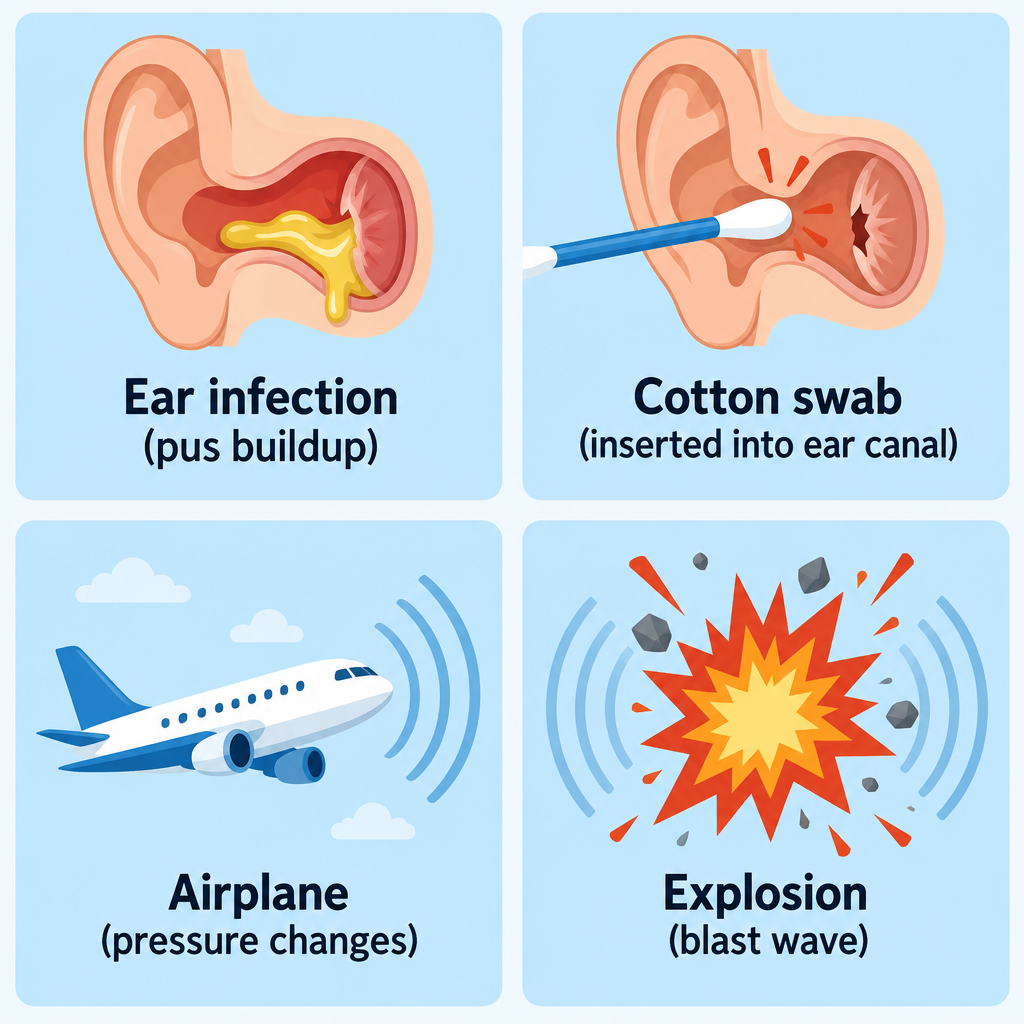
This is the most common cause, especially in children. Fluid and pus build up behind the eardrum during an infection (otitis media). The pressure stretches the membrane until it tears. Many parents first realise what happened when they see crusted discharge on a pillow.
Pressure changes (barotrauma)
Your eardrum needs equal pressure on both sides. Rapid changes can overwhelm it. Common triggers include:
- Descending in a plane, particularly with a cold or blocked nose
- Scuba diving without equalising properly
- Driving down steep mountain roads
- A direct blow that forces air into the canal, such as a slap with an open hand or a fall flat onto water
Loud blasts (acoustic trauma)
An explosion, gunshot or very close firework can tear the eardrum with sound pressure alone. Blast injuries often damage the inner ear too, so the hearing loss may be partly permanent even after the drum heals.
Objects in the ear
Cotton swabs are a classic culprit. So are bobby pins, pen caps and keys used to scratch an itch. Children sometimes push small toys into their ears. In clinics, a small number of perforations also happen during earwax removal, which is one reason you should never try to clean deep inside your own canal.
Head injury
A skull fracture or severe blow to the side of the head can tear the eardrum and damage the middle and inner ear structures. This always needs emergency assessment.
Risk factors
You are more likely to get a perforation if you:
- Have frequent ear infections, or a child who does
- Have Eustachian tube problems from allergies, colds or sinus issues
- Fly or dive often, especially while congested
- Clean your ears with swabs or other objects
- Work around firearms, explosives or very loud equipment without protection
- Play contact sports or water sports where the ear can be struck by water
How a perforated eardrum is diagnosed
You can’t confirm a perforation at home. A GP, urgent care clinician or ear, nose and throat (ENT) specialist will usually:
- Look with an otoscope. This lighted scope lets them see the hole directly, although discharge sometimes has to be cleared first.
- Check for infection. If there is drainage, they may take a sample to identify the bacteria.
- Test your hearing. A tuning fork test can show whether the loss is conductive. An audiologist can run a full hearing test (audiogram) to measure how much you’ve lost and at which pitches.
- Run tympanometry. A small probe changes the air pressure in your canal to measure how the eardrum moves. A perforated drum gives a distinctive reading.
If you have vertigo or the injury came from a blast or head trauma, you may be referred for balance testing or imaging.
Treatment: how a perforated eardrum usually heals
Watchful waiting
Most small perforations close by themselves. The outer skin layer of the eardrum regrows across the gap, a bit like a cut on your hand. Your doctor will usually want to recheck the ear in a few weeks to confirm it has sealed.
Antibiotic ear drops or tablets
If the hole came from an infection, or there’s a risk of one, you may be prescribed antibiotic drops. Use only the drops your clinician prescribes. Some over-the-counter ear drops, and some older prescription drops, are not considered safe to put through an open eardrum because they can reach the inner ear. Oral antibiotics may be added for a bad infection.
Pain relief
Over-the-counter pain relievers such as acetaminophen or ibuprofen usually control the discomfort. A warm, dry cloth held against the outside of the ear can help too.
Eardrum patch
If a perforation isn’t closing, an ENT may place a patch over it in the clinic. They may first irritate the edges of the hole to stimulate growth, then apply a thin patch made of paper or a similar material. It works as scaffolding for new tissue. This sometimes needs to be repeated.
Surgery (tympanoplasty)
Larger holes, or ones still open after about three months, may need surgery. In a tympanoplasty, the surgeon takes a small piece of your own tissue, often from near the ear, and uses it to rebuild the drum. It is usually done as a day procedure. Most people go home the same day, with packing in the ear for a couple of weeks.
Healing timeline
Healing time varies with the cause, the size of the hole and whether infection is present. This is a typical pattern, not a guarantee.
| Stage | What’s usually happening | What you might notice |
|---|---|---|
| First few days | Pain eases, drainage slows | Muffled hearing, possible ringing |
| 1 to 3 weeks | Skin begins growing over small holes | Itching, crackling or popping sounds |
| 3 to 8 weeks | Many small perforations fully close | Hearing gradually improves |
| About 3 months | Remaining holes assessed for repair | Persistent hearing loss or discharge needs follow-up |
Perforations from infection or pressure tend to heal faster than large traumatic or blast injuries. Repeated infections slow everything down.
Looking after your ear while it heals
Keeping water out is the single most useful thing you can do. Water can carry bacteria straight into the middle ear.
Keeping the ear dry
- Coat a cotton ball lightly with petroleum jelly.
- Place it gently in the outer ear before showering or washing your hair.
- Remove it once you’re dry, and never push it into the canal.
- Skip swimming until your doctor confirms the drum has closed.
- Blow your nose gently, one nostril at a time.
Other habits that help:
- Don’t use cotton swabs or put anything in the canal.
- Avoid ear drops unless they were prescribed for this injury.
- Ask your doctor before flying or diving. Flying is often possible, but diving is usually off the table until you’re fully healed.
- Treat colds and allergies promptly so your Eustachian tubes keep working.
Hearing tip
While one ear is muffled, sit with your good ear towards the conversation and turn on closed captioning for TV and video calls. It reduces strain more than turning up the volume.
Complications to know about
Most perforations heal cleanly. Possible complications include:
- Ongoing hearing loss. Usually temporary, but large holes, blast injuries or damage to the middle ear bones can leave a lasting loss.
- Recurring infections. A chronic perforation lets bacteria in and can cause repeated drainage.
- Cholesteatoma. Rarely, skin cells grow into the middle ear and form a cyst that can slowly damage bone. It needs surgery, so persistent smelly discharge or worsening hearing should always be checked.
- Balance problems. Dizziness that lasts may point to inner ear involvement.
Hearing aids and a perforated eardrum
This is an angle most guides skip. If you already wear a hearing aid, ask your doctor before putting it back in a healing ear. A device that seals the canal can trap moisture and raise infection risk.
For people living with a long-term perforation, hearing aids can still work well. An audiologist may choose a vented or open-fit style to let air circulate, and should verify the settings with real ear measurement, since a perforation changes how sound behaves in the canal. Over-the-counter hearing aids are meant for adults with perceived mild to moderate loss and no active ear problems. Ear drainage, pain or a known perforation is a reason to see a professional instead of buying OTC.
Preventing another perforation
You can’t prevent every injury, but you can lower the odds:
- Get ear infections treated, and follow up if symptoms return.
- Avoid flying or diving with a heavy cold. If you must fly, chewing, swallowing and yawning on descent help, and some people find filtered pressure-regulating earplugs useful.
- Stop using swabs. Your ear canal cleans itself.
- Protect your ears around loud noise. Shooting ranges need proper hearing protection. For concerts and noisy venues, musician-style filters or loop earplugs are a reasonable everyday option once your ear has fully healed.
- Wear protective headgear in contact sports.
When to see a doctor
See a doctor whenever you suspect a perforated eardrum. Even mild cases benefit from confirmation, and a clinician can make sure there’s no infection. Seek urgent or emergency care for:
- Sudden, significant hearing loss
- Severe vertigo, vomiting or trouble walking
- Facial weakness
- Fluid from the ear after a head injury
- High fever with ear pain
Book a follow-up if your hearing hasn’t returned, discharge continues, or the ear still feels wrong after six to eight weeks.
FAQ
What is a perforated eardrum in simple terms?
It’s a hole or tear in your eardrum, the thin membrane between your ear canal and middle ear. It can affect hearing and lets germs reach the middle ear until it heals.
How long does a perforated eardrum take to heal?
Small perforations often close within a few weeks. Most heal within about two to three months. If the hole is still open after three months, an ENT may suggest a patch or surgery.
Can you hear with a burst eardrum?
Yes, usually. Hearing tends to be muffled in the affected ear rather than gone. Total or near-total hearing loss, especially after a blast or head injury, needs urgent assessment.
Is a popped eardrum the same as a perforated eardrum?
Sometimes. If “popped” means pain followed by fluid or muffled hearing, it may well be a rupture. If it means the click you feel when pressure equalises, that’s normal and not an injury.
Can I shower with a perforated eardrum?
Yes, but keep water out of the ear. A cotton ball lightly coated with petroleum jelly in the outer ear works for most people. Avoid swimming until a doctor says the drum has closed.
Does a perforated eardrum cause permanent hearing loss?
Usually not. Most people’s hearing returns once the drum heals. Permanent loss is more likely after large tears, blast injuries, repeated infections or damage to the inner ear, which is why a hearing test after healing is worthwhile.