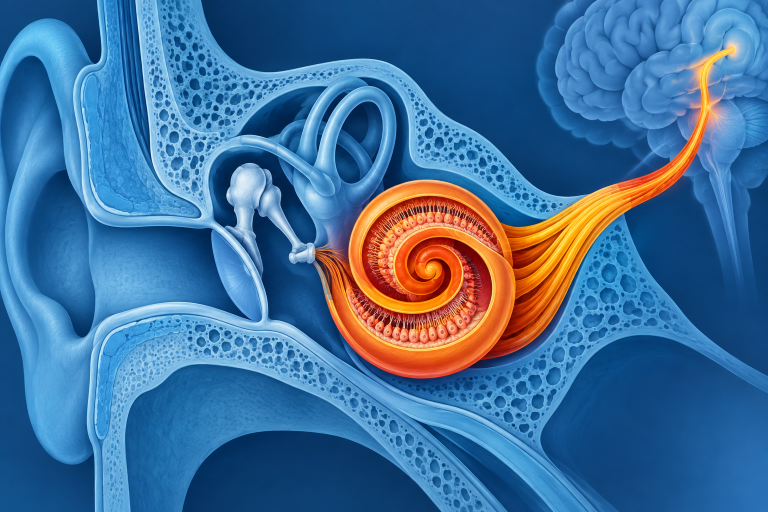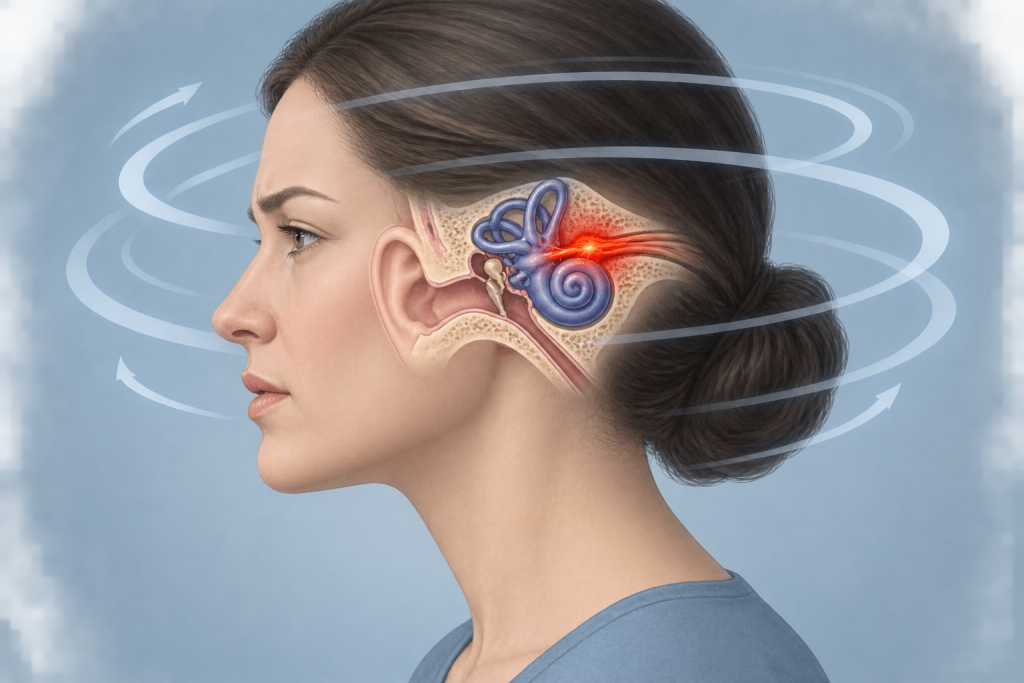
Vestibular neuritis is inflammation of the balance branch of the inner-ear nerve. It causes sudden, constant spinning vertigo that lasts a day or more, while your hearing stays normal. The worst vertigo usually eases within about a week, full recovery takes weeks to months, and vestibular rehabilitation has the strongest evidence of any treatment. A stroke can look almost the same in the first hours, so new vertigo that comes with any neurological symptom needs a 911 call.
Last checked: November 26, 2026.
Worth remembering
- Classic vestibular neuritis does not affect hearing. New hearing loss points to labyrinthitis or another cause.
- Double vision, slurred speech, weakness, numbness or a severe headache with vertigo means you should call 911.
- Anti-vertigo pills such as meclizine should only bridge the first few days. Taken longer, they slow recovery.
- Steroids improve test results in the short term. Long-term symptoms are no better with them.
- If you are still dizzy at 3 months, ask about secondary BPPV, PPPD, migraine and anxiety. These are treatable.
Fact-checked
We checked these key facts against the sources named, on November 26, 2026:
- Recurrent vertigo from any cause, including BPPV, affected about 26% in that study (source: pubmed.ncbi.nlm.nih.gov)
- In Mandalà’s cohort followed for a mean of 4.9 years, 1 of 51 patients (2.0%) had a recurrence (source: pubmed.ncbi.nlm.nih.gov)
- A 131-patient study in Acta Oto-Laryngologica (2011) found recurrent vestibular neuritis in 10.7% (source: pubmed.ncbi.nlm.nih.gov)
- The best-known trial, by Michael Strupp and colleagues in the New England Journal of Medicine in 2004, randomized 141 patients (source: nejm.org)
- It means dizziness or unsteadiness on most days for 3 months or more, worse when you are upright, moving, or in busy visual surroundings (source: neuropt.org)
Is it vestibular neuritis or a stroke? Red flags first

Most sudden constant vertigo turns out to be a problem in the inner ear. A stroke in the back of the brain (posterior circulation stroke) can look almost the same, though, and frontline teams miss it in roughly 35% of cases where dizziness is the main complaint, according to a 2023 review. So the first job is to rule out stroke, and only after that to look at the inner ear.
Call 911 if you have any of these
Call 911 if your vertigo comes with:
- Double vision, or vision loss in part of the visual field
- Slurred speech, trouble swallowing or a drooping face
- Weakness, numbness or clumsiness in an arm or leg
- A sudden, severe or unusual headache or neck pain
- Being unable to sit up or walk at all, even with support
- Sudden hearing loss in one ear along with the vertigo
Your risk is higher if you have high blood pressure, diabetes, high cholesterol, atrial fibrillation, a history of smoking, or a previous stroke or TIA. The absence of risk factors does not rule a stroke out.
Hearing tip
Vertigo with double vision, slurred speech, facial droop, limb weakness or numbness, or a sudden severe headache means a 911 call. Do not wait to see whether it is “just the inner ear.”
What the HINTS exam checks
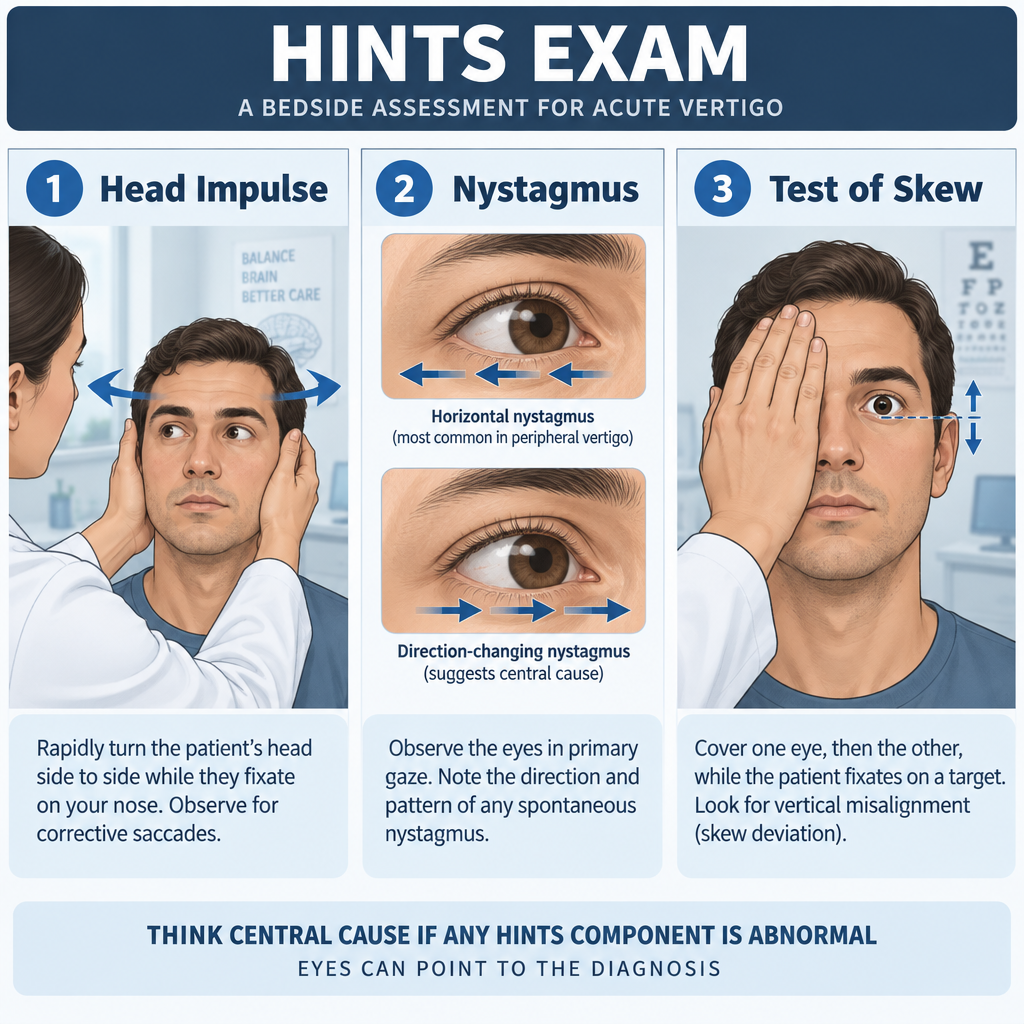
HINTS is a three-part bedside eye exam that trained clinicians use for acute, constant vertigo. Each letter stands for one step:
- Head Impulse. The examiner turns your head quickly while you look at their nose. With inner-ear damage, your eyes slip off target and then flick back with a “catch-up” movement. Oddly, that abnormal result is reassuring. A normal head impulse in someone with constant vertigo raises concern for stroke.
- Nystagmus. This is the jerking eye movement vertigo causes. In vestibular neuritis it beats in one direction. If it changes direction when you look left and then right, the cause is more likely central (in the brain).
- Test of Skew. The examiner covers one eye and then the other, looking for vertical misalignment. Skew deviation points to the brainstem.
A 2013 study in Academic Emergency Medicine found HINTS had 96.5% sensitivity and 84.4% specificity for stroke in acute vestibular syndrome. The ABCD2 risk score (4 or higher) managed only 61.1% and 62.3%. An extended version, often called HINTS plus, adds a bedside hearing check. A stroke in the artery that supplies the inner ear can cause sudden one-sided hearing loss along with the vertigo.
Why an early MRI can be normal in a stroke
Diffusion-weighted MRI is excellent, but in the first 24 to 48 hours it can miss small brainstem and cerebellar strokes. In a 2014 study by Saber Tehrani and colleagues in Neurology, the first MRI was falsely negative in 15 of 105 strokes (14.3%). CT does even worse for this part of the brain.
Did you know?
In a 2009 study in the journal Stroke, led by Jorge Kattah, the three-step HINTS bedside exam was more sensitive than early diffusion-weighted MRI for detecting stroke in people with acute constant vertigo.
Hearing tip
If you are told “the scan was normal, it’s your inner ear,” you can ask whether a HINTS exam was done. A normal CT or early MRI alone does not rule out stroke.
Symptoms: the first days versus the weeks after
The symptoms of vestibular neuritis come in two phases. First come a few days of severe, constant vertigo. Then comes a longer stretch of milder unsteadiness, triggered by movement, while your brain adjusts.
Acute phase (days 1 to 7)
The onset is sudden, often on waking, and the vertigo is continuous rather than coming in bursts. Typical acute symptoms include:
- Spinning or tilting vertigo that is there even when you lie still, and worse when you move your head
- Nausea and vomiting, sometimes severe enough to cause dehydration
- Nystagmus, which other people may see before you notice it
- Veering or falling toward the affected side, so you cannot walk a straight line
- Oscillopsia, where the world seems to bounce when you walk or turn your head
Your hearing should stay normal. Medscape’s clinical review (updated August 2025) notes that most people recover from the severe vertigo and imbalance within a week.
Lingering phase (weeks to months)
Once the spinning stops, many people are surprised by what follows. Common lingering symptoms include:
- Brief dizziness with quick head turns, bending over or rolling in bed
- Unsteadiness in the dark or on uneven ground
- Visual vertigo: feeling off in supermarket aisles, crowds, traffic or while scrolling a screen
- Eye strain and trouble reading or using a computer
- Fatigue, brain fog and poor concentration
- Anxiety, and a constant awareness of your own balance
One reader question comes up often: “I’m on week 4 and left with eye strain and visual dizziness.” That pattern is common at that stage. It is the kind of problem gaze-stabilization and habituation exercises target.
Symptoms that suggest something else
These features do not fit classic vestibular neuritis and should prompt a rethink:
- Hearing loss, tinnitus or ear fullness (labyrinthitis, Ménière’s disease or sudden sensorineural hearing loss)
- Spins lasting under a minute that are triggered only by head position (BPPV)
- Repeated episodes with headache or light sensitivity (vestibular migraine)
- An ear rash, ear pain or facial weakness (Ramsay Hunt syndrome)
- Any of the neurological red flags listed above
What causes vestibular neuritis?
The leading explanation is a viral one. Herpes simplex virus type 1 (HSV-1) lies dormant in the vestibular ganglion and is thought to reactivate, which inflames the vestibular part of the vestibulocochlear nerve (cranial nerve VIII). HSV-1 has been found in human vestibular ganglia, but researchers still lack final proof that it causes the disease. Many people report a cold, flu or other viral illness in the week or two before onset. Other viruses mentioned in the literature include influenza, Epstein-Barr virus and COVID-19.
Two other theories have support. One is microvascular ischemia, meaning reduced blood flow to the nerve or labyrinth. The other is immune-mediated inflammation. These may explain some cases with no viral history. The Bárány Society’s 2022 consensus criteria, published in the Journal of Vestibular Research, use the neutral name acute unilateral vestibulopathy (AUVP) because the cause cannot be confirmed in the individual patient. You may also see the older term vestibular neuronitis.
Is vestibular neuritis contagious?
No. The condition itself does not spread from person to person. A cold that came before it can be contagious, but the nerve inflammation is an internal reaction, often to a virus you have carried for years.
Superior, inferior and total vestibular neuritis
The vestibular nerve has two divisions, and they serve different parts of the inner ear:
| Subtype | Parts of the inner ear affected | How common | Practical note |
|---|---|---|---|
| Superior | Horizontal and anterior canals, utricle | Most common form (Medscape) | Shows up clearly on the head impulse test and caloric testing |
| Inferior | Posterior canal, saccule | Rare | Can be missed by caloric testing; vHIT and cervical VEMP help |
| Total (both divisions) | All of the above | Combined involvement is reported in a substantial share of cases | Often a slower recovery |
The subtype matters because a standard caloric test only checks the horizontal canal. Inferior vestibular neuritis can produce a normal caloric result even though the nerve is damaged.
Vestibular neuritis vs labyrinthitis vs BPPV vs Ménière’s vs vestibular migraine
Three things usually separate these conditions: your hearing, how long each spell lasts, and what sets it off. Vestibular neuritis and labyrinthitis share the same days-long vertigo. The difference is that labyrinthitis also affects hearing.
| Condition | How vertigo starts and lasts | Hearing affected? | Triggered by head position? | Other clues | Urgency |
|---|---|---|---|---|---|
| Vestibular neuritis | Sudden, constant, 24+ hours, eases over days | No | Worse with movement, present at rest | Recent cold, one-direction nystagmus, abnormal head impulse | Same-day medical assessment |
| Labyrinthitis | Same as vestibular neuritis | Yes: one-sided loss and/or tinnitus | Worse with movement | Ear fullness, possible recent infection | Same-day; sudden hearing loss is time-sensitive |
| BPPV | Brief spins, usually under a minute | No | Yes: rolling over, looking up, lying down | Repeated short attacks, positive Dix-Hallpike test | Routine; treated with repositioning |
| Posterior circulation stroke | Sudden, constant, can mimic neuritis | Usually no; sudden loss possible | No | Double vision, slurred speech, weakness, skew, normal head impulse | Call 911 |
| Ménière’s disease | Attacks of 20 minutes to 12 hours, recurring | Yes: fluctuating, low-pitch at first | No | Ear fullness, roaring tinnitus | Prompt ENT and audiology review |
| Vestibular migraine | Episodes of minutes to 72 hours, recurring | Usually not | Sometimes motion-sensitive | Migraine history, light or sound sensitivity | Routine neurology review |
How it’s diagnosed: the tests explained
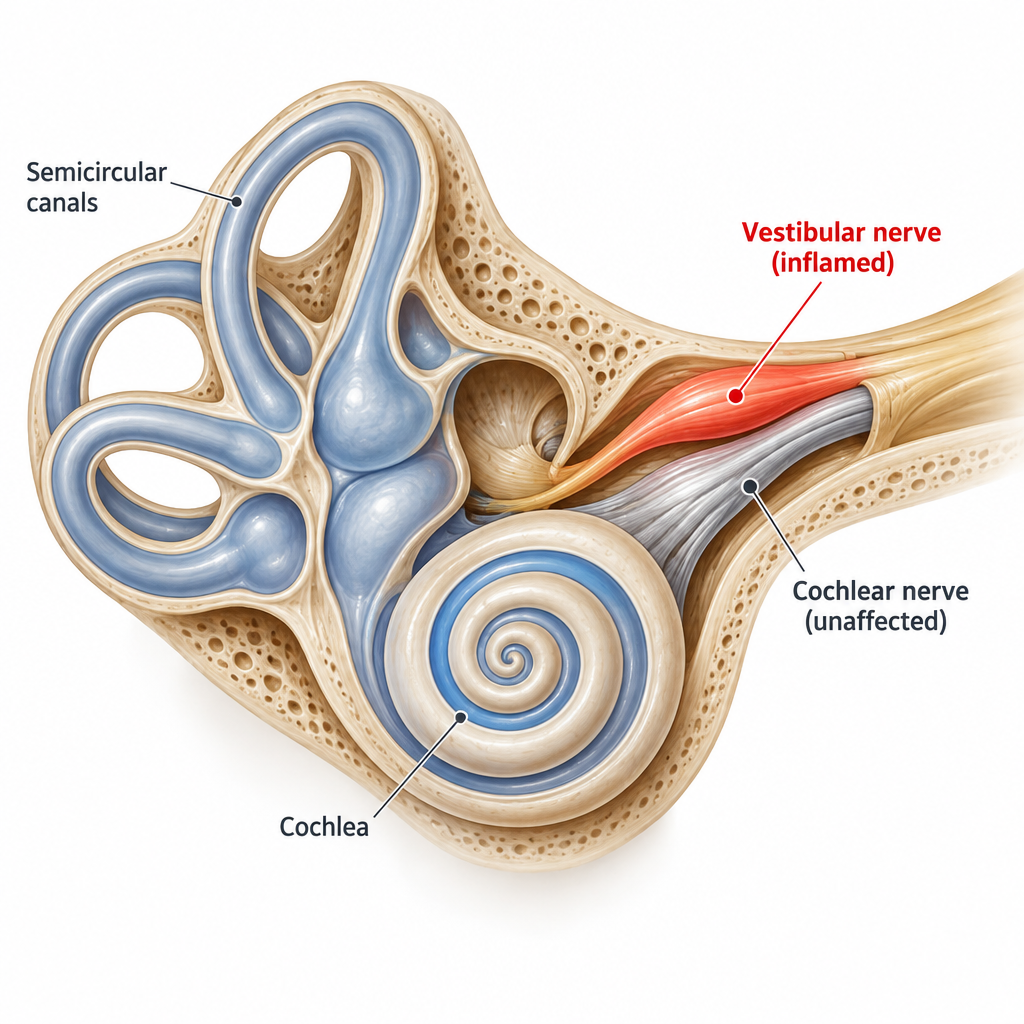

Diagnosis rests mainly on your history and a bedside exam, and lab tests confirm and measure the damage. The Bárány Society criteria, in plain English: vertigo that comes on fast and lasts at least 24 hours, signs of reduced function in one inner ear, no new hearing or ear symptoms, and no brain-type eye signs such as skew deviation or gaze-evoked nystagmus. If your vertigo lasted 24 hours or more and then slowly faded, the criteria allow a diagnosis of “history of AUVP” even after the fact.
Bedside exam
The HINTS steps come first. The clinician may also check your gait, have you stand with your eyes closed, and look at your eyes with or without special goggles. Goggles stop you fixing your gaze, which makes nystagmus easier to see.
Hearing test
An audiogram is the hearing test that separates vestibular neuritis from labyrinthitis and Ménière’s disease. You sit in a sound booth and respond to tones and words. A normal result fits vestibular neuritis. A new one-sided sensorineural loss changes the diagnosis and the urgency.
Balance lab tests
| Test | What it measures | What it feels like | Typical vestibular neuritis result |
|---|---|---|---|
| Video head impulse test (vHIT) | Eye response to fast head turns, one canal at a time | Lightweight goggles, small quick head turns | Low gain and catch-up saccades on the affected side |
| Videonystagmography (VNG) with caloric test | Nystagmus and each ear’s horizontal canal response | Warm and cool air or water in each ear canal; brief vertigo | Reduced response on one side (canal paresis) |
| VEMP (cervical and ocular) | Saccule and inferior nerve (cervical); utricle and superior nerve (ocular) | Clicks or tones through earphones while you tense neck or eye muscles | Ocular VEMP often reduced in superior neuritis |
| Rotary chair | Inner-ear response across rotation speeds; tracks compensation | Sitting in a slowly turning chair in the dark | Asymmetry that often lessens as you compensate |
| Posturography | How you use vision, feet and inner ear to balance | Standing on a moving platform in a safety harness | Shows reliance on vision or feet; guides rehab |
A typical early pattern is an abnormal vHIT or caloric test with a normal audiogram. Initial bedside testing can also help predict incomplete recovery, according to work by Mandalà and colleagues cited in the Medscape review.
Imaging
MRI of the brain, ideally with diffusion-weighted sequences, is used when the exam shows central signs, when you have stroke risk factors with an atypical picture, or when there is hearing loss. Vestibular neuritis itself usually leaves no visible mark on a scan. If your brain MRI was normal and you are still dizzy at 5 months, as one common reader question puts it, that result is reassuring about the brain. It does not explain the dizziness, and the causes in the section on lingering dizziness below are the next things to check.
Treatment: what works, what’s debated
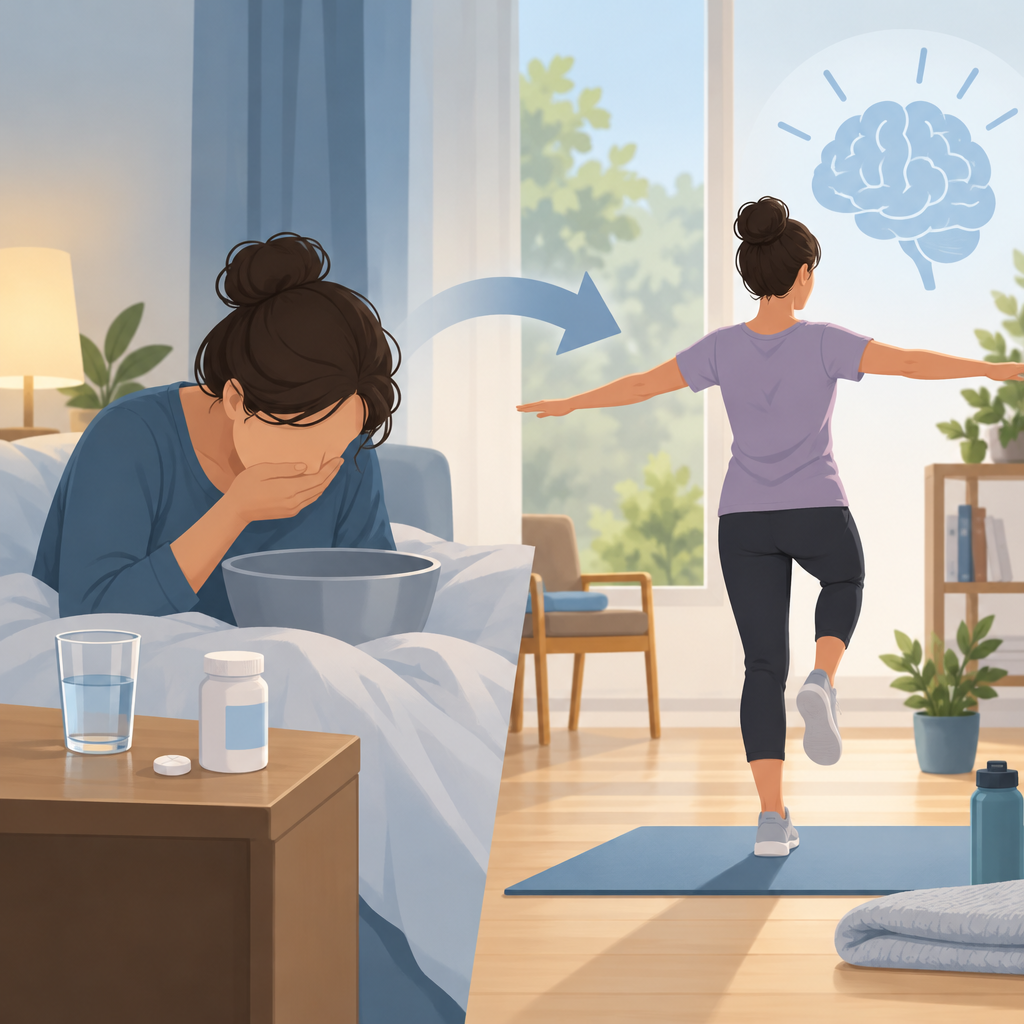
Treatment has two goals: get you through the acute days safely, then help your brain compensate. Medicines help briefly. Movement and rehabilitation do most of the long-term work.
| Treatment | Purpose | When and how long | What the evidence shows | Source |
|---|---|---|---|---|
| Antiemetics, e.g. ondansetron (Zofran) | Control vomiting, prevent dehydration | First few days | Symptom relief only | StatPearls, NHS |
| Vestibular suppressants, e.g. meclizine (Antivert), benzodiazepines | Dampen severe vertigo | A few days at most | Longer use can delay compensation | Johns Hopkins Medicine, NHS |
| Corticosteroids, e.g. methylprednisolone | Reduce nerve inflammation | Early, if used at all | Better short-term canal recovery; no clear long-term symptom benefit | Leong 2021 meta-analysis; 2022 systematic review |
| Antivirals, e.g. valacyclovir | Target herpes viruses | May be considered if zoster or Ramsay Hunt is suspected | No benefit for typical vestibular neuritis | Strupp et al., NEJM 2004 |
| Vestibular rehabilitation | Drive central compensation | Start early, usually for weeks | Strong evidence; recommended by guideline | ANPT/APTA CPG 2022 |
Short-term symptom medicines (and why to stop them early)
Meclizine, dimenhydrinate, promethazine and benzodiazepines such as diazepam calm the vestibular system. That helps on day one. The trouble is that your brain recovers by noticing the mismatch between your two inner ears and recalibrating, and these drugs blunt the very signal it needs. Johns Hopkins Medicine advises against taking them for more than several days after onset. NHS guidance gives a limit of up to 3 days for antihistamine or motion-sickness tablets.
Did you know?
According to Johns Hopkins Medicine, anti-nausea and anti-vertigo medicines taken for more than several days can delay recovery, because they slow the brain’s natural compensation for the damaged nerve.
Hearing tip
Treat meclizine, benzodiazepines and other vestibular suppressants as a bridge for a few days only. When you are prescribed one, ask exactly when you should stop.
Do steroids help?
Steroids help the test results more than they help how you feel later. The best-known trial, by Michael Strupp and colleagues in the New England Journal of Medicine in 2004, randomized 141 patients. At 12 months, vestibular function had improved by 62.4 percentage points with methylprednisolone, against 39.6 with placebo. Later pooled analyses tempered that result. A 2021 meta-analysis by Leong and colleagues in Otolaryngology-Head and Neck Surgery found short-term improvement in canal paresis but no long-term benefit in canal function or symptom recovery. A 2022 systematic review of 4 randomized trials (182 patients) found steroids beat rehab on canal paresis at one month, with no long-term difference. Its authors judged the evidence insufficient to support routine use.
A network meta-analysis presented to the American Academy of Neurology adds a useful detail. Rehab alone had a significant effect, and steroids plus rehab did better than steroids alone. Steroids also carry risks, especially if you have diabetes, an infection, stomach ulcers or mood problems, so the decision belongs with your doctor.
Antivirals: when they are and aren’t used
Even though HSV-1 is the leading suspect, the 2004 NEJM trial found valacyclovir gave no benefit, alone or added to steroids. Antivirals may be considered for suspected herpes zoster oticus (Ramsay Hunt syndrome). In that condition, varicella-zoster virus causes ear pain, a rash in or around the ear, facial weakness and often hearing loss alongside the vertigo.
Vestibular rehabilitation: the treatment with the strongest evidence
Vestibular rehabilitation therapy (VRT) is a structured exercise program, usually run by a physical therapist with vestibular training. The 2022 clinical practice guideline from the Academy of Neurologic Physical Therapy (ANPT) of the American Physical Therapy Association (APTA) recommends, based on strong evidence, that clinicians offer it to adults with unilateral vestibular hypofunction.
Exercises a therapist will likely give you
- Gaze stabilization (VOR x1). You hold a letter or a small target at arm’s length and turn your head side to side, then up and down, while keeping the target sharp. This retrains the reflex that steadies your eyes when your head moves, and it addresses oscillopsia and visual blur.
- Habituation. You repeat the specific movements or visual scenes that provoke mild dizziness, such as busy patterns or quick turns, so your brain gets used to them.
- Balance and gait training. This means standing with feet together, then heel-to-toe, then on foam or with eyes closed, and walking while turning your head.
- Walking. A daily walk, gradually longer and in busier places, may be the simplest exercise on the list.
Your therapist sets the speed, the distance and when to progress. This is also where a therapist earns their keep, because doing the exercises too fast or too slow both hold you back.
How much and how often
For chronic unilateral hypofunction, the ANPT/APTA guideline suggests gaze-stabilization exercises 3 to 5 times a day, adding up to at least 20 minutes daily, for 4 to 6 weeks. Acute and subacute cases often need a shorter program, but guidelines give each person their own plan, not a universal timetable.
Exercises should bring on mild, short-lived symptoms that settle within minutes. One reader worry, “I had a setback after physio and feel back to square one,” usually reflects a session pitched too hard. It does not mean new damage. Tell your therapist, who can scale the dose back.
Why moving early speeds recovery
Your brain cannot recalibrate to signals it never receives. Staying in bed or keeping your head still keeps the mismatch alive. A 2023 single-center study in Frontiers in Neurology found early vestibular rehabilitation was linked to lower rates of persistent postural-perceptual dizziness (PPPD), and longer delays to diagnosis were linked to more severe PPPD.
First-week steps
- Rule out stroke: get same-day medical assessment for new constant vertigo.
- Sip fluids often; take antiemetics only as prescribed.
- Ask when to stop any vertigo suppressant, ideally within a few days.
- Once vomiting settles, sit up, then stand and walk with support daily.
- Ask for a vestibular physical therapy referral now, not in a month.
Recovery timeline: how long does vestibular neuritis last?
The severe vertigo usually settles within a week. The NHS says most people regain their balance over 2 to 6 weeks, though it can take longer, and NHS Lanarkshire’s vestibular physiotherapy service cites an average of about 8 weeks for the system to readjust. Many people do recover without specialist treatment, because the brain compensates. Rehab tends to make that recovery faster and more complete.
| Stage | Typical timing | What’s normal | What to do | Warning signs |
|---|---|---|---|---|
| Onset | Hours 0 to 24 | Severe constant spinning, vomiting, nystagmus, cannot walk straight | Get assessed the same day; rule out stroke | Any neurological red flag, sudden hearing loss |
| Acute | Days 1 to 7 | Spinning fades; strong unsteadiness, fatigue | Fluids, short-term meds, start walking with support | Worsening after day 3, new symptoms |
| Early compensation | Weeks 1 to 6 | Dizziness with quick head turns, visual vertigo, eye strain, brain fog | Vestibular rehab; gradual return to activity | Brief positional spins (possible BPPV) |
| Late compensation | Weeks 6 to 12 | Most daily life back; off days when tired or in busy places | Keep exercising; build up harder environments | Dizziness most days with no improvement |
| Persistent | 3 months and beyond | Some people have residual symptoms | Re-evaluation for BPPV, PPPD, migraine, anxiety | Daily dizziness, avoidance of activities |
So is it normal to be “10 weeks in and still dizzy most of the time”? Some residual symptoms at 10 weeks are within the range the NHS describes. Dizziness most of the time at that point is a reason to get re-evaluated, though. Waiting it out is the wrong move, because the most common causes at that stage can be treated.
Still dizzy after 3 months? Common reasons

Lasting dizziness is often not about the nerve at all. A prospective study by Cousins and colleagues found that long-term dizziness after vestibular neuritis was predicted by migraine, BPPV, visual dependence and anxiety, more than by how much inner-ear function came back. That explains how one person with a badly damaged nerve can feel fine while another with good test results feels dizzy every day.
Did you know?
A prospective study by Cousins and colleagues found that whether people were still dizzy long after vestibular neuritis depended more on migraine, anxiety, visual dependence and BPPV than on how much inner-ear function returned.
Secondary BPPV after vestibular neuritis
Inflammation can loosen the tiny calcium crystals in the inner ear, which then drift into a canal and cause short positional spins. Spins when you roll over in bed, months after the neuritis, should make you think of BPPV. In a follow-up averaging 4.9 years, Mandalà and colleagues (2010) found secondary BPPV was a common outcome, mainly in people who had not fully recovered. It was also harder to treat than ordinary BPPV. Ask for a Dix-Hallpike test and repositioning maneuvers.
PPPD (persistent postural-perceptual dizziness)
PPPD is a functional disorder of how the brain processes balance, as defined by the Bárány Society. It means dizziness or unsteadiness on most days for 3 months or more, worse when you are upright, moving, or in busy visual surroundings. Reported rates after vestibular neuritis vary widely between studies. Early warning signs include symptoms that worsen with posture, motion or visual stimuli at first presentation, plus high anxiety and body vigilance. Treatment usually combines tailored vestibular rehab, cognitive behavioral therapy and sometimes SSRI or SNRI medication. If you have been dizzy and foggy for 5 months with a normal MRI, PPPD is one of the first things to ask about.
Migraine, anxiety and visual dependence
Vestibular neuritis can unmask vestibular migraine, especially if you have a personal or family history of migraine. Anxiety is a natural response to sudden vertigo, and it keeps the balance system on high alert. Visual dependence means leaning on your eyes for balance, which makes supermarkets and screens hard. Each has its own approach: migraine management, psychological therapy and targeted habituation exercises.
Can it become a lifelong chronic condition? In a minority of people symptoms persist for many months or even years, as the NHS notes. Even then, the drivers above can be treated. Recovery stories online, including “How I cured my vestibular neuritis,” usually describe compensation plus persistent rehab. No single product or protocol cures it.
Hearing tip
Ask for a vestibular physical therapist referral early rather than waiting weeks. Delays to diagnosis and the lack of structured rehab are linked to PPPD.
Can vestibular neuritis come back?
A true second episode is uncommon. In Mandalà’s cohort followed for a mean of 4.9 years, 1 of 51 patients (2.0%) had a recurrence. A 131-patient study in Acta Oto-Laryngologica (2011) found recurrent vestibular neuritis in 10.7%. Recurrent vertigo from any cause, including BPPV, affected about 26% in that study.
A second episode, especially on the other side, should prompt a fresh stroke check. It is also a reason to review Ménière’s disease, vestibular migraine and autoimmune inner-ear disease with a specialist.
Hearing and vestibular neuritis
Classic vestibular neuritis spares hearing, because the inflammation involves the balance branch of cranial nerve VIII and not the hearing branch. The Bárány criteria exclude anyone with new audiologic or otologic signs. Your audiogram is therefore part of the diagnosis.
When dizziness comes with hearing loss
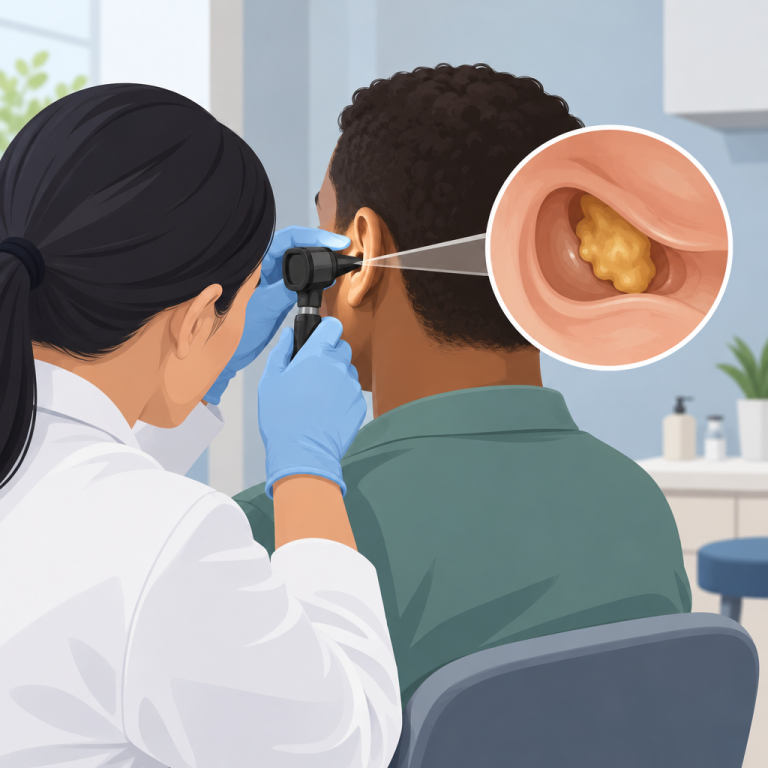
New one-sided hearing loss, tinnitus or ear fullness with vertigo changes both the diagnosis and the urgency. Possible causes include labyrinthitis, sudden sensorineural hearing loss, Ménière’s disease, Ramsay Hunt syndrome and, rarely, a stroke affecting the inner ear’s blood supply. Sudden hearing loss is a medical emergency, because the window for treatment is short. An audiologist or ENT will also look in the ear canal, since something as simple as ear wax can cause fullness and muffled sound.
See a professional
Get same-day care for vertigo with sudden hearing loss in one ear. Call 911 for vertigo with any stroke sign.
If hearing doesn’t come back
Permanent loss after labyrinthitis is a form of sensorineural deafness, so it involves the inner ear or nerve, not the ear canal or middle ear. An audiologist can measure it and talk you through options. These include a hearing aid, a CROS system that routes sound from the poorer ear to the better one, and, for some people with severe one-sided loss, a cochlear implant evaluation. If tinnitus lingers, sound at bedtime, such as a white noise maker for tinnitus, can make it less intrusive.
Living with it: work, driving, screens and exercise
You return to daily life gradually, guided by your symptoms and your clinician. No fixed date applies to everyone.
- Driving. Do not drive while you have constant vertigo, while head turns still blur your vision, or while you are taking sedating medicines such as meclizine or benzodiazepines. Ask your clinician when it is safe, and check your state’s rules.
- Work. Desk work often becomes possible before jobs involving heights, ladders, machinery or driving. A phased return with screen breaks helps many people.
- Screens. Larger text, lower brightness, less scrolling and regular breaks ease eye strain. Turning on captions also cuts the effort of following video when concentration is poor.
- Exercise. Walking daily is the foundation. Add cycling on a stationary bike, then sports with head movement, as your therapist advises.
- Flying. This is mostly a comfort question. Crowded terminals, moving walkways and turbulence are the busy motion and visual input that stirs up symptoms during compensation.
When to see a doctor
Call 911 for vertigo with any stroke sign, or if you cannot walk at all. Get same-day care for any new, constant vertigo, for vertigo with sudden hearing loss, or for vomiting that stops you keeping fluids down. Book a follow-up if you are not steadily improving after a week. Ask for re-evaluation if you are still dizzy most days at 6 to 12 weeks. This guide gives general information and cannot diagnose your symptoms.
FAQ
What is the cause of vestibular neuritis?
The leading theory is reactivation of herpes simplex virus type 1 in the vestibular ganglion, often after a cold or flu. Reduced blood flow and immune inflammation are other possibilities. In any single person the cause usually stays unconfirmed.
Does vestibular neuritis go away on its own?
For most people, yes. The severe vertigo eases within about a week, and the brain compensates over weeks. Vestibular rehabilitation makes that recovery faster and more complete, and some people need it to recover fully.
How do you treat vestibular neuritis?
Short-term antiemetics and suppressants for a few days, possibly steroids early on, then vestibular rehabilitation. Antivirals may be considered if Ramsay Hunt syndrome is suspected.
What are the symptoms of vestibular imbalance?
Vertigo, unsteadiness, veering when you walk, blurred or bouncing vision with head movement, nausea, motion sensitivity, fatigue and difficulty in busy visual surroundings.
How long does vestibular neuritis last?
The severe phase usually lasts days. The NHS says balance typically returns over 2 to 6 weeks, though it can take longer, and a minority have symptoms for months.
What is the difference between vestibular neuritis and labyrinthitis?
Hearing. Vestibular neuritis affects balance only. Labyrinthitis also causes hearing loss or tinnitus, because it involves the inner ear’s hearing structures.
How is vestibular neuritis different from BPPV?
Vestibular neuritis causes constant vertigo lasting a day or more. BPPV causes spins that usually last under a minute and are set off by changes in head position. BPPV can also develop after vestibular neuritis.
What test confirms vestibular neuritis?
No single test confirms it. Diagnosis combines a bedside exam (including HINTS), a normal audiogram, and lab tests such as vHIT or caloric testing that show reduced function on one side.
Can vestibular neuritis cause hearing loss or tinnitus?
Classic vestibular neuritis does not. If hearing loss or tinnitus appears with the vertigo, the diagnosis is more likely labyrinthitis or another condition, and you need prompt assessment with an audiogram.
Is vestibular neuritis contagious?
No. A cold that came before it may spread, but the nerve inflammation itself cannot be passed on.
The next step that matters most
How fast you recover depends less on how badly the nerve was hit and more on what you do in the first weeks. That means ruling out stroke early, stopping suppressants within days, moving every day and starting rehab soon. If you are past the acute days and still struggling, ask for a vestibular physical therapist and a check for BPPV, PPPD and migraine.
About this article
- Fact-checked by Lorraine Ostrowski against the sources listed below before publication.
- Published
Sources (8)
- Vestibular Neuritis: Background, Epidemiology (Medscape) (emedicine.medscape.com)
- Vestibular Neuritis: Symptoms, Causes & Treatment (Cleveland Clinic) (my.clevelandclinic.org)
- Acute unilateral vestibulopathy/vestibular neuritis: Diagnostic criteria (Bárány Society, J Vestib Res 2022) (pmc.ncbi.nlm.nih.gov)
- HINTS vs ABCD2 in acute vestibular syndrome (Academic Emergency Medicine 2013) (deepblue.lib.umich.edu)
- HINTS to diagnose stroke in the acute vestibular syndrome (Stroke 2009) (pubmed.ncbi.nlm.nih.gov)
- Review on misdiagnosis of posterior circulation stroke presenting with dizziness (2023) (mdpi.com)
- Corticosteroids in vestibular neuritis meta-analysis (Leong et al., 2021) (pubmed.ncbi.nlm.nih.gov)
- Systematic review of corticosteroids vs vestibular rehabilitation in vestibular neuritis (2022) (ncbi.nlm.nih.gov)