Blog

  • OTC hearing aid prices in October 2026: deals and price drops

    OTC hearing aid prices in October 2026: deals and price drops

    We checked OTC hearing aid prices on October 30, 2026 for Jabra Enhance, Sennheiser, Apple, Lexie, Eargo, Sony, ELEHEAR, MDHearing and Audien. This month’s best deal is the AirPods Pro 3 at Amazon. Sony’s discontinued models are almost gone, and Jabra’s newer M series now heads its lineup. Each row shows the list price, the lowest credible price we found, where it was listed and when, followed by advice on when a lower price is worth taking.

    Last checkedOctober 30, 2026
    Price rangeAbout $98 to $2,950
    Biggest dropAirPods Pro 3, $199
    Top pickSennheiser All-Day Clear

    What changed in October 2026

    Four changes matter if you’re shopping now.

    • AirPods Pro 3 went back to $199 at Amazon. Amazon had been offering AirPods Pro 3 for approximately $198 last week before increasing the price toward Apple’s regular $249 MSRP on October 26, then the discount was restored on October 27. Amazon previously offered AirPods Pro 3 for $179 during its October Prime Day event, so $199 is good but not the lowest price yet.
    • Sony stock has nearly run out. In April 2026, HearingTracker reported that Sony OTC hearing aids are being discontinued and will no longer be listed on the Sony website. One of the last discounted listings is gone: Soundly listed the CRE-E10 at $698 and marked it sold out in October 2026.
    • The M series now leads Jabra Enhance’s lineup. Jabra Enhance’s current lineup includes the Select M1 ($1,195 per pair), Select M2 ($1,695 per pair), and Select M3 ($1,995 per pair). The older Select 500 is still sold at some retailers, and in at least one case it’s marked as clearance.
    • Lexie’s status is unclear. A comparison site says Lexie Hearing has gone out of business and the B2 Plus is no longer available. We could not confirm this with Lexie, and other review sites updated in the past two months still list Lexie prices. Treat it as unconfirmed, and check the company is still trading before you pay.

    October 2026 OTC hearing aid price table

    All prices are for a pair in US dollars. “Price seen” means the lowest price we could tie to an official store or a major retailer. The date shows when that price was reported. If no date was available, the table says so.

    Device List price Price seen Where Date reported
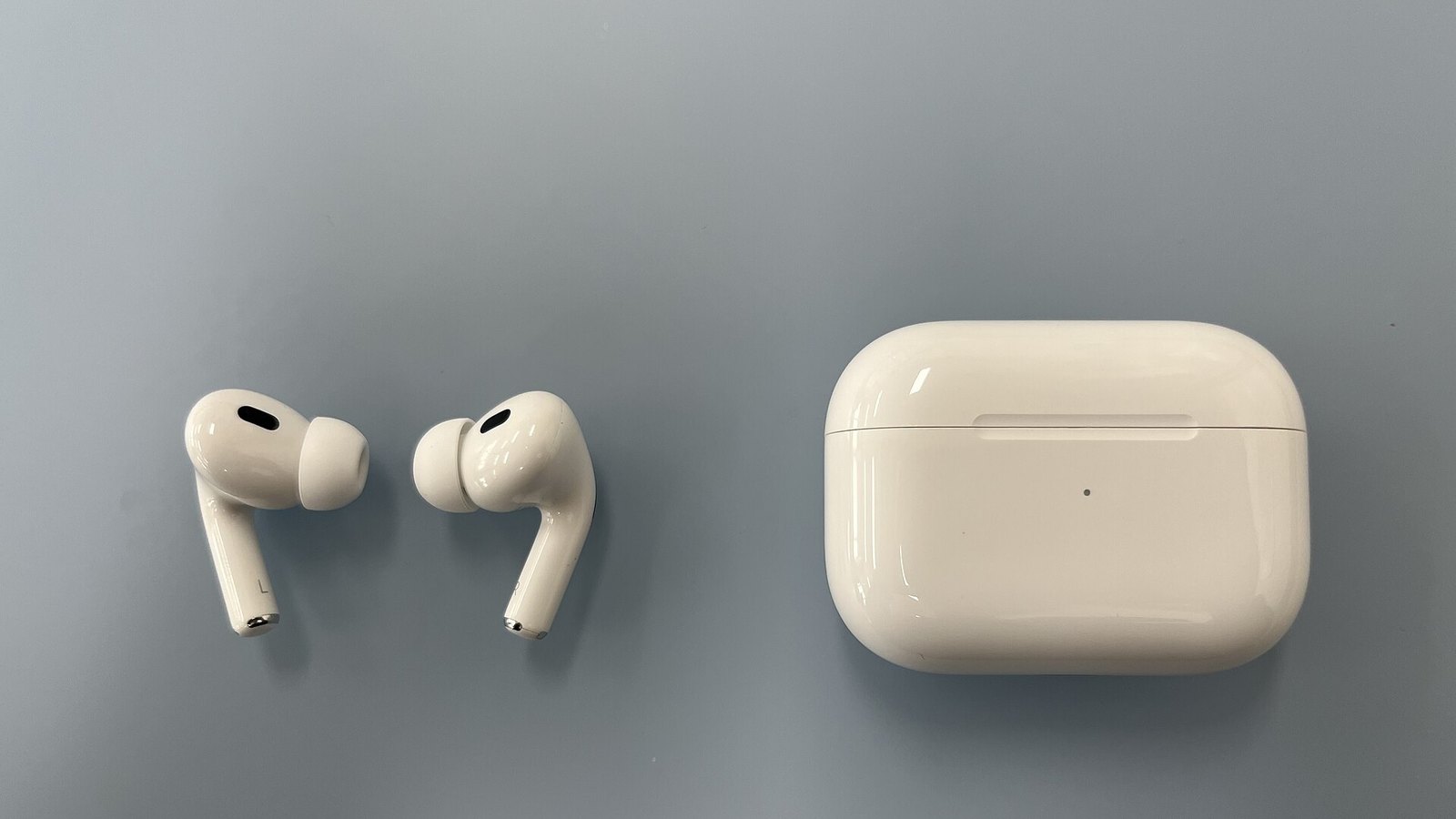
    Apple AirPods Pro 3 $249 $199 Amazon Oct 27, 2026
    Jabra Enhance Select M1 $1,195 $1,195 Jabra Enhance (direct) Oct 2026
    Jabra Enhance Select M2 $1,695 $1,695 Jabra Enhance (direct) Oct 2026
    Jabra Enhance Select M3 $1,995 $1,995 Jabra Enhance (direct) Oct 2026
    Jabra Enhance Select 500 $1,995 $1,795.99 (clearance) Best Buy Listing not dated
    Sennheiser All-Day Clear $999.95 $999.95 (promos reported lower) Retail list price Late Sep 2026
    Lexie B2 Plus $999 $899 Lexie (direct) May 2026
    ELEHEAR Beyond $399 $399 ELEHEAR (direct) Late Sep 2026
    Eargo Link $799 $799 Eargo (direct) 2026
    Sony CRE-E10 $1,299.99 at launch $698, now sold out Soundly Oct 2026

    Some sources disagree on price. For Jabra, SeniorLiving.org and NCOA both reported the M series prices in October. The Select 500 Best Buy listing showed Clearance $1,795.99, Save $199.01, Comp. Value: $1,995.00, but the listing had no date, so check it again before you plan around it. For Lexie, the newest direct price we could find is from May: in May of 2026, the Lexie B2 Plus is $899 on the company website.

    Eargo’s flagship isn’t in the table because current sources disagree too much. One review lists the Eargo model: Eargo 8. Price per pair: $2,699. A competing retailer’s guide says Eargo 8 at $2,950 per pair, Eargo 7 at $2,650, Eargo Link at $799, Eargo SE at $799. Check eargo.com on the day you buy.

    The 8 OTC hearing aids worth pricing right now

    We ranked these by value for money at October prices. That weighs price against independent lab results, the support included, and whether the brand looks likely to keep supporting the product.

    1. Sennheiser All-Day Clear (top pick)

    This month’s top pick is the Sennheiser All-Day Clear. The Sennheiser All-Day Clear is a self-fitting RIC hearing aid made by Sonova, the company behind Phonak and Unitron. That backing matters more now that one major OTC brand has left the market and another may have. HearingTracker rates it highly: its HearingTracker Score of 4.6/5 is the highest among the OTC picks on this page and ties the prescription Rexton Reach R-Li.

    The list price is $999.95 per pair before promotions. HearingTracker’s price box showed $850 to $900, but it didn’t name the seller, so we left that out of the table. If you see the All-Day Clear under $900 from Sennheiser or a major electronics retailer, it’s a good price.

    It has weaknesses. HearingTracker lists its limited fitting controls, basic charger, and weaker performance in noisy places as the main reasons to compare alternatives. It suits adults with mild loss who mostly need clearer speech in quiet rooms, on calls and in streamed audio.

    2. Jabra Enhance Select M series (best if you want an audiologist included)

    Jabra Enhance is pricier than most OTC brands, and the main reason is the remote care. According to SeniorLiving.org, all three include remote audiology care; the M3 is the brand’s most feature-rich option. SeniorLiving.org also ranks Jabra its top OTC brand thanks to its strong sound quality, 100-day trial, and three years of remote audiology care.

    Here’s how the M series is split up, according to NCOA. The M1 is the most affordable option with high-end features like Bluetooth LE and Auracast compatibility. The M2 includes advanced acoustics. The M3 is Jabra’s most discreet OTC model and the only one with TapControl. Auracast support on the cheapest model is a good sign it will last. If you want to know what that buys you in airports, theaters and lecture halls, our guide to Auracast broadcast audio explains it.

    The older Select 500 still sells in two packages on Jabra’s site. The $1,995 version is custom-programmed to your unique hearing needs. Plus, 3 years of professional hearing care, warranty and loss & damage protection. The $1,795 version is pre-programmed to fit, set up, and manage yourself out-of-the-box, and comes with No Audiology Team care or services. HearAdvisor’s lab gave the 500 an A grade with a SoundScore of 4.2/5.

    Jabra prices tend to drop late in the year. Camelcamelcamel’s Amazon tracker recorded a Select 500 low of $1,395.00 (Nov 20, 2025), against $1,995.00 (Aug 18, 2025) at its highest. Unless you need hearing aids now, wait for November before buying any Jabra Enhance model.

    3. Apple AirPods Pro 3 (best cheap option for iPhone owners)

    At $199, AirPods Pro 3 are the cheapest way to try hearing amplification from a mainstream brand. Apple sells AirPods Pro 3 for $249, so Amazon’s current price represents a $50 savings, or approximately 20% off MSRP. No coupon or Prime membership is required to receive the advertised $199 price.

    The hearing features come free in the software. They use Apple’s FDA-authorized “Hearing Aid feature” to provide personalized, frequency-specific amplification based on the user’s hearing profile, which you create with Apple’s hearing test on your iPhone. Battery life is much better than on the previous model. The new buds will also be capable of 10 hours of battery life with Transparency mode enabled in Hearing Aid mode, compared with six hours on AirPods Pro 2.

    The downside shows up in lab results. HearAdvisor gave AirPods Pro 3 a B grade with a SoundScore of 3.3/5 in our lab testing, and it says the earbuds are best suited for budget-conscious listeners who prioritize audio entertainment over speech clarity. They also do not feature Auracast broadcast technology. They suit iPhone owners with mild loss who want help in restaurants, meetings or with the TV, but not all-day wear.

    4. ELEHEAR Beyond and Beyond 2 Pro (best mid-price value)

    HearingTracker picks the ELEHEAR Beyond as its top affordable OTC aid for its combination of speech performance, Bluetooth features, and included remote support. Elehear currently lists the standalone pair at $399, with accessory bundles priced separately.

    The newer Beyond 2 Pro costs more. SeniorLiving.org lists it from $799 per pair with a 45-day risk-free trial. At $399, the original Beyond costs less than half as much as the All-Day Clear. That makes it a sensible first purchase if you aren’t sure how much hearing aids will help you.

    5. Lexie B2 Plus Powered by Bose (good aid, uncertain support)

    On sound alone, the B2 Plus deserves a higher spot. The Lexie B2 Plus is a mid-priced OTC hearing aid that earns an A grade with a SoundScore of 4.4/5 in HearAdvisor’s lab testing, ranking #7 among 65 OTC devices. That’s a better lab score than both the Jabra Select 500 and AirPods Pro 3.

    It ranks fifth because of the reported closure. When a company stops trading, app updates, repairs and protection plans usually stop too. If you find a B2 Plus at a big discount, assume support could end, and only buy from a seller with a clear return policy. If Lexie confirms it’s still in business, the B2 Plus moves back up the list.

    6. MDHearing and Audien (cheapest options)

    These brands sell at the lowest prices. SeniorLiving.org lists the MDHearing NEO XS, a completely-in-canal model, at $297 per pair. The MDHearing VOLT 4, which costs $397, is designed for people who want straightforward hearing support without complicated smartphone apps or Bluetooth pairing.

    The Audien Atom ONE costs even less. It’s listed at $98 at Walmart, according to an October review by an independent blogger who wears hearing aids. That same reviewer warns that below about $98, you’re generally buying amplifiers, not hearing aids. We agree. Below that price, check that the product is sold as an FDA OTC hearing aid and not a personal sound amplifier.

    The survey data further down shows what you trade for the low price.

    7. Eargo 8 and Eargo Link (most discreet)

    Eargo charges the most of any brand here, and its lineup is the hardest to price because sources disagree. The constant is the range: Eargo hearing aids range from $799–$2,950 before discounts. At the top end you pay for an aid that sits deep in the ear canal, which few other OTC brands offer.

    The flagship has one limit to check before you buy. SeniorLiving.org’s spec list for the Eargo 8 includes Bluetooth streaming: No. The cheaper Link has an earbud style and does stream. Eargo has offered frequent discounts on its flagships, so don’t pay full price without checking for a sale first.

    8. Sony CRE-E10 (closeout only, and mostly gone)

    Sony’s OTC range performed well, and an October roundup says the Sony CRE-E10 posted the highest score of any OTC device in HearAdvisor’s lab. Production has ended, though. WS Audiology (WSA), the manufacturer of Sony hearing aids, told HT that warranty and service obligations will be honored for purchasers.

    The CRE-E10 launched at $1,299.99 a pair, so closeout prices under $700 were a real bargain while stock lasted. If you find new stock now, buy it from an authorized seller with a return window. Open-box listings from marketplace sellers often don’t allow returns, which defeats the point of a trial.

    Features compared

    Price alone won’t tell you which aid suits you. This table shows the features that affect daily use. Lab grades come from HearAdvisor or HearingTracker where they were published.

    Device Style Rechargeable Bluetooth streaming Independent score Care included
    Sennheiser All-Day Clear RIC Yes Yes, plus hands-free calls HearingTracker 4.6/5 Paid add-on
    Jabra Enhance Select 500 Mini RIE Yes, case gives 3 extra charges Yes, LE Audio and Auracast HearAdvisor A (4.2) 3 years on Premium package
    Lexie B2 Plus RIC Yes, USB-C case Phone calls HearAdvisor A (4.4) Protection plan extra
    Apple AirPods Pro 3 Earbud Yes, 10 hrs in Hearing Aid mode Yes, no Auracast HearAdvisor B (3.3) None
    Sony CRE-E10 Earbud Yes iPhone only Top HearAdvisor score Warranty honored
    Eargo 8 CIC Yes No Not published here Bundled support
    MDHearing VOLT 4 BTE Yes No app needed Not published here Basic

    A few of these entries need sources. Jabra’s Select 500 charging case provides up to three additional full charges for on-the-go convenience. The B2 Plus has a rechargeable case that uses a USB-C cable, and there is an companion app supported by Apple and Android. The Sony E10 offered Bluetooth streaming (iOS only) and a wired charging case.

    You may need a telecoil for church loops or theater systems. None of the main models above lists one, so if you rely on hearing loops, ask the seller before you buy.

    How we chose the models

    We used five criteria, in roughly this order:

    1. FDA OTC status. Every model above is sold as an OTC hearing aid or uses an FDA-authorized hearing aid feature. These are meant for adults ages 18 and older with perceived mild to moderate hearing loss.
    2. Independent testing. Lab grades from HearAdvisor and HearingTracker counted for more than marketing claims.
    3. Price you can verify. A price had to come from the brand’s own store or a major retailer. Marketplace and used listings were left out.
    4. Support and the company’s future. We moved Lexie and Sony down for this reason alone.
    5. Total cost. That means accessories, protection plans and paid care over three years, not only the price on the box.

    What people actually pay for hearing aids

    List prices don’t show what buyers really spend. HearingTracker’s 2026 buyer survey fills that gap. The survey was large, but the answers are self-reported, so treat the figures as a guide.

    Purchase channel Average price per pair
    All OTC purchases $502
    Without professional fitting (Amazon, Audien and similar) $922
    With professional fitting through online networks $2,643
    Traditional clinic, no insurance $4,727

    In the survey, OTC purchases averaged $502 per pair, with reported prices as low as $20. By comparison, buyers at traditional clinics who paid without insurance reported an average of $4,727 per pair. Buyers going through online networks with a professional fitting, through retailers like ZipHearing or Hear.com averaged $2,643 per pair, while purchases without professional fitting, including OTC devices from Amazon, Audien, and similar retailers, averaged just $922 per pair.

    The $502 OTC average is pulled down by very cheap devices. HearingTracker notes that OTC brands like Audien averaged just $150 per pair, though these devices typically lack professional fitting and advanced features found in prescription hearing aids. A full-featured self-fitting aid with Bluetooth and an app usually costs $800 to $2,000.

    Budget vs premium OTC: does paying more help?

    On the survey evidence, yes, though the sample is small. HearingTracker compared Jabra OTC buyers with people who bought OTC aids under $400.

    Segment Recommend the aids Helpful daily Satisfied Median price Respondents
    Jabra OTC 86% 86% 71% $1,695 7
    Budget OTC (under $400) 42% 42% 48% $110 50

    All the figures come from OTC: Jabra vs Budget Products in HearingTracker’s satisfaction data. Only seven Jabra buyers answered, so the 86% figure could move a lot with more responses. The budget result is more solid. Fewer than half of the 50 budget buyers said their aids helped every day.

    Our view: a $110 device can show you whether amplification helps at all, but it’s a poor test of OTC hearing aids in general. If a cheap pair disappoints you, try a lab-graded mid-price model before deciding hearing aids don’t work for you.

    The Costco option

    Costco’s hearing centers are the main alternative to OTC for many buyers, and the price gap is smaller than people think. Jabra makes a model only for Costco: the Jabra Enhance Pro 30, a prescription hearing aid that NCOA lists at $1,599. It’s described as Jabra’s prescription hearing aid, only available at Costco. HearingTracker reported the same arrangement: Jabra Enhance Pro is available from Costco at $1,599 per pair.

    That price is below Jabra’s own M2 and M3, and it includes an in-person fitting by a licensed hearing aid dispenser. If you have a Costco membership and a hearing center nearby, compare that quote before ordering a premium OTC aid. Our guide to buying hearing aids at Costco covers the appointment, the trial and what’s included.

    When OTC is the wrong choice

    OTC prices only make sense if OTC suits your hearing. The FDA category is for perceived mild to moderate loss in adults. Self-fitting apps can’t diagnose anything, and they can’t confirm that the sound reaching your eardrum matches your hearing loss.

    Clinics can check that with real ear measurement. A small probe microphone in your ear canal measures what the hearing aid actually delivers, and the audiologist adjusts it to match your prescription. You won’t get that with OTC aids. That’s one reason why, for some people, a cheaper prescription aid fitted properly works better than an expensive OTC aid.

    If you’re unsure which way to go, our guide to over the counter hearing aids compares the two options in detail.

    See a professional

    Sudden hearing loss in one or both ears is a medical emergency, so see a doctor the same day. Also get checked for ear pain, drainage, dizziness, loss in one ear only, or trouble following speech even when it’s loud enough.

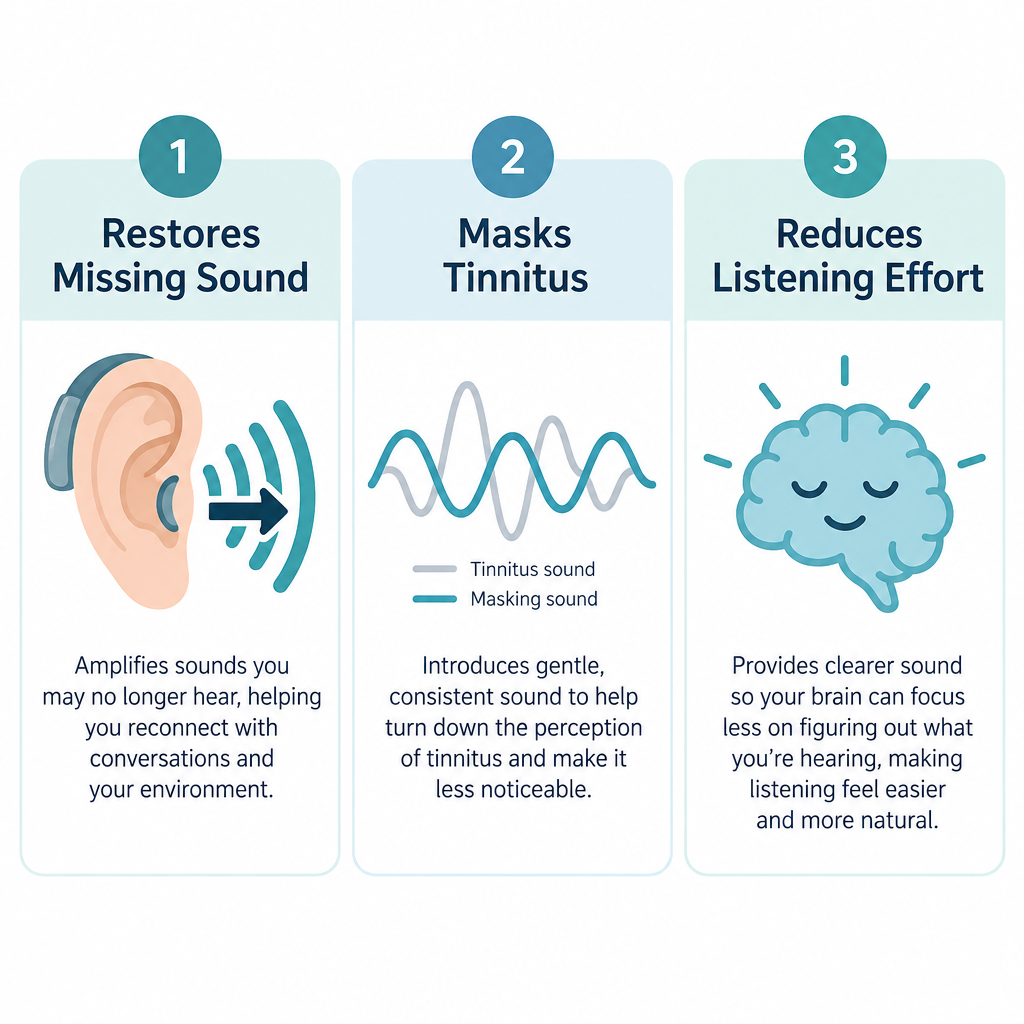
    Hearing aids for tinnitus can help some people by making outside sound easier to hear, which can make ringing less noticeable. They don’t cure tinnitus, and no OTC device on this list says it does. If tinnitus is your main problem, see an audiologist before spending $1,000 or more on OTC aids.

    How to save money on OTC hearing aids

    Waiting for the right month can save you more than haggling. Here’s what October’s prices tell us.

    Buy in November if you can. The lowest Amazon price recorded for the Jabra Select 500 came on November 20, 2025, at $1,395. That’s $600 below list. AirPods Pro 3 have already dropped to $179 during Prime Day this October. Holiday sales usually match or beat the Prime Day price.

    Compare Apple’s price with Amazon’s before buying AirPods. In the last week of October, Amazon’s AirPods Pro 3 price went from about $198 to $249 and back to $199 in three days. Check it on the day you buy.

    Choose the package carefully, not only the hearing aid. On Jabra’s Select 500, the $200 gap between Basic and Premium pays for three years of remote audiology care and a longer warranty. That’s cheap if you’ll use the care and wasted money if you won’t.

    Use pre-tax money. Hearing aids, including OTC models, are generally an eligible medical expense for HSA and FSA accounts. If your account resets on December 31, use any leftover balance before then. Don’t count on Medicare: most insurance plans, including Medicare Part A and Part B, do not cover the full cost of hearing aids. Medicare Advantage plans differ, so call yours before buying.

    Be wary of closeout bargains. A discontinued aid at half price is only a good deal if returns are allowed and the warranty is honored. Sony meets both conditions through authorized sellers. A brand that may have shut down might not.

    Price-check routine before you buy

    1. Note the list price on the brand’s own website and screenshot it with the date.
    2. Search the exact model number at Amazon, Best Buy and Walmart, and compare prices for the same package.
    3. Check that the price covers a pair and includes the charger and domes.
    4. Read the trial length and who pays for return shipping.
    5. Confirm the app is still updated on your phone’s app store.
    6. Look up the warranty and loss-and-damage terms before you check out.

    Hidden costs that change the real price

    The price you pay at checkout is only the start. Domes, wax guards and ear tips wear out. Consumer Reports estimates that for the Lexie B2 Plus, the appx cost of annual replacement accessories is $150, however prices may vary. Other RIC models cost about the same to run, so budget roughly $100 to $150 a year.

    Protection plans cost extra. For Lexie, HearingTracker reported the Protection Plan comes at an additional cost of $72, $96, and $180 for the Lumen, B1, and B2/Plus hearing aids, respectively. Jabra’s Premium packages and Eargo’s flagships include more of this, which partly explains their higher prices.

    Batteries also wear out. A rechargeable aid that lasts a full day now will last less after a few years, and replacing the battery or the whole aid can cost a lot. Over three years, a $999 aid with $150 a year in parts costs about $1,450. Compare that total, not the sticker price.

    Hearing tip

    Use the trial period fully. Wear the aids every day in the places that give you trouble, such as restaurants and family dinners. Testing them only in a quiet living room tells you very little.

    Which one should you buy?

    Your situation Our pick at October prices
    Mild loss, want a solid aid under $1,000 Sennheiser All-Day Clear
    Want an audiologist included without visiting a clinic Jabra Enhance Select M1
    iPhone owner with mild loss, part-time use AirPods Pro 3 at $199
    Tight budget but want app control ELEHEAR Beyond at $399
    Want something no one will see Eargo, after checking current pricing
    Have a Costco membership Get a Jabra Enhance Pro 30 quote first

    The bottom line

    October’s best deal is the $199 AirPods Pro 3 at Amazon, as long as you own an iPhone and need help some of the time rather than all day. For a dedicated hearing aid, the Sennheiser All-Day Clear gives the best mix of price, lab results and long-term support. Jabra Enhance costs more, but it’s worth it if you want an audiologist adjusting your aids remotely for three years. In either case, watch for November sales before paying full price.

    We’ll check these prices again next month.

    FAQ

    How much do OTC hearing aids cost in October 2026?

    Among the models we checked, prices ran from about $98 for the cheapest FDA OTC device to roughly $2,950 for Eargo’s top model. Most self-fitting aids with Bluetooth and an app cost $799 to $1,995 a pair. In HearingTracker’s survey, the average buyer paid $502, a figure pulled down by very cheap devices.

    Are AirPods Pro 3 a real hearing aid?

    The Hearing Aid feature on AirPods Pro 3 is FDA-authorized for adults with perceived mild to moderate hearing loss. You set it up with Apple’s hearing test on an iPhone. In lab testing they scored below dedicated OTC aids on speech clarity, so they work best for part-time use.

    Can I still buy Sony OTC hearing aids?

    New stock is scarce. Sony and WS Audiology discontinued the range in April 2026, and one well-known closeout listing sold out in October. WSA says it will honor warranty and service for buyers. Only buy from authorized sellers that accept returns.

    Is Lexie out of business?

    One comparison site reports that it is, but Lexie hasn’t confirmed it and other reviewers still list its prices. Until that’s resolved, only buy a Lexie aid from a seller with a firm return policy, and check that the Lexie app is still available for your phone.

    Should I wait for Black Friday to buy hearing aids?

    If your hearing isn’t getting rapidly worse, yes. Jabra’s Select 500 reached its lowest recorded Amazon price on November 20 last year, and AirPods discounts usually peak around the holidays. If your hearing changed suddenly, don’t wait for a sale. See a doctor right away.

    Do I need a hearing test before buying OTC hearing aids?

    No, you can legally buy OTC aids without one. A test from an audiologist is still worth it, because it confirms your loss is in the mild-to-moderate range OTC aids are made for. It can also find problems an app can’t, such as earwax blockage or loss in one ear only.
  • Sensorineural Hearing Loss Explained: Causes and Treatment Options

    Sensorineural Hearing Loss Explained: Causes and Treatment Options

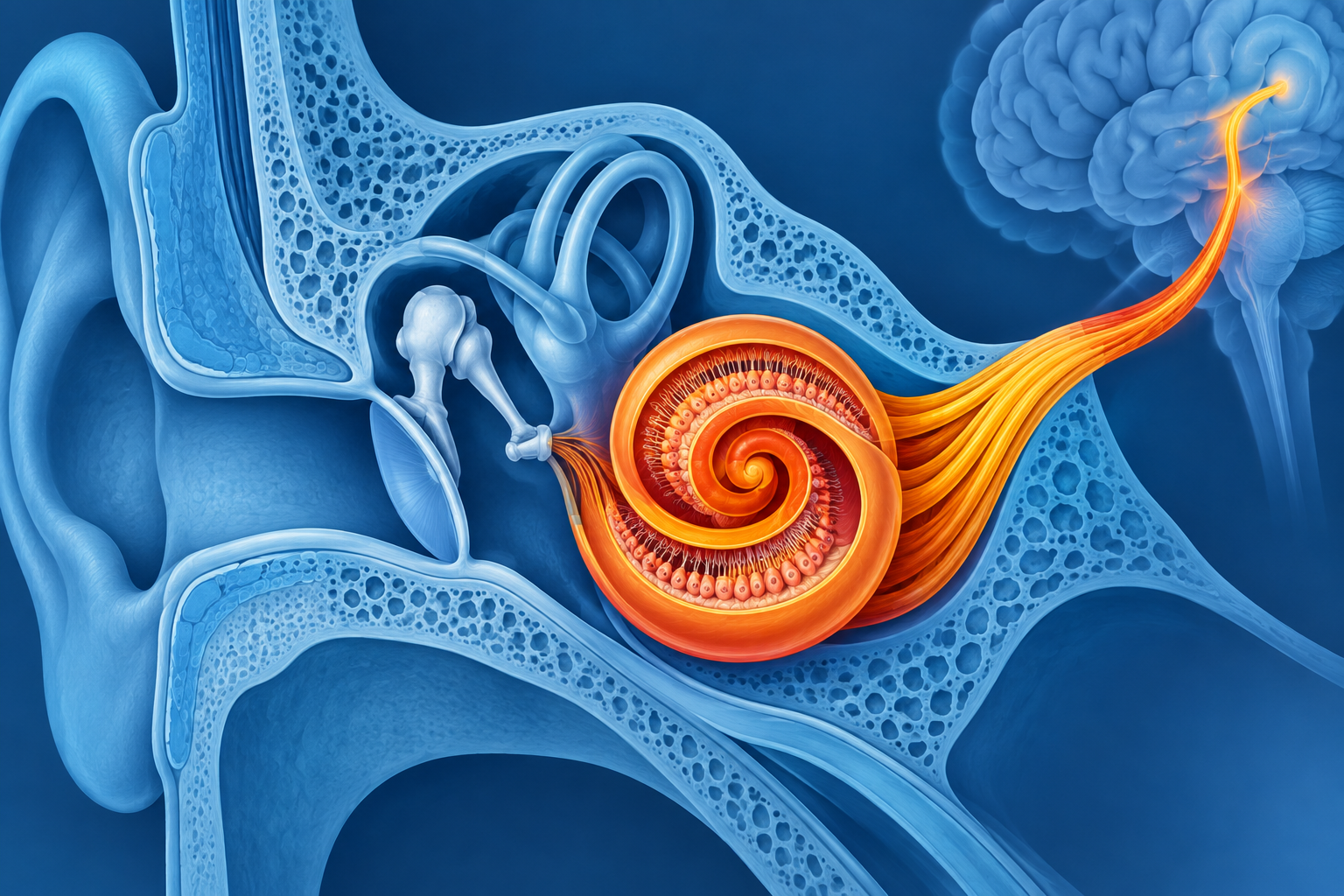
    Sensorineural deafness is hearing loss caused by damage to the inner ear (the cochlea) or to the auditory nerve that carries sound signals to the brain. It is the most common type of permanent hearing loss in adults, and while it usually cannot be reversed, hearing aids, cochlear implants and fast medical care for sudden cases can make a large difference.

    Last updated: October 30, 2026. General information only, not a diagnosis.

    TypeInner ear or nerve
    Medical abbreviationSNHL
    Usually reversibleNo
    Main treatmentsHearing aids, implants
    Emergency formSudden SNHL

    Sensorineural Deafness Definition

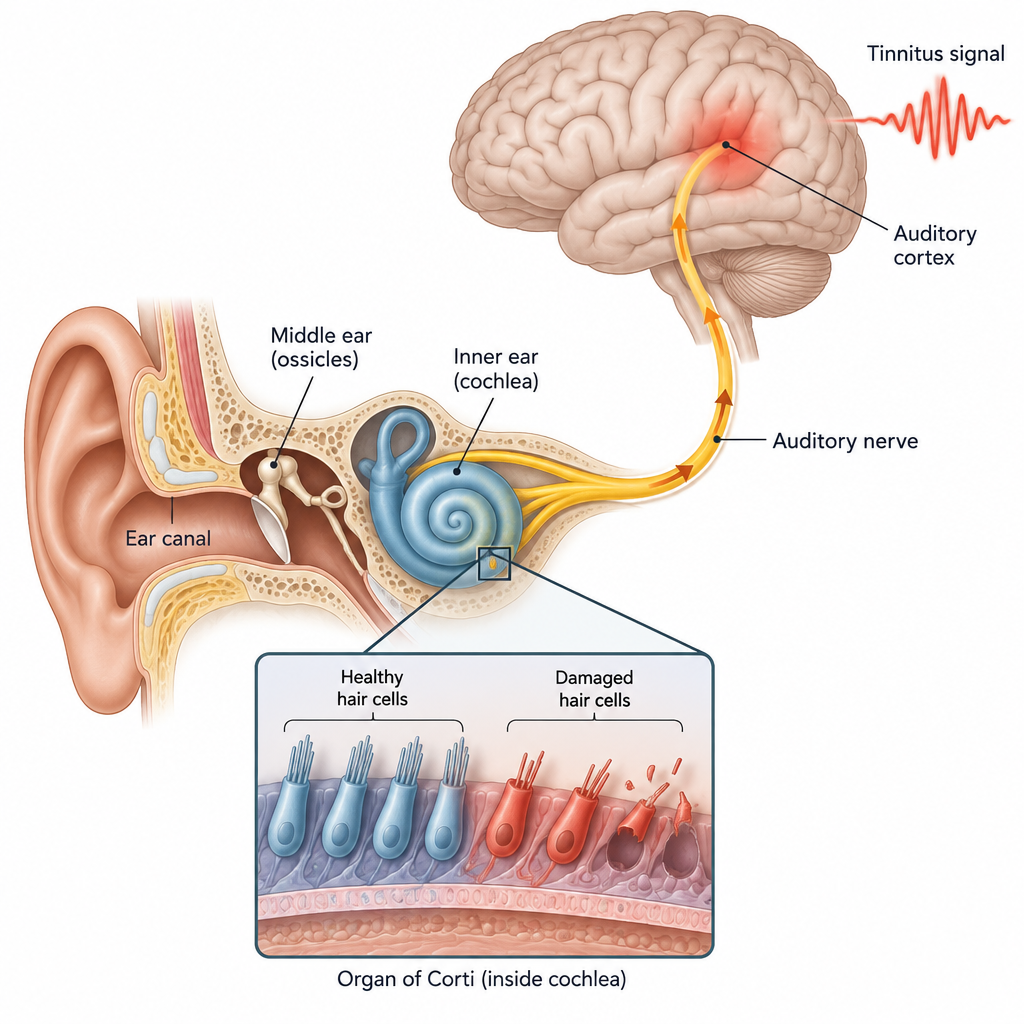
    “Sensorineural” combines two words. Sensory refers to the hair cells inside the cochlea that turn sound vibrations into electrical signals. Neural refers to the auditory nerve that carries those signals to your brain. Damage to either part causes sensorineural hearing loss.

    The medical abbreviation is SNHL. You may also see SSNHL or SSHL for sudden sensorineural hearing loss. Older texts and MedlinePlus list “nerve deafness” as an alternative name, although the nerve itself is often not the damaged part.

    “Deafness” in a medical heading does not always mean total loss of hearing. Doctors use “sensorineural deafness” for anything from a mild high-pitch loss to profound hearing loss. In everyday use, “deaf” usually describes profound loss, and many people who identify as Deaf (capital D) see themselves as part of a cultural and linguistic community rather than as having a condition to fix.

    How SNHL Differs From Other Types

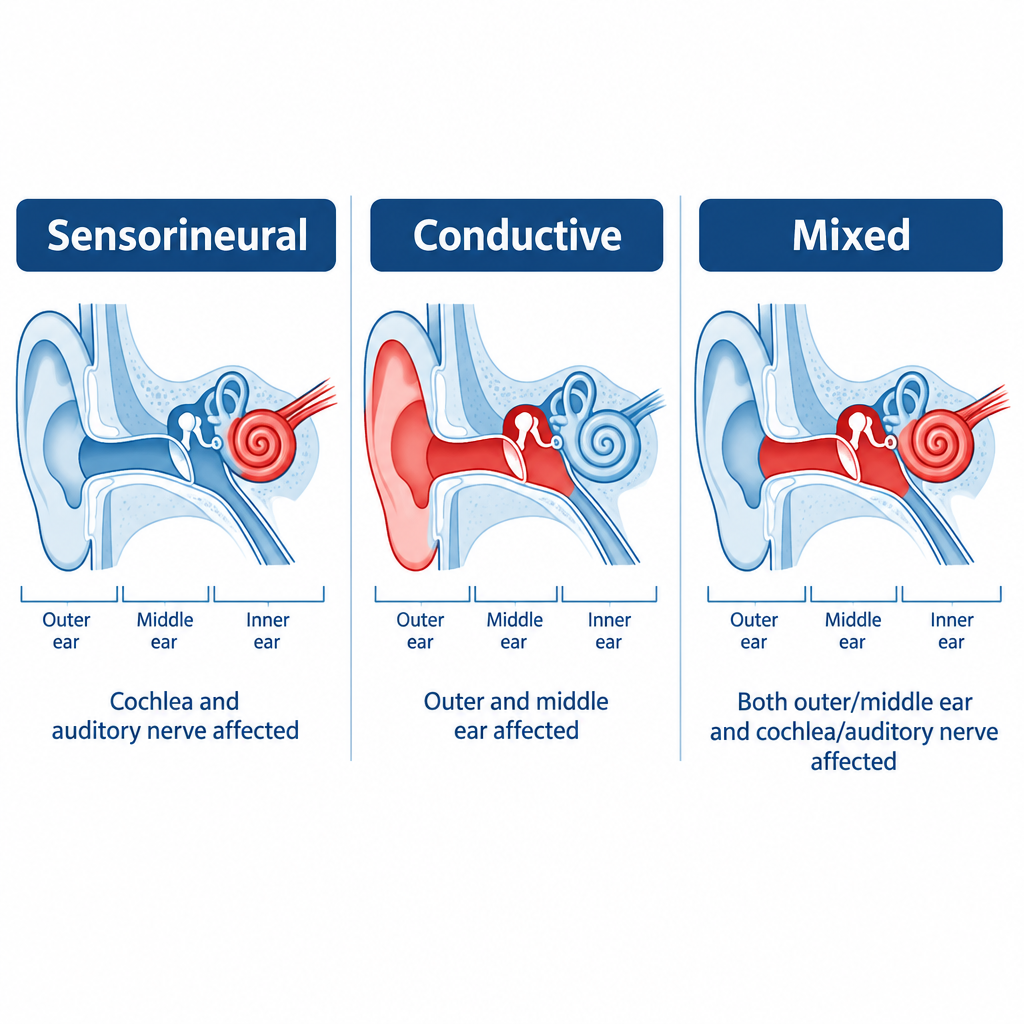
    Hearing loss falls into three main types. Where the problem sits decides how it is treated.

    Type Where the problem is Common examples Typical outlook
    Sensorineural Cochlea or auditory nerve Aging, loud noise, genetics, some drugs Usually permanent; managed with devices
    Conductive Outer or middle ear Earwax, fluid, ear infection, perforated eardrum Often treatable with medicine or surgery
    Mixed Both at once Chronic ear disease plus age-related loss Conductive part may be treatable

    A blocked ear from swimmer’s ear or a perforated eardrum stops sound reaching the inner ear. That is conductive loss, and it often clears up. With SNHL, sound arrives normally but the inner ear or nerve cannot process it properly.

    Sensorineural loss is by far the most common type. Many clinical and industry sources put it at roughly 90% of hearing loss in adults.

    Symptoms of Sensorineural Hearing Loss

    Types of Hearing Loss Comparison

    SNHL usually creeps in slowly. Many people notice the effects on conversation before they notice “hearing loss” itself.

    Common signs include:

    • Speech sounds mumbled, especially in noisy restaurants or group settings
    • Trouble hearing women’s and children’s voices, which tend to be higher pitched
    • Missing consonants like “s,” “f,” “th” and “sh,” so words blur together
    • Turning up the TV louder than others prefer
    • Ringing, buzzing or hissing in the ears (tinnitus)
    • Sounds seeming too loud and too quiet at the same time, called recruitment
    • Dizziness or balance problems in some cases, since the inner ear also controls balance

    The clarity problem matters. Damaged hair cells distort sound, so making it louder does not fully restore crispness. That is why people with SNHL often say, “I can hear you, I just can’t understand you.”

    See a professional

    Sudden hearing loss in one or both ears, over hours or up to three days, is a medical emergency. See a doctor or urgent care the same day, ideally within 72 hours.

    What Causes Sensorineural Deafness

    Many cases have more than one cause. Here are the main ones.

    Aging (presbycusis)

    Age-related hearing loss is the most common cause. According to the National Institute on Deafness and Other Communication Disorders (NIDCD), about one in three US adults aged 65 to 74 has hearing loss, and nearly half of those over 75 do. It usually affects both ears equally and hits high pitches first.

    Loud noise exposure

    Noise damages the delicate hair cells in the cochlea. A single extreme blast, like a gunshot or explosion, can cause instant damage. More often, damage builds over years of loud work, concerts, power tools or earbuds turned up high.

    Hair cells in humans do not grow back. Once enough are lost, the hearing loss is permanent.

    Genetics and congenital causes

    Some babies are born with SNHL, and some inherit genes that cause loss later in life. Changes in the GJB2 gene (connexin 26) are the most common genetic cause of congenital hearing loss in many populations. Cytomegalovirus (CMV) infection during pregnancy is the leading non-genetic cause of congenital SNHL. Newborn hearing screening in US hospitals is designed to catch these cases early.

    Ototoxic medicines

    Certain drugs can damage the inner ear. Known examples include:

    • The chemotherapy drug cisplatin
    • Aminoglycoside antibiotics such as gentamicin
    • High doses of loop diuretics such as furosemide
    • Very high doses of aspirin, where hearing effects are usually reversible
    • Quinine

    Never stop a prescribed medicine on your own. If you notice ringing or hearing changes during treatment, tell your prescriber.

    Illness, injury and other conditions

    • Infections: meningitis, measles, mumps and some viral infections
    • Ménière’s disease: episodes of vertigo, tinnitus, ear fullness and fluctuating low-pitch hearing loss
    • Autoimmune inner ear disease: the immune system attacks the inner ear, often causing loss in both ears over weeks to months
    • Head trauma: skull fractures or concussion can injure the cochlea
    • Vestibular schwannoma (acoustic neuroma): a noncancerous tumor on the nerve, usually causing loss in one ear only
    • Blood flow problems: reduced blood supply to the inner ear, which is one suspected cause of sudden SNHL

    Sudden sensorineural hearing loss

    The NIDCD defines sudden SNHL as a loss of at least 30 decibels across three connected frequencies, happening within 72 hours. It usually affects one ear. Many people first notice it on waking, or after a “pop” in the ear.

    In most cases, doctors never find a specific cause. The NIDCD reports that about half of people recover some or all of their hearing on their own, usually within one to two weeks. Prompt treatment, usually corticosteroids, gives you the best chance at recovery.

    How Loud Is Too Loud?

    Cochlea Hair Cell Damage Illustration

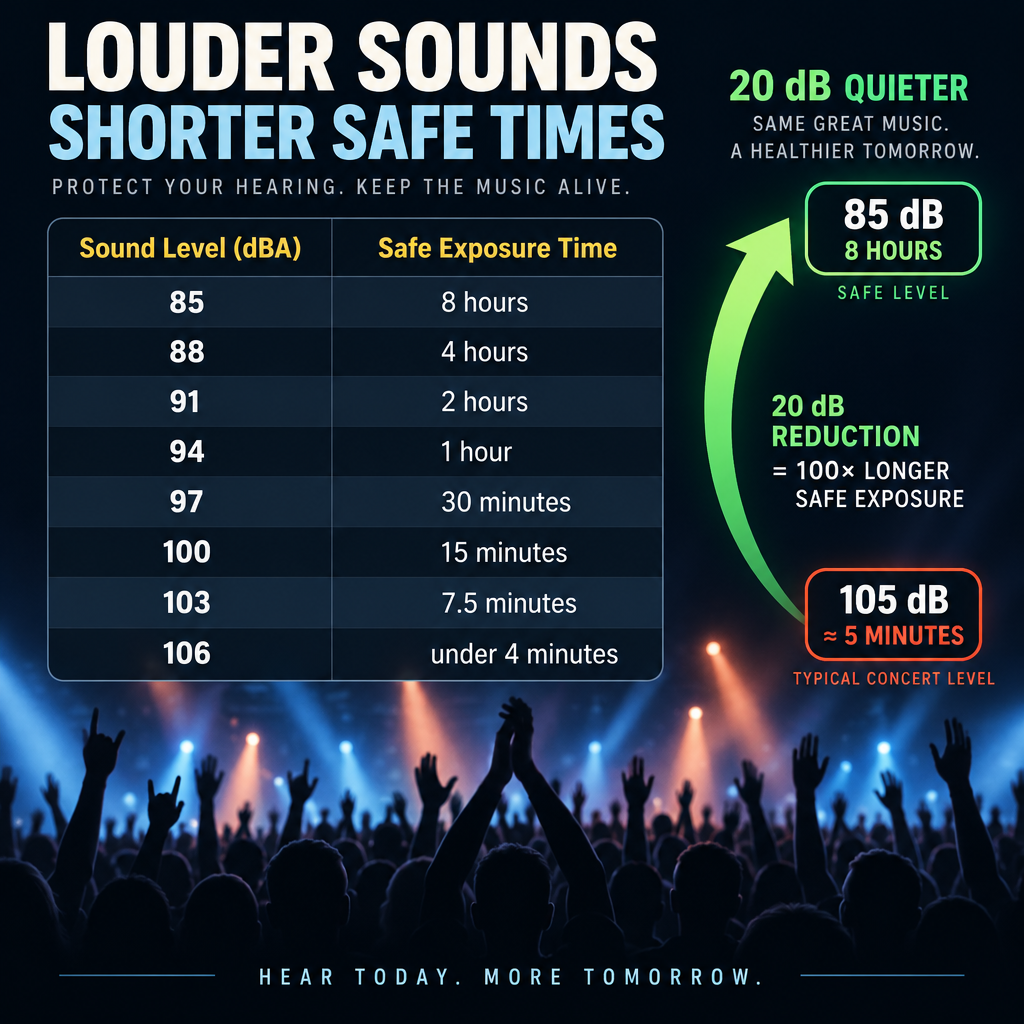
    Noise is the one major cause you can control. The National Institute for Occupational Safety and Health (NIOSH) recommends a limit of 85 decibels (dBA) averaged over 8 hours. For every 3 dB increase, the safe time halves.

    Sound level (dBA) NIOSH recommended max time Everyday comparison
    85 8 hours Heavy city traffic
    88 4 hours Lawn mower range
    91 2 hours Loud power tools
    94 1 hour Motorcycle
    97 30 minutes Loud nightclub range
    100 15 minutes Rock concert range

    The OSHA legal workplace limit is looser, at 90 dBA over 8 hours. Treat the NIOSH numbers as the safer target.

    Hearing tip

    Your phone can track noise for you. On iPhone, add the Noise control to Control Center or check Health > Hearing. On Apple Watch, the Noise app warns you when sound passes your chosen level.

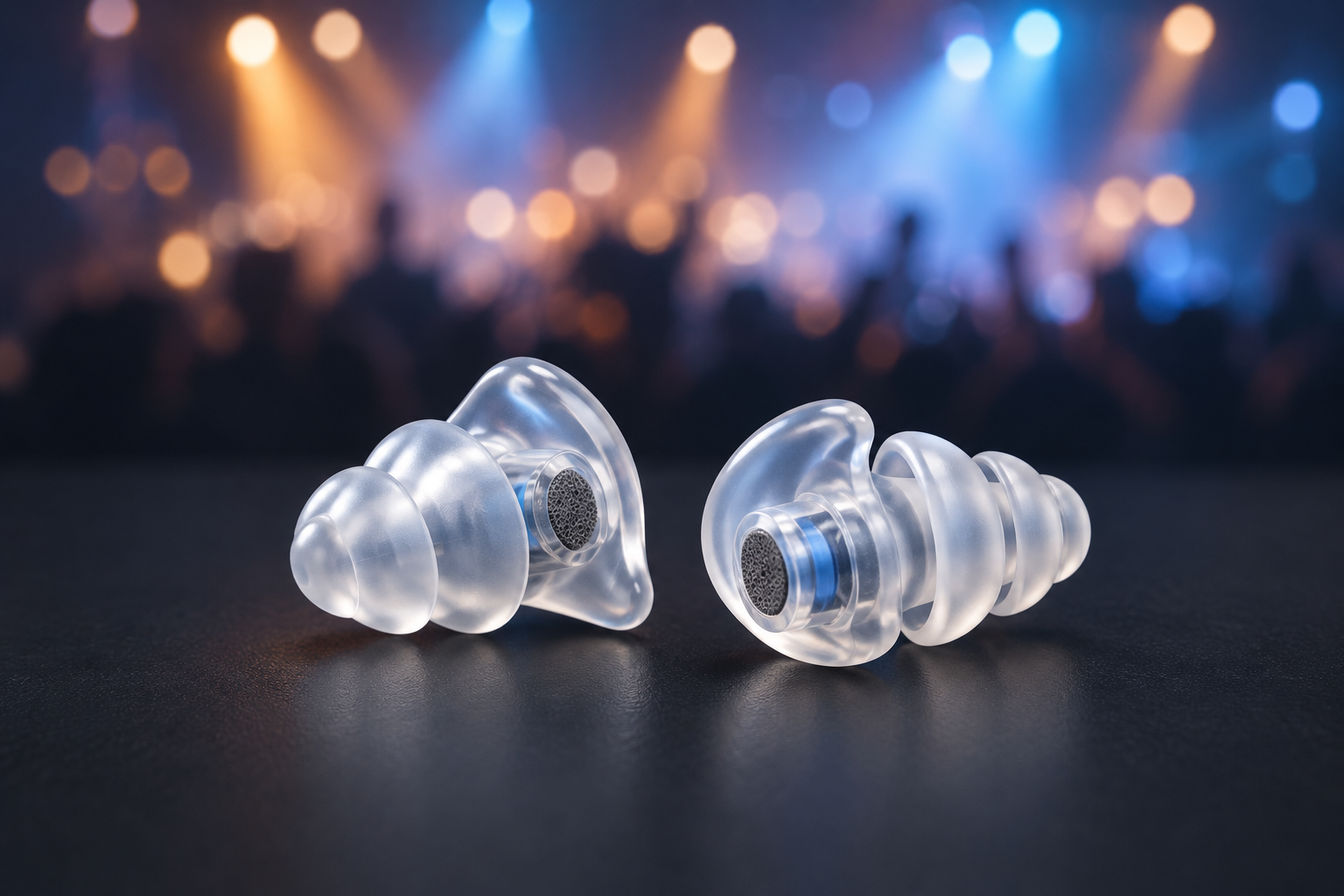
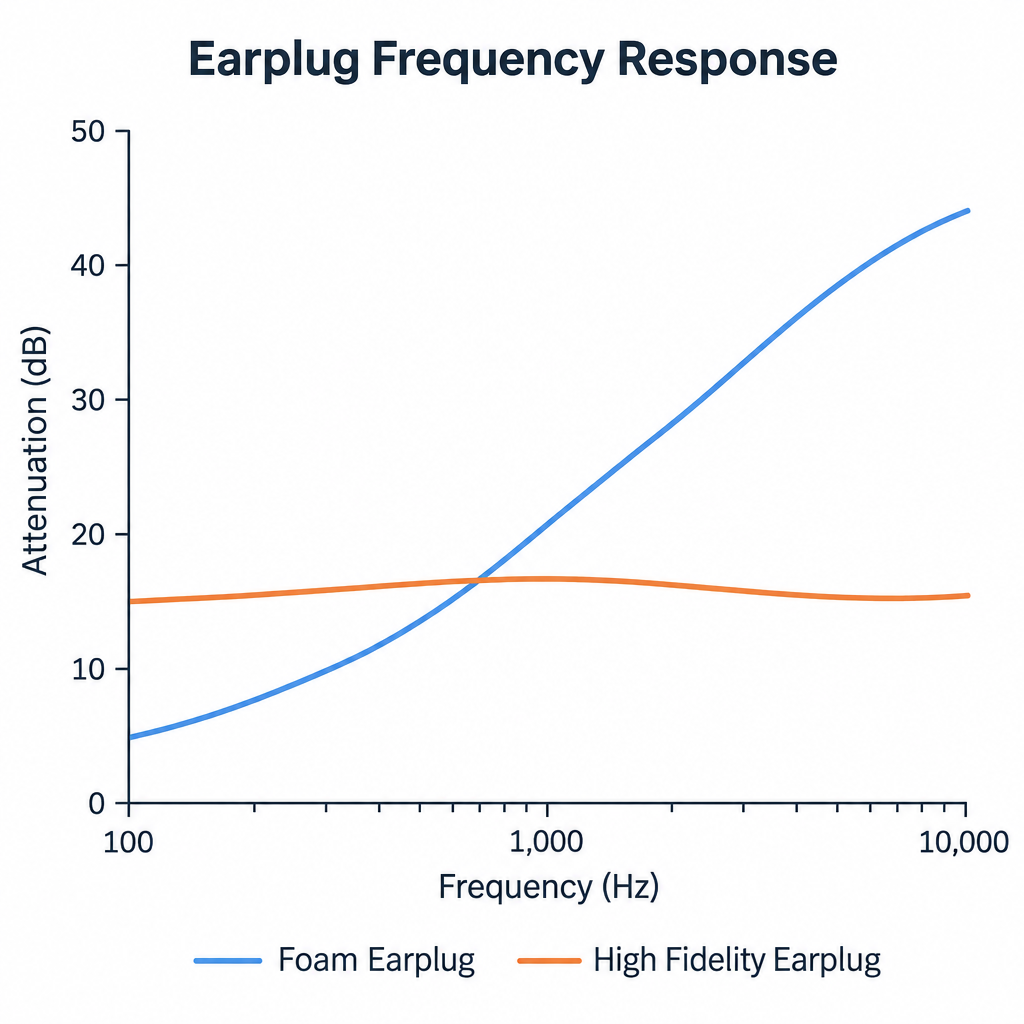
    For concerts, motorsports or loud work, choosing the right types of earplugs matters. Foam plugs block the most noise, while filtered “musician” plugs lower volume more evenly so music still sounds natural.

    How SNHL Is Diagnosed

    Diagnosis usually starts with a primary care doctor and moves to an audiologist and an ear, nose and throat specialist (ENT, also called an otolaryngologist).

    What to expect at your visit

    1. History and exam. The doctor asks when the loss started, whether it affects one or both ears, and about noise, medicines, dizziness and family history. They look in your ears to rule out wax, infection or a damaged eardrum.
    2. Tuning fork tests. In the Weber test, a vibrating fork on your forehead sounds louder in the better ear when SNHL is present. The Rinne test compares hearing through air and through bone.
    3. Pure-tone audiogram. In a sound booth, you respond to beeps at different pitches. Testing through headphones (air conduction) and a bone vibrator (bone conduction) shows where the problem is. In SNHL, both results are lowered by a similar amount.
    4. Speech testing. You repeat words at set volumes. This shows how well you understand speech, which helps predict how much hearing aids will help.
    5. Tympanometry. A small probe checks how the eardrum and middle ear move.
    6. Further tests if needed. An MRI is often ordered for loss in one ear or uneven loss, to rule out a tumor on the nerve. Blood tests may check for infection or autoimmune disease.

    Reading your audiogram

    Results are measured in decibels hearing level (dB HL). Higher numbers mean you need louder sounds to hear. Clinics commonly use these ranges, based on the American Speech-Language-Hearing Association (ASHA) classification:

    Degree Hearing threshold (dB HL) What it often feels like
    Normal −10 to 15 No trouble in quiet
    Slight 16 to 25 Faint speech hard in noise
    Mild 26 to 40 Soft speech and whispers missed
    Moderate 41 to 55 Normal conversation is a strain
    Moderately severe 56 to 70 Group talk very difficult
    Severe 71 to 90 Only loud speech heard
    Profound 91+ Most speech not heard without devices

    5 Treatment Options for Sensorineural Hearing Loss

    No pill or surgery currently regrows hair cells. Treatment aims to restore access to sound and speech. The exception is sudden SNHL, where early medical treatment may bring hearing back.

    1. Steroids for sudden SNHL

    Corticosteroids, taken as pills or injected through the eardrum, are the standard treatment for sudden SNHL. Clinical guidelines favor starting within two weeks of onset, and sooner is better. Some clinics also offer hyperbaric oxygen therapy as an add-on. Steroids are not used for gradual age-related or noise-related loss.

    2. Hearing aids

    Hearing aids are the main treatment for most people with SNHL. They amplify the frequencies you have lost and reduce background noise. Modern models are often rechargeable, connect to phones over Bluetooth, and adjust through an app.

    You have two routes in the US:

    • Over the counter hearing aids: The FDA created this category in a rule that took effect on October 17, 2022. They are for adults 18 and older with perceived mild to moderate hearing loss. You can buy them without an exam or prescription.
    • Prescription hearing aids: Fitted by an audiologist or hearing aid specialist. These suit severe loss, children, unusual hearing patterns and anyone who wants professional fine-tuning.

    Telecoil-equipped aids can also pick up hearing loop systems in theaters and places of worship. Newer aids increasingly support Auracast broadcast audio, which streams sound from venue systems or TVs straight to compatible hearing devices.

    3. Cochlear implants

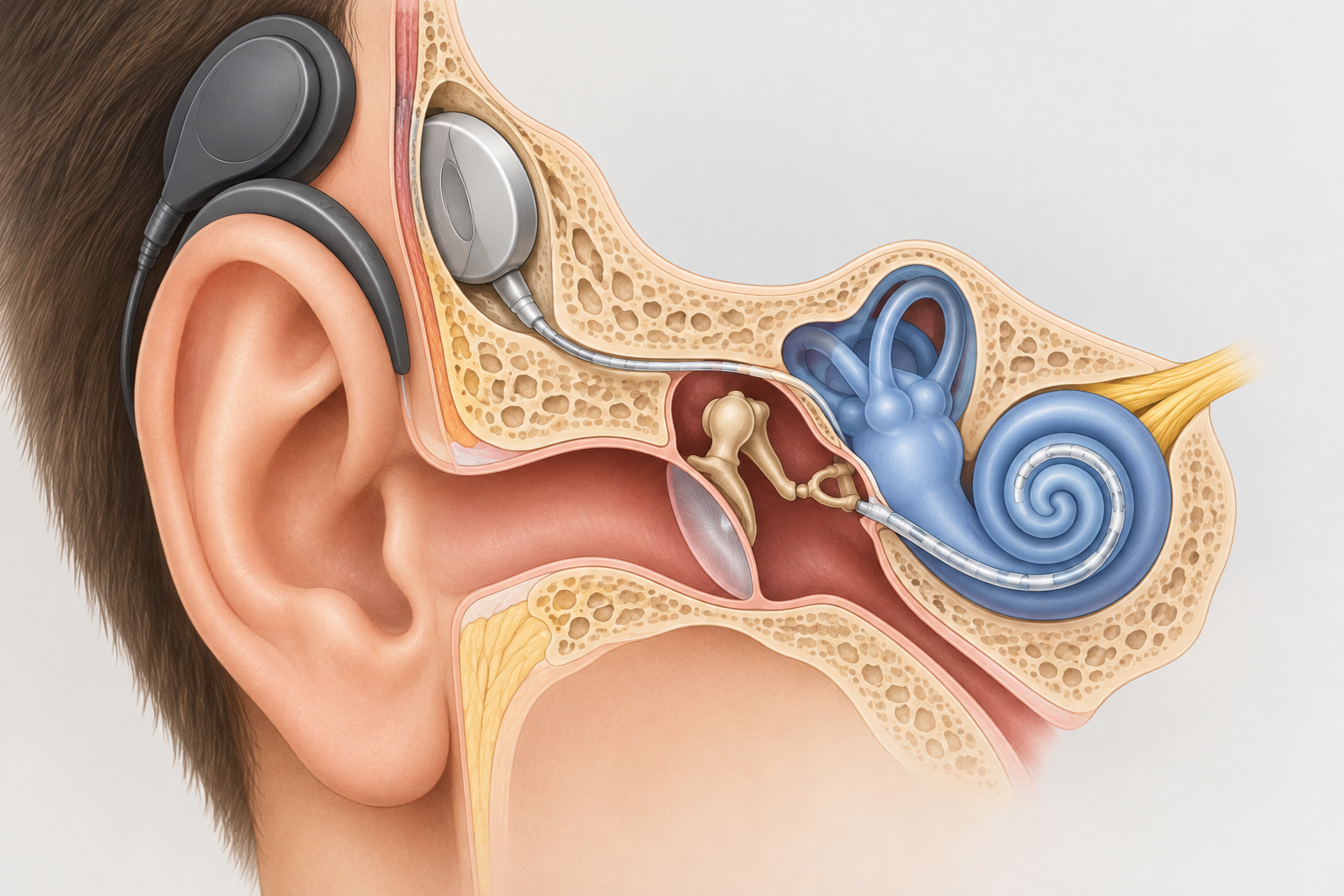
    When hearing aids no longer provide clear speech, a cochlear implant may help. A surgeon places an electrode array inside the cochlea. It bypasses the damaged hair cells and stimulates the auditory nerve directly. An external processor worn behind the ear picks up sound.

    Implants are FDA-approved for both children and adults with severe to profound SNHL. Candidacy has widened over time, and some people with single-sided deafness now qualify. The brain needs time to learn the new signal, so auditory rehabilitation afterward is part of the process.

    4. Options for single-sided deafness

    If one ear has severe SNHL and the other hears well, you have specific choices:

    • CROS hearing aids: a microphone on the deaf side sends sound to a receiver in the hearing ear
    • Bone-conduction devices: these send sound vibrations through the skull to the working cochlea
    • Cochlear implant: an option for some people, as noted above

    5. Assistive technology and communication

    Devices and skills fill the gaps where hearing aids fall short:

    • Live captioning on phones, such as Live Caption on Android and Live Captions on iPhone
    • Captioned telephones and relay services
    • Remote microphones that clip onto a speaker’s shirt
    • Visual alerts, like a light for telephone calls, doorbells and smoke alarms
    • Speechreading lessons and American Sign Language (ASL)

    For tinnitus that often comes with SNHL, sound therapy can make it less intrusive. Hearing aids with built-in tinnitus sounds or a white noise maker for tinnitus at bedtime help many people, though neither cures it.

    What about gene therapy?

    Research is moving fast. In 2024, early clinical trials reported that gene therapy restored some hearing in children with a rare form of genetic deafness caused by changes in the OTOF gene. These treatments are experimental. They apply only to specific genetic causes and are not available as routine care. Be wary of any clinic or supplement that claims to reverse SNHL.

    Outlook and Prognosis

    Your outlook depends on the cause:

    • Age and noise-related loss: permanent and often slowly progressive. Regular hearing tests track changes.
    • Sudden SNHL: around half recover some or all hearing on their own, and early treatment improves the odds. Severe initial loss and accompanying vertigo tend to predict a poorer recovery.
    • Drug-related loss: usually permanent once it happens, though aspirin-related changes often reverse.
    • Congenital loss: early detection and fitting with hearing aids or implants, or early access to sign language, gives children the best language outcomes.

    Treating hearing loss matters beyond hearing itself. Untreated hearing loss in older adults is linked to social isolation and has been identified as a risk factor for dementia. The 2023 ACHIEVE trial found that hearing intervention slowed cognitive decline in older adults who were at higher risk.

    Living With Sensorineural Hearing Loss

    Daily habits that help

    1. Get a baseline hearing test now, then retest as advised.
    2. Wear hearing aids all waking hours so your brain adapts.
    3. Ask people to face you and speak clearly, not loudly.
    4. Choose quiet restaurant seats away from kitchens and speakers.
    5. Turn on captions for TV, video calls and phone calls.
    6. Protect the hearing you have from loud noise.

    Tell people what helps you. A simple “I hear better when you face me” works better than nodding along. Many people also find support groups, such as local chapters of the Hearing Loss Association of America, useful for practical tips and connection.

    FAQ

    What does SNHL stand for in medical terms?

    SNHL stands for sensorineural hearing loss. It means hearing loss caused by damage to the cochlea in the inner ear or to the auditory nerve. SSNHL or SSHL refers to sudden sensorineural hearing loss.

    Can sensorineural deafness be cured?

    In most cases, no. Damaged inner ear hair cells do not regrow in humans. Sudden SNHL is the main exception, where steroids and natural recovery may restore some or all hearing. Hearing aids and cochlear implants do not cure SNHL, but they restore access to sound.

    Is sensorineural hearing loss the same as nerve deafness?

    “Nerve deafness” is an older name for the same thing. It is a bit misleading, since the damage is usually in the cochlea’s hair cells rather than the nerve itself.

    Will over the counter hearing aids work for SNHL?

    They can, if your loss is mild to moderate and you are 18 or older. They are designed for exactly that range. For severe loss, loss in one ear only, sudden changes, ear pain or dizziness, see an audiologist or doctor first.

    Does sensorineural hearing loss get worse over time?

    Age-related and noise-related SNHL often progresses slowly. Protecting your ears from loud noise and avoiding ototoxic drugs where possible can help slow further damage. Regular testing lets you adjust your hearing aids as your hearing changes.

    How fast do I need to see a doctor for sudden hearing loss?

    Treat it as an emergency and go the same day if you can. Steroid treatment works best when started early, and guidelines favor starting within two weeks of onset.

  • Over the Counter Hearing Aids and How They Differ From Prescription

    Over the Counter Hearing Aids and How They Differ From Prescription

    Over the counter hearing aids are FDA-regulated devices that adults 18 and older with perceived mild to moderate hearing loss can buy without an exam, prescription or fitting appointment. Prescription hearing aids are fitted by an audiologist or hearing instrument specialist, cost more, and handle a much wider range of hearing loss. The right choice depends on how much hearing you’ve lost, how comfortable you are with self-setup, and how much support you want afterwards.

    Last updated: October 30, 2026

    TypeOTC hearing aid
    Who can buyAdults 18 and over
    Hearing lossPerceived mild to moderate
    Prescription neededNo
    FittingDone by you

    What counts as an over-the-counter hearing aid

    The OTC category is new. Congress passed the Over-the-Counter Hearing Aid Act in 2017. The FDA finalized the rule in August 2022, and it took effect on October 17, 2022. Before that, every hearing aid in the US went through a licensed professional, and many states required a medical evaluation or a signed waiver first.

    The rule created a separate class of hearing aids you can buy in a pharmacy, big-box store or online. To be sold as OTC, a device has to meet FDA requirements on safety and labeling, including:

    • An output cap. Maximum sound output is limited to 111 dB SPL, or 117 dB SPL for devices with input-controlled compression and a volume control you can adjust. This limit is designed to protect your remaining hearing.
    • User control. You must be able to adjust the device yourself, usually through buttons, presets or a phone app.
    • Clear labeling. The box has to list “red flag” symptoms that mean you should see a doctor rather than self-treat. It also has to state that the device is for adults with perceived mild to moderate loss.

    “Perceived” is the important word. Nobody checks your hearing before you buy. The device is aimed at people who notice trouble in specific situations, like noisy restaurants, group conversations or the TV, and who still do fine in quiet one-on-one talks.

    OTC hearing aids are not the same as PSAPs

    Personal sound amplification products (PSAPs) are sold for people with normal hearing who want a boost in certain settings, such as birdwatching or hunting. They aren’t regulated as medical devices and can’t legally be marketed to treat hearing loss. Some cheap “hearing amplifiers” sold online are really PSAPs with misleading packaging.

    A real OTC hearing aid will say “OTC hearing aid” on the packaging. If a $30 product doesn’t, treat it as an amplifier, not a hearing aid.

    Hearing aid software in earbuds

    OTC hearing doesn’t always come in a dedicated device anymore. In September 2024, the FDA authorized Apple’s hearing aid feature for AirPods Pro 2. This was the first over-the-counter hearing aid software to run on consumer earbuds. Apple also supports the feature on AirPods Pro 3. You take a hearing test on your iPhone, and the earbuds apply a personalized profile to the sounds around you, as well as to music and calls.

    This route makes sense if you already own compatible AirPods and have mild to moderate loss. The trade-off is battery life and comfort. Earbuds aren’t designed to be worn all day, every day, the way a small behind-the-ear aid is.

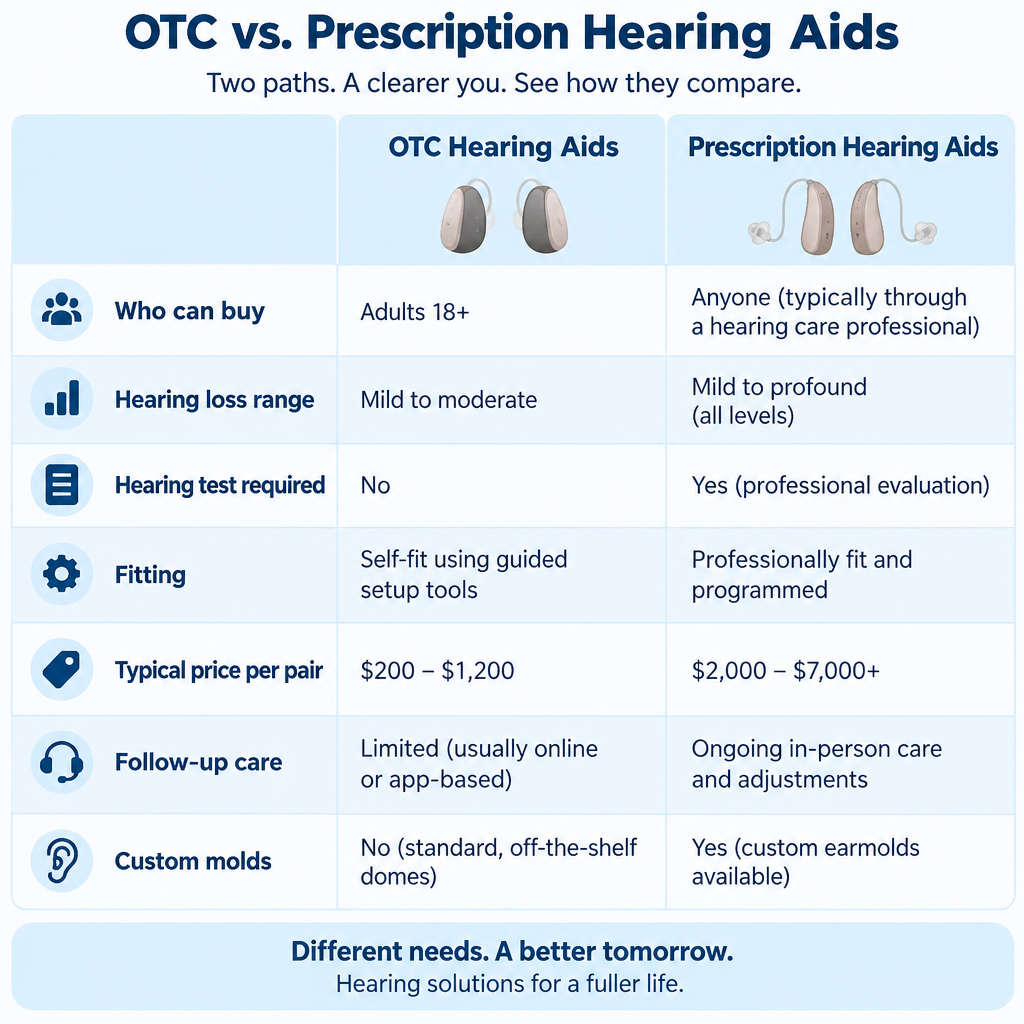
    OTC vs prescription hearing aids: the 7 key differences

    OTC hearing aids Prescription hearing aids
    Who can buy Adults 18+ Any age, through a professional
    Hearing loss range Perceived mild to moderate Mild to profound
    Hearing test required No Yes
    Fitting Self-fit with presets or app Professional fitting and verification
    Typical price per pair Hundreds to about $2,000 About $2,000 to $7,000+
    Follow-up care Phone, chat or app support In-person adjustments, cleanings, repairs
    Custom molds Rare Common
    1. The range of hearing loss covered. OTC devices are capped for mild to moderate loss. Severe or profound loss needs more power and finer control than the OTC rules allow.
    2. Who fits them. With OTC, you’re the fitter. Prescription devices are programmed to your audiogram, often across many separate frequency channels.
    3. Verification. A good audiologist confirms the fit with real ear measurement. A tiny microphone in your ear canal checks that the aid is actually delivering the prescribed sound levels. OTC devices skip this step entirely.
    4. Age. OTC is for adults only. Children and teens need a professional, because their hearing needs and ear canals change quickly.
    5. Cost and bundling. Prescription prices often bundle the device with years of appointments. OTC prices cover the hardware and whatever remote support the brand offers.
    6. Physical fit. Prescription aids can use custom earmolds made from impressions of your ear. Most OTC aids come with a few sizes of silicone domes.
    7. Ongoing care. With prescription aids, you can walk into a clinic for a re-program, a deep clean or a repair. OTC support happens mostly by phone, video or app, and repairs usually mean mailing the device back.

    What OTC hearing aids cost compared with prescription

    OTC vs Prescription Comparison Table

    Prices change often, so treat these as typical ranges as of October 2026, not quotes.

    Option Typical price per pair What’s usually included
    Basic OTC hearing aids About $200 to $600 Preset programs, limited app control
    Mid to premium OTC hearing aids About $600 to $2,000 App fitting, rechargeable case, remote support
    Earbuds with hearing aid software Price of the earbuds Hearing test and profile through your phone
    Warehouse-club prescription aids Around $1,500 to $2,000 Hearing test, fitting, follow-ups
    Clinic prescription aids About $2,000 to $7,000+ Exam, fitting, verification, multi-year care

    Warehouse clubs sit in an interesting middle ground. You get a professional test and fitting at a price closer to premium OTC. If that appeals to you, our guide to hearing aids Costco shoppers buy explains how their hearing centers work.

    Are you a good candidate for OTC hearing aids?

    OTC devices tend to work well if most of these describe you:

    • You’re 18 or older.
    • You hear fine in quiet rooms but struggle in restaurants, meetings or the car.
    • People seem to mumble, especially women and children, whose voices are higher-pitched.
    • You turn the TV up louder than others in the room like.
    • You can follow a phone call, though you sometimes ask people to repeat themselves.
    • Your hearing changed gradually, over years rather than days.

    OTC is usually the wrong choice if you can’t follow conversation even in a quiet room, rely heavily on lipreading, or have trouble hearing loud speech. Those are signs of moderately severe loss or worse.

    See a professional

    Sudden hearing loss in one or both ears is a medical emergency, so get to a doctor or urgent care the same day. Also see a doctor for ear pain, drainage, dizziness, loss in only one ear, or a feeling of blockage.

    The FDA labeling for OTC aids lists these same red flags. Sudden sensorineural hearing loss responds best to treatment started quickly, often within days. Don’t wait it out with an amplifier.

    Before you buy an OTC hearing aid: what to check

    OTC Hearing Aid in Pharmacy Setting

    Get a hearing test anyway

    You don’t need a test to buy OTC, but one is still worth getting. An audiologist can give you an audiogram without selling you anything, and you can then use that result to set up an OTC device. Some OTC apps even let you enter your audiogram numbers directly. A test also rules out simple problems. Earwax buildup, for example, can mimic hearing loss and is easily treated.

    If cost is the barrier, many OTC apps and phone platforms include a self-test. These are less precise than a sound booth, but they’re far better than guessing.

    Pick a style you’ll actually wear

    • Behind-the-ear (BTE) or receiver-in-canal (RIC): A small body sits behind your ear, and a thin wire or tube runs to a dome in your canal. This is the most common OTC style. It handles feedback well and fits larger batteries.
    • In-the-canal / completely-in-canal: Small and discreet, but harder to handle and usually shorter on battery and features.
    • Earbud style: Looks like wireless earbuds and often streams audio well. It’s bulkier in the ear and more obvious in social settings.

    If you have arthritis or limited dexterity, avoid the tiniest models. Fiddly charging contacts and dome changes become a daily annoyance.

    Read the return policy before the spec sheet

    The return window may be the most important number on the page. It takes time for your brain to adjust to amplified sound, and you won’t know if a device works for you after one afternoon. Look for at least 30 days, a full refund with no restocking fee, and clear warranty terms. Some brands offer longer trials.

    Hearing tip

    Write the return deadline on your calendar the day the box arrives, and wear the aids daily from then on. You need real-world use in noisy places to judge them fairly before the window closes.

    Features worth paying for

    Feature What it does Who needs it
    App-based fitting Tunes sound to your test results Almost everyone
    Rechargeable battery Charges in a case overnight Anyone who hates tiny batteries
    Directional microphones Focus on voices in front of you Restaurant and meeting goers
    Noise reduction Softens steady background noise City dwellers, commuters
    Bluetooth streaming Calls, music, TV straight to the aids Phone and podcast users
    Telecoil Picks up hearing loop signals Theater, church and transit users
    Auracast support Receives broadcast audio streams Early adopters, frequent travelers
    Feedback cancellation Reduces whistling Open-fit dome users

    Rechargeable models usually advertise a full day of use on a charge. Real battery life drops with heavy streaming, so check the stated hours both with and without streaming.

    Telecoils are less common in OTC devices than in prescription ones. If you regularly attend venues with hearing loops, look for a telecoil before you buy. Newer devices are starting to add Bluetooth LE Audio, and our explainer on Auracast broadcast audio covers why that could matter in airports, gyms and lecture halls over the next few years.

    After you buy: setting up and adjusting

    Most OTC hearing aids follow a similar setup flow. Exact menus vary by brand, so use the steps below as a general guide.

    Setup steps

    1. Charge the aids fully in their case before first use.
    2. Install the brand’s app and create an account.
    3. Pair the aids through the app, not your phone’s Bluetooth menu, unless instructed otherwise.
    4. Run the in-app hearing test in a quiet room, or enter your audiogram.
    5. Try each dome size and choose the one that seals comfortably without pain.
    6. Start at the recommended volume and wear the aids for a few hours a day.
    7. Increase daily wear over the first two weeks.

    If you’re using AirPods Pro with a supported iPhone, Apple’s path is built into Settings.

    AirPods hearing aid setup

    1. Update your iPhone and AirPods to the latest software.
    2. Put your AirPods in and open Settings.
    3. Tap your AirPods name near the top of Settings.
    4. Under Hearing Health, tap Take a Hearing Test.
    5. When finished, open Hearing Assistance and turn on Hearing Aid.

    Expect an adjustment period

    Your brain has gotten used to a quieter world. At first, amplified sound can seem tinny, sharp or overwhelming. Your own voice may sound strange, and the hum of your fridge may suddenly feel loud. That’s normal. Most people settle in over a few weeks of consistent use.

    Resist the urge to crank the volume. Start low, wear the aids daily, and make small adjustments. If speech still sounds muffled after two or three weeks, contact the brand’s support team. If problems continue, get a professional hearing test before your return window closes.

    Care and cleaning

    Wipe the aids daily with a dry cloth, and change wax guards and domes as the manual recommends. Store them in the charging case. Keep them out of the bathroom while you shower, because moisture and earwax cause most hearing aid failures.

    When prescription hearing aids are the better choice

    Choose prescription if you have more than moderate loss, if your two ears are very different, or if a doctor has found a medical cause like otosclerosis. Prescription is also the better route for children and teens.

    It’s also a good choice if you tried OTC aids and couldn’t get comfortable. Some people simply do better with a professional handling the fine-tuning. That isn’t a failure. Often an OTC trial is how you learn what you need.

    If you’re buying prescription hearing aids

    Ask these questions before you sign anything:

    • Is the price bundled or unbundled? Bundled pricing includes years of visits. Unbundled pricing is cheaper upfront, but you pay per appointment.
    • Do you perform real ear measurement? Clinics that verify fittings this way consistently deliver more accurate results. Our explainer on real ear measurement covers what happens during the test.
    • What’s the trial period? Many states require a trial window for prescription aids. Ask for the terms in writing.
    • Who owns the programming? Some aids are “locked” to the original clinic, which makes switching providers harder later.

    Paying for OTC and prescription hearing aids

    Medicare. Original Medicare (Parts A and B) doesn’t cover hearing aids, although it can cover a diagnostic hearing exam ordered by a doctor. Many Medicare Advantage plans include some hearing aid benefit. Check your plan’s details, because some benefits only apply through specific providers.

    Private insurance. Coverage varies widely, and some states mandate hearing aid coverage for children. Call your insurer and ask specifically whether OTC devices count, since some plans only reimburse prescription aids.

    HSA and FSA. Hearing aids, including OTC models, are generally eligible medical expenses. Keep the receipt and packaging that shows “OTC hearing aid.”

    Veterans. Eligible veterans can often get hearing aids through the VA. If you served, it’s worth checking before you pay out of pocket.

    OTC hearing aids and tinnitus

    Many people with ringing in their ears also have some hearing loss. Amplifying outside sounds can make tinnitus less noticeable. Some devices also include a sound generator that plays soft background noise. Neither approach cures tinnitus, and results vary from person to person. Our guide to hearing aids for tinnitus walks through what the research supports.

    If your tinnitus is only in one ear, pulses with your heartbeat, or came on suddenly, see a doctor before you buy anything.

    FAQ

    Do I need a prescription for OTC hearing aids?

    No. Adults 18 and older can buy OTC hearing aids in stores or online without a prescription, exam or fitting appointment. A hearing test is still a smart first step, even though the law doesn’t require it.

    Are non-prescription hearing aids as good as prescription ones?

    For mild to moderate loss, a well-fitted OTC device can work very well, especially in everyday situations. Prescription aids pull ahead with more severe loss, unusual hearing patterns, and in tough settings where professional fine-tuning and verification make a difference.

    Can OTC hearing aids damage my hearing?

    The FDA caps OTC output to limit that risk, and following the labeling keeps it low. Keep the volume at a comfortable level. If you notice pain, worsening hearing or new ringing, stop using the aids and see a professional.

    Can teenagers use OTC hearing aids?

    No. The OTC category is limited to adults 18 and older. Anyone younger should be evaluated and fitted by an audiologist.

    Does Medicare pay for over the counter hearing aids?

    Original Medicare doesn’t. Some Medicare Advantage plans offer an allowance that may apply to OTC or prescription aids. Check your specific plan’s benefits.

    Can AirPods really work as hearing aids?

    Yes, with limits. AirPods Pro 2 and AirPods Pro 3 support Apple’s FDA-authorized hearing aid feature for perceived mild to moderate loss. You need a compatible iPhone and current software. They’re best for part-time use rather than all-day wear.

    How long do OTC hearing aids last?

    Most hearing aids last several years with good care. Rechargeable batteries gradually lose capacity over time. Check the warranty length and whether the brand offers battery replacement before you buy.

  • Can Deaf People Drive? Licenses, Safety and Adaptations

    Can Deaf People Drive? Licenses, Safety and Adaptations

    Yes, deaf people can drive. Every US state licenses deaf and hard of hearing drivers on the same terms as everyone else, and no state requires a hearing test for a regular car license. This guide covers the actual rules, where hearing standards still apply, and how deaf drivers handle sirens, police stops and breakdowns.

    Last updated: October 30, 2026

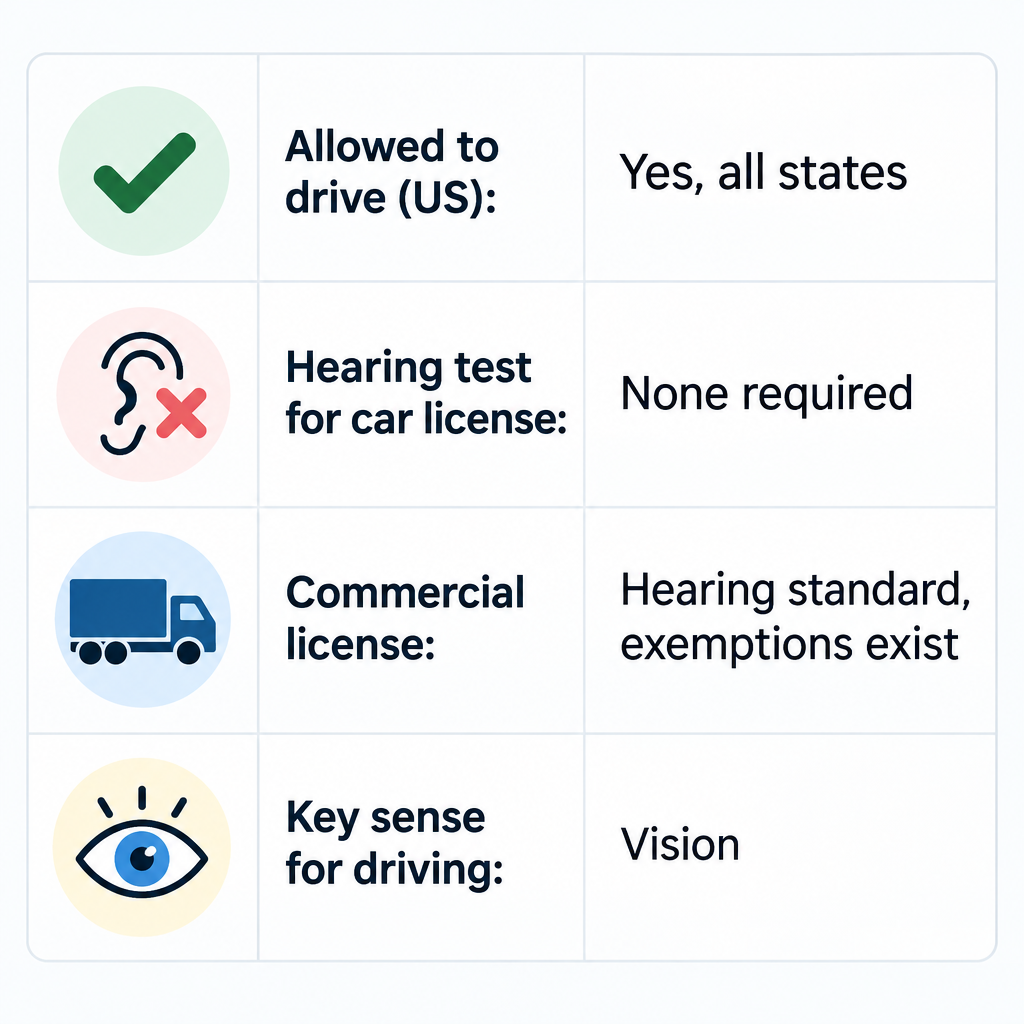
    Allowed to drive (US)Yes, all states
    Hearing test for car licenseNone required
    Commercial licenseHearing standard, exemptions exist
    Key sense for drivingVision

    Are deaf people allowed to drive?

    Deaf people are allowed to drive in the United States. A person who is profoundly deaf from birth goes through the same licensing process as a hearing teenager: a written knowledge test, a vision screening and a road test. Hearing never enters the scoring.

    The reasoning is simple. Driving is a visual task. You read signs, track lane markings, watch brake lights, check mirrors and judge gaps in traffic with your eyes. Sound adds some information, but it is never the main channel. That is why every state requires a vision test and none requires a hearing test for a standard license.

    This has not always been settled. In the early 20th century, some states tried to bar or restrict deaf drivers. The National Association of the Deaf (NAD) campaigned against those rules for decades, using deaf drivers’ safety records as evidence. Today the question “do deaf people drive?” has a boring answer: millions do, every day, and the law treats them as ordinary drivers.

    What the licensing process looks like

    Getting a license as a deaf or hard of hearing person follows the standard path for your state. The differences are about communication, not qualification.

    • Written test: This is already a reading test, so it is accessible as is. Some DMVs also offer the knowledge test in other formats.
    • Vision test: This is the same for everyone. If your vision meets the state standard, you pass.
    • Road test: The examiner gives spoken directions in most cases. Here you can ask for an accommodation.

    DMVs are state agencies, so they fall under Title II of the Americans with Disabilities Act. That means they must provide effective communication. In practice, you can request an ASL interpreter for the road test or classroom portions, or ask the examiner to use written cards or agreed hand signals for turns and stops. Our article on the disability rights act explains who the ADA covers and how Title II works.

    Ask for the accommodation when you book the test, not on the day. Some offices need lead time to schedule an interpreter.

    Hearing tip

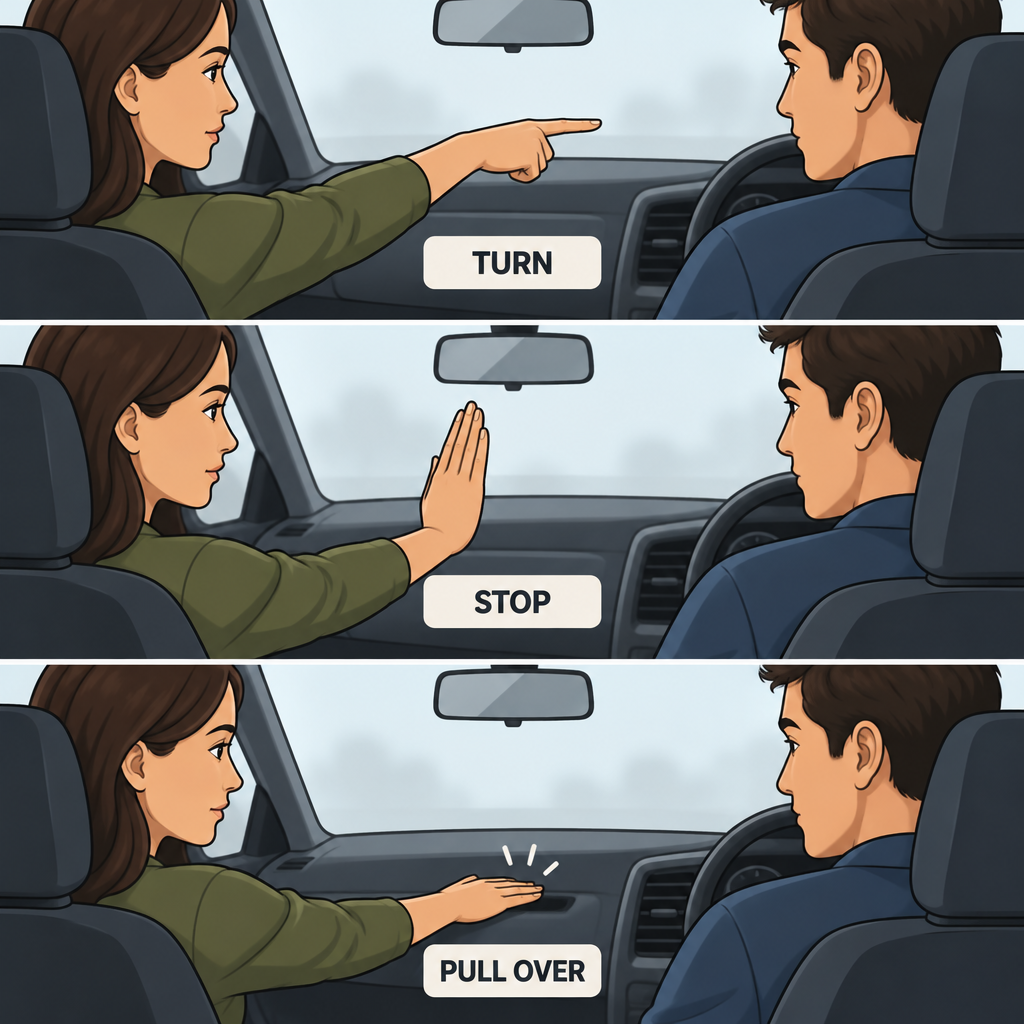
    Before your road test, agree on simple signals with the examiner: a pointed finger for turns, a flat palm for stop, a tap on the dashboard to pull over. Agreeing in advance means fewer surprises during the drive.

    Commercial licenses: where hearing standards still apply

    The one big exception in the US is commercial driving. The Federal Motor Carrier Safety Administration (FMCSA) sets medical standards for interstate commercial drivers, and hearing is one of them.

    Under the federal rule, a commercial driver must either perceive a forced whispered voice at 5 feet or more in the better ear, or have an average hearing loss no greater than 40 dB at 500, 1,000 and 2,000 Hz in the better ear. Hearing aids can be worn during the test. Many hard of hearing drivers pass this way.

    Drivers who cannot meet the standard are not automatically shut out. In 2013, after advocacy led by the NAD, FMCSA granted its first hearing exemptions to deaf drivers, and the program has continued since. An exemption allows a deaf driver to operate a commercial vehicle in interstate commerce if they meet every other qualification. Exemptions must be renewed, so check FMCSA’s current requirements before you apply.

    A few points matter here:

    • The federal hearing rule covers interstate commercial driving. Rules for intrastate commercial driving are set by each state and can differ.
    • School bus and passenger transport jobs often carry extra state or employer requirements.
    • A standard car license is never affected by the commercial hearing rule.

    Deaf truck drivers work across the country today. The obstacles that remain are mostly employer attitudes and paperwork, not ability.

    Driving outside the US

    Deaf Driving License Summary Chart

    Most high-income countries also license deaf drivers for ordinary cars. In the UK, for example, the DVLA says you do not need to tell it about deafness if you hold a car or motorcycle license. Drivers of buses, coaches and lorries must declare it, much like the US commercial rule.

    If you plan to drive abroad or move countries, check the licensing authority’s medical rules before you go. Rules for heavy vehicles vary more than rules for cars.

    Do deaf drivers have more crashes?

    The fear behind “are deaf people allowed to drive?” is usually about safety. The evidence does not support it. There is no solid research showing that deaf drivers crash more often than hearing drivers, and insurers and licensing agencies do not treat deafness as a risk category for regular licenses.

    There are reasonable explanations for this:

    • Visual attention: Lab research on deaf adults, notably work by cognitive scientist Daphne Bavelier and colleagues, has found that deaf people who use sign language often show stronger attention to their peripheral vision. That is useful for spotting a car drifting into your lane or a cyclist at the edge of your view.
    • Compensation: Swedish driving-simulator research on drivers with hearing loss found they tended to drive more cautiously and scan more. The same research suggested they were more affected when given demanding secondary tasks. That is a reminder that distraction is the real hazard.
    • Fewer audio distractions: A deaf driver is not half-listening to a podcast or an argument on speakerphone.

    Distraction is the common thread. A deaf driver reading a text is as dangerous as a hearing driver reading one. Hearing status does not change that.

    Why driving depends on sight far more than sound

    Road Test Hand Signals

    Think about what sound actually tells a hearing driver. Horns, sirens, a train crossing bell, an engine noise that signals a problem, or a passenger’s warning shout. That is a short list, and every item on it has a visual backup.

    Sound cue Visual or physical backup
    Emergency siren Flashing lights, traffic pulling over, mirror checks
    Car horn Driver behavior around you, mirror scanning
    Railroad crossing bell Flashing signals, gates, crossbuck signs
    Turn signal clicking Dashboard indicator arrow
    Engine or brake trouble Warning lights, gauges, vibration, smell
    Tire going flat Tire pressure warning light, pull to one side

    Hearing drivers also miss sounds all the time. Modern cabins are well insulated, and many people drive with music up and windows closed. A siren often reaches a hearing driver late. Sometimes it is only noticed after the lights appear in the mirror. That is the same moment a deaf driver notices it.

    How to drive safely as a deaf driver

    Most deaf drivers build these habits early, often without thinking about them. If you have lost hearing as an adult, these are the adjustments worth making on purpose.

    Scan your mirrors more often

    Check your rearview and side mirrors every few seconds, especially on highways and in city traffic. Some drivers add a wide-angle or panoramic rearview mirror that clips over the factory one. It gives you a broader view of the lanes behind you and makes approaching flashing lights obvious sooner.

    Watch other drivers for emergency vehicles

    When cars ahead start slowing and moving right for no visible reason, assume an emergency vehicle is coming. Check all mirrors, slow down and pull over safely. Watching the traffic around you works as well as sound, and it often works better.

    Use your car’s safety features

    Driver-assistance features help every driver, and several are especially useful if you cannot hear:

    • Blind-spot monitoring: A light in or near the side mirror flags a car you might not see.
    • Lane departure and lane-keeping alerts: Many systems can vibrate the steering wheel instead of beeping.
    • Haptic seat alerts: Some General Motors vehicles offer a Safety Alert Seat that vibrates the left or right side of the seat cushion to signal where a hazard is.
    • Rear cross-traffic alerts: These are useful when backing out of parking spaces, where you would otherwise listen for approaching cars.
    • Tire pressure monitoring: This catches a slow leak you cannot hear.

    When you shop for a car, ask whether alerts can be set to vibration or visual only. Many cars let you switch alert style in the settings menu. The test drive is the time to check.

    Make dashboard checks routine

    Get in the habit of glancing at the instrument cluster: turn signal arrows, warning lights, temperature and fuel. A turn signal left blinking is a classic giveaway for any driver. The arrow on the dash is your cue to cancel it.

    Set up phone sound alerts as a backup

    Both iPhone and Android can listen for certain sounds and flash or vibrate an alert. These features are a backup, not a replacement for watching the road. They can miss sounds in a noisy cabin, and you should never look at the phone while moving.

    Turn on siren alerts on your phone

    1. iPhone: open Settings, then Accessibility, then Sound Recognition.
    2. Turn on Sound Recognition, tap Sounds, then turn on Siren.
    3. Android: open Settings, then Accessibility, then Sound Notifications (names vary by brand).
    4. Turn it on and allow it to listen for alarms and sirens.
    5. Mount the phone in a dashboard holder so a flash is visible without picking it up.

    Sign with passengers carefully

    For ASL users, conversation in the car is visual, which pulls the driver’s eyes off the road. Many deaf drivers handle this by letting passengers sign while the driver keeps their eyes forward and answers briefly at red lights. Longer conversations wait until you park. Front-seat passengers can also act as a second set of eyes and tap your arm when they spot an emergency vehicle.

    Wear your hearing aids if you use them

    If you are hard of hearing and use hearing aids, wear them while driving. They can help with sirens and horns, and many Bluetooth models stream navigation prompts straight to your ears. Some hearing aids offer a car or noise program that cuts down road rumble. Ask your audiologist to set one up if road noise drowns everything out.

    Headphones vs hearing loss: why the law treats them differently

    A common question on forums is why it is illegal to drive with headphones when deaf people can drive. California’s Vehicle Code, for example, bans wearing a headset or earplugs in both ears while driving, with an exception for hearing aids. Several other states have similar rules.

    The difference comes down to distraction and adaptation, not the volume of sound reaching your ears.

    • Headphones add a distraction. Music, podcasts and calls compete for attention, and the driver chose that distraction.
    • Headphones disrupt a driver who relies on sound. A hearing driver has built habits around hearing horns and sirens. Suddenly blocking them removes a cue the driver expects, and the driver has not built visual habits to replace it.
    • Deaf drivers have adapted. They have built their scanning habits around vision from the start. Nothing is suddenly missing.

    Hearing aids are exempt for the same reason. They restore sound rather than block it.

    Know your rights at a traffic stop

    Police stops are the part of driving that worries deaf drivers most, and for good reason. Officers give spoken commands, and a driver who does not respond can be misread as uncooperative. A few steps lower that risk.

    Before a stop happens:

    • Ask your state DMV about deaf or hard of hearing notations. Some states offer a voluntary flag on your license or vehicle record that an officer sees when running your plate. Others hand out visor communication cards.
    • Keep a visor card or printed card that says you are deaf and how you communicate. Many state commissions for the deaf and hard of hearing distribute these.
    • Keep a pen and notepad within easy view, not in the glove box.

    During a stop:

    1. Pull over safely, turn off the engine, and turn on the dome light if it is dark.
    2. Keep both hands on the steering wheel where they are visible.
    3. Do not reach for your phone, wallet or glove box until the officer understands you are deaf.
    4. When the officer approaches, point to your ear and shake your head, or hold up your visor card.
    5. Ask to communicate in writing, or by typing on a phone once the officer agrees.

    Under the ADA, police departments must communicate effectively with deaf people. For a simple traffic stop, writing notes is often enough. For an arrest or questioning about a serious matter, you can request a qualified ASL interpreter. If an officer refused reasonable communication, write down the date, location and badge number afterward and contact a disability rights organization.

    Breakdowns and emergencies on the road

    Plan how you will get help before you need it. Phone calls are the default for roadside assistance and emergencies, so line up text-based options.

    • Text-to-911: This works in many areas of the US, but not all of them. If it is not available, you will get a bounce-back message telling you to use another method. Check your area’s coverage in advance.
    • Real-time text (RTT): Many phones support RTT calls to 911, which send each character as you type.
    • Relay services: You can reach roadside assistance through a telecommunications relay service, including video relay in ASL.
    • Roadside apps: Most insurers and auto clubs let you request a tow through their app, with no voice call needed.

    Keep a written card in the glove box with your insurance details, your auto club number and a note explaining you are deaf. If a tow driver or bystander arrives, you can hand it over.

    When hearing changes affect your driving

    Stable deafness is not a driving problem. Some hearing-related conditions do affect safety, though, mostly through balance and dizziness rather than hearing itself.

    Conditions such as Ménière’s disease and other inner ear disorders can cause sudden vertigo. A vertigo attack at the wheel is dangerous. If you have episodes of spinning dizziness, talk to your doctor about whether and when it is safe to drive.

    See a professional

    Sudden hearing loss in one or both ears is a medical emergency. See a doctor or go to urgent care within a day or two, and do not drive if you also have vertigo or severe dizziness.

    If your hearing has been fading slowly, a hearing test with an audiologist is worth booking. Treating hearing loss will not change your license status. It can make driving less tiring and help you notice sirens and horns sooner.

    Key takeaways

    • Deaf people can drive legally in every US state, and no hearing test is required for a standard car license.
    • DMVs must offer communication accommodations such as ASL interpreters for road tests under the ADA.
    • Commercial drivers face a federal hearing standard, but FMCSA has granted exemptions to deaf drivers since 2013.
    • Research does not show deaf drivers are less safe. Distraction is the real risk for everyone.
    • Mirror scanning, haptic car alerts and phone sound alerts cover most of what hearing provides.
    • At a traffic stop, keep your hands visible, show a visor card and ask to communicate in writing.

    FAQ

    Can 100% deaf people drive?

    Yes. A person with no measurable hearing can get a regular driver’s license in every US state. Licensing depends on vision, knowledge of traffic laws and road skills, not hearing.

    Can you drive if you are totally deaf?

    You can. Total deafness does not disqualify you from a car license in the US or the UK. The only hearing standards apply to commercial driving, and even there US federal exemptions exist for deaf drivers.

    Can you drive if you are deaf in the US?

    Yes, in all 50 states. You take the same written, vision and road tests as any other applicant, and you can request an ASL interpreter or written instructions for the road test.

    Why is it illegal to drive with headphones but deaf people can drive?

    Headphone bans target distraction and the sudden loss of cues that hearing drivers depend on. Deaf drivers have built their driving habits around vision and are not choosing to add an audio distraction. Hearing aids are specifically exempt in states like California.

    Can hearing impaired people drive with hearing aids?

    Yes, and wearing them is a good idea if you use them every day. Hearing aids are allowed under state headphone laws. Bluetooth models can also stream navigation directions.

    Do I have to tell the DMV I am deaf?

    Not for a regular US car license. Some states let you add a voluntary notation so police know before approaching your car. Commercial drivers must disclose hearing loss during the DOT medical exam.

  • Cochlear Implant Surgery Step by Step and What Recovery Is Like

    Cochlear Implant Surgery Step by Step and What Recovery Is Like

    Cochlear implant surgery is usually a 1.5 to 3 hour operation done under general anesthesia through a small cut behind your ear. Most adults go home the same day or the next morning and are back to light routines within about a week. The implant is not switched on until a follow-up visit, often 2 to 4 weeks later.

    Last updated: October 30, 2026. This is general information, not medical advice. Your surgeon’s instructions always come first.

    TypeSurgery, general anesthesia
    Operating timeAbout 1.5 to 3 hours
    Hospital staySame day or overnight
    Back to light routinesAbout 1 week
    Implant switched onOften 2 to 4 weeks

    Before surgery: what happens first

    You don’t book this operation the way you book a hearing test. A cochlear implant team first checks whether you are a candidate. Expect hearing tests with well-fitted hearing aids, speech recognition testing, and a CT or MRI scan of your inner ear.

    Your surgeon also reviews your general health for anesthesia. In the US, the CDC recommends that people getting cochlear implants be up to date on pneumococcal vaccines, because implant recipients have a higher risk of bacterial meningitis. Ask for your vaccines early, since some need to be given at least two weeks before surgery.

    You will also choose a device. Three manufacturers make FDA-approved implants in the US: Cochlear (Nucleus), Advanced Bionics and MED-EL. Your surgeon may recommend one based on your anatomy, the MRI compatibility you need, and which processor features matter to you.

    The cochlear surgery procedure, step by step

    Every surgeon’s technique differs slightly. This is the general sequence most hospitals describe.

    What happens in the operating room

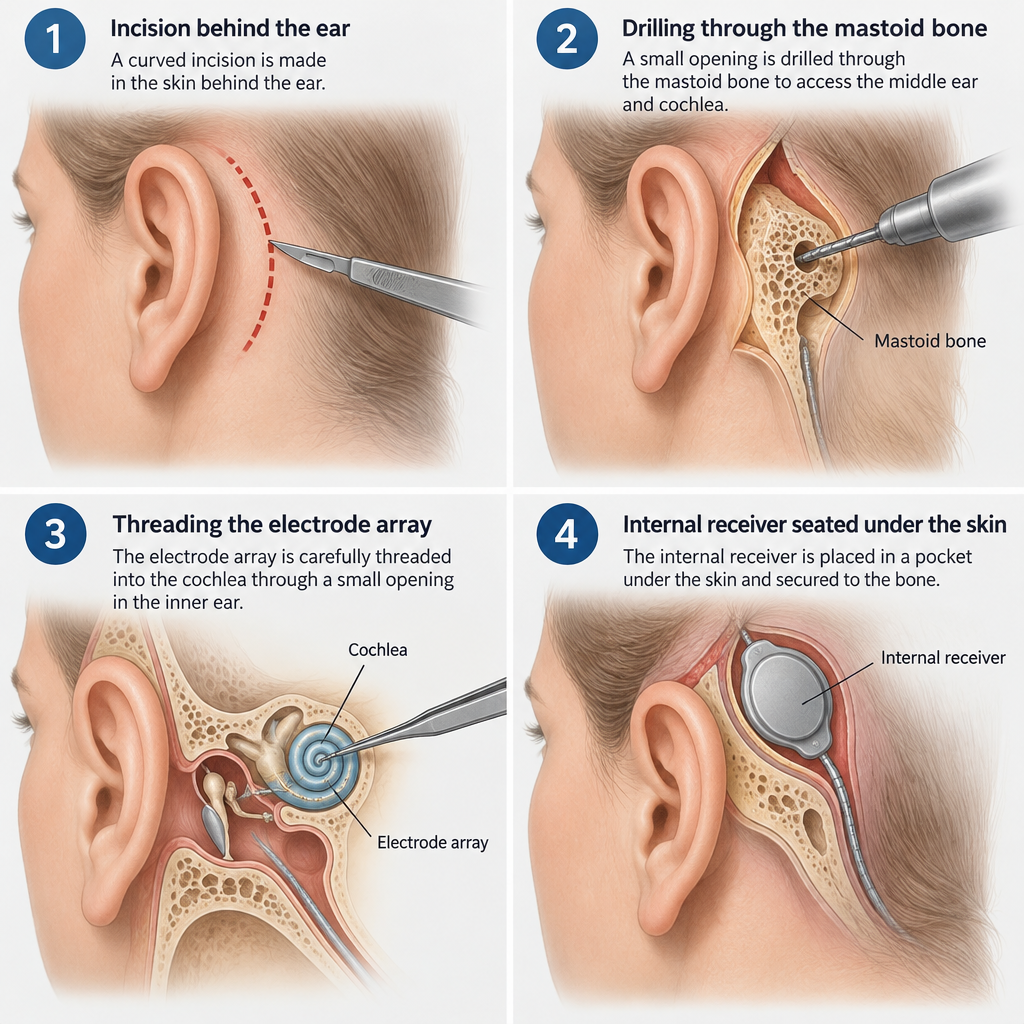
    1. You are given general anesthesia, so you are asleep throughout.
    2. A small area of hair behind the ear may be shaved, and a curved incision is made.
    3. The surgeon drills through the mastoid bone behind the ear to reach the middle ear.
    4. A shallow bed or snug pocket is made under the skin for the internal receiver.
    5. The electrode array is threaded into the cochlea, usually through the round window.
    6. The team tests the implant’s electrodes and your auditory nerve response while you sleep.
    7. The incision is closed and covered with a pressure dressing.

    Throughout the operation, the team monitors your facial nerve, which runs close to the surgical route. Some hospitals take an X-ray afterward to confirm the electrode’s position.

    Insights a surgeon will usually share

    Surgeons often stress two points. The first is that the operation is on bone and the inner ear, not the brain. The second is that many teams now use “soft” insertion techniques and thinner electrodes to try to preserve whatever natural low-pitch hearing you still have. Preservation isn’t guaranteed, so ask your surgeon for their own results.

    Recovery timeline

    Step-by-Step Surgical Procedure Diagram
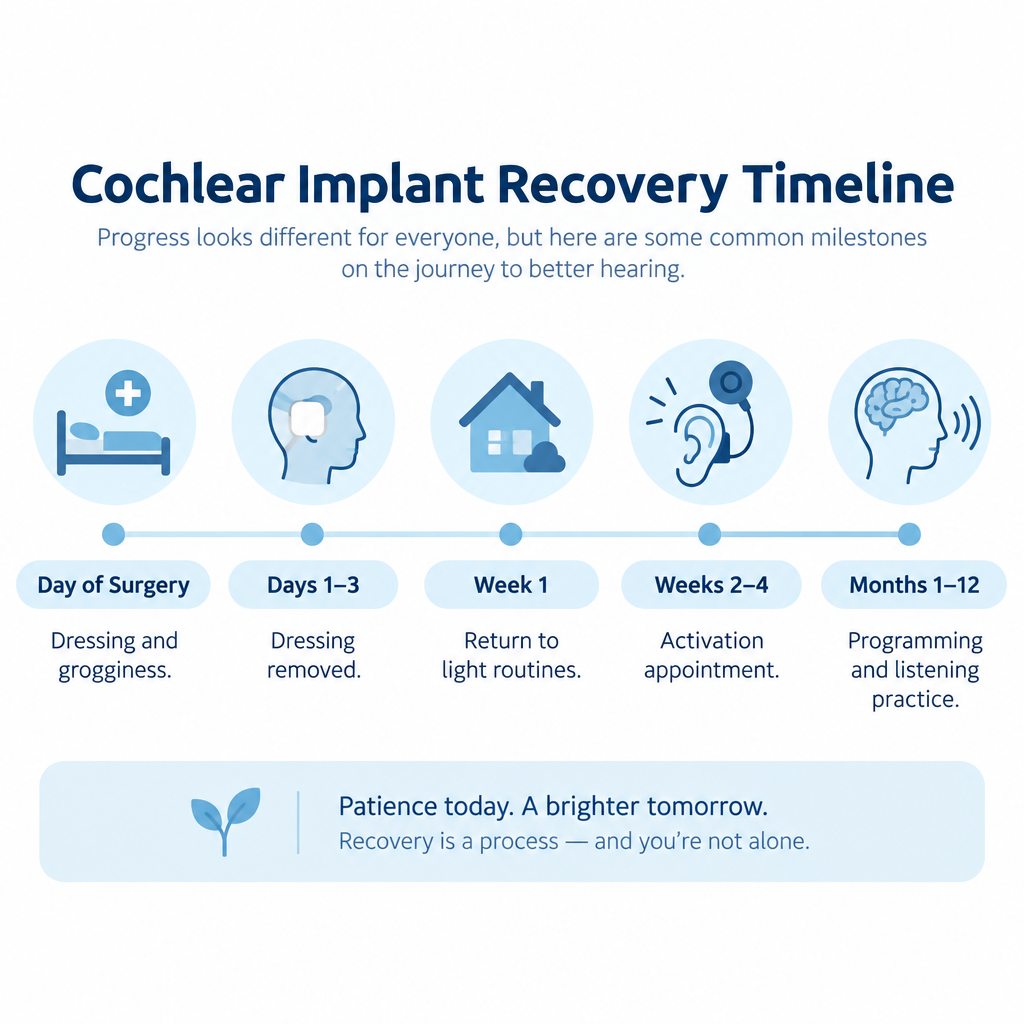
    When What is typical
    Day of surgery Grogginess, ear pressure, a head dressing, mild to moderate pain
    Days 1 to 3 Dressing removed, some dizziness, tenderness behind the ear
    Week 1 Most adults return to desk work and light activity
    Weeks 1 to 2 Stitches removed or dissolving, swelling fading
    Weeks 2 to 4 Activation appointment at many centers
    Months 1 to 12 Repeated programming visits and listening practice

    In the first weeks, you may notice a few side effects:

    • Dizziness or imbalance often settles within days, though some people feel it for longer.
    • Taste changes, such as a metallic taste on one side of the tongue, happen because a small taste nerve runs through the middle ear.
    • Numbness around the ear may last for weeks.
    • Tinnitus can change, either for better or worse.

    Keep the incision dry until your team clears it. You will also be told to avoid heavy lifting, contact sports and blowing your nose hard for a few weeks.

    Hearing tip

    Before activation, you’ll hear little or nothing on the implanted side. Turn on closed captioning for TV and video calls, and set up telecommunications relay service for phone calls so you don’t miss anything important.

    See a professional

    Call your surgeon promptly for fever, spreading redness, fluid from the wound, facial weakness, a stiff neck or a severe headache. If you notice sudden hearing loss in your other ear, treat it as a medical emergency.

    Hearing with your new device

    Activation is when an audiologist attaches the external sound processor and programs it. First sounds are often described as beeps, robotic voices or high-pitched chatter. That is normal. Your brain needs time to adapt to electrical hearing.

    Most people improve noticeably over the first 3 to 6 months, and many keep improving for a year or more. Daily listening practice speeds this up. Some newer processors support Bluetooth streaming, and a few are ready for Auracast broadcast audio, which helps in venues that offer it.

    Questions for your surgeon

    Recovery Timeline Chart
    • How many implant operations do you perform each year?
    • Will this be outpatient, or should I plan to stay overnight?
    • What are your rates of infection, facial nerve injury and device failure?
    • How likely is it that I’ll keep some natural hearing?
    • Is my device safe for MRI scans, and with what precautions?
    • When will activation happen, and how many programming visits come after?

    Supporting your child

    Children can receive implants from as young as 9 months, depending on the device and their hearing loss. The operation itself is similar to the adult version. Younger children usually bounce back from surgery quickly, but they need close supervision so they don’t knock or scratch the incision.

    Prepare your child with simple, honest words about a “sleepy medicine” and a bandage. Bring a favorite toy. Many families keep using sign language alongside spoken language during the early months, and you should plan for regular speech and listening therapy afterward.

    FAQ

    How serious is cochlear implant surgery?

    It is a well-established operation with a low rate of serious complications. It still carries real risks: infection, dizziness, taste changes, facial nerve injury, meningitis and device failure. Most of these are uncommon, and facial nerve injury is rare.

    How painful is cochlear implant surgery?

    Most people describe aching, pressure and tenderness behind the ear rather than severe pain. It is usually managed with over-the-counter pain relief or a short course of prescription medication. Discomfort typically eases within a few days.

    Is cochlear implant surgery major surgery?

    It involves general anesthesia and drilling through bone, so it is a significant operation. Even so, it is often done as a same-day or overnight procedure, and recovery is shorter than many people expect.

    How long does it take to fully recover from cochlear implant surgery?

    The incision usually heals within 2 to 4 weeks, and most adults resume normal activities within one to two weeks. Learning to hear with the implant is a separate process that unfolds over months, often a year or longer.

  • Swimmer’s Ear Basics: Causes, Prevention and When to See a Doctor

    Swimmer’s Ear Basics: Causes, Prevention and When to See a Doctor

    Swimmer’s ear is an infection of the outer ear canal, usually caused by bacteria that grow when water stays trapped inside your ear. The telltale sign is pain that gets worse when you tug on your earlobe or press the small flap in front of your ear. Most cases clear within 7 to 10 days with prescription eardrops, and a few simple drying habits prevent most repeat infections.

    Last updated: October 29, 2026. This guide is general information, not a diagnosis. See a doctor if you have ear pain, drainage or any change in your hearing.

    Medical nameAcute otitis externa
    Usual causeBacteria in trapped water
    Key signPain when ear tugged
    Typical treatmentAntibiotic eardrops
    Usual recovery7 to 10 days

    What swimmer’s ear is

    Your ear canal is a short tunnel. It runs from the opening of your ear to your eardrum. Thin skin lines it, and a light coating of earwax protects that skin from water and germs.

    Swimmer’s ear happens when that protection breaks down. Water sits in the canal, the skin softens, and bacteria move in. Doctors call it acute otitis externa: “otitis” means ear inflammation and “externa” means the outer ear.

    It’s far from rare. A CDC analysis estimated that outer ear infections lead to about 2.4 million healthcare visits a year in the United States. Summer brings the most cases, but you can get swimmer’s ear any time of year, even if you never swim.

    Most infections are bacterial. The two usual culprits are Pseudomonas aeruginosa and Staphylococcus aureus. A smaller share are fungal, which doctors call otomycosis. Fungal cases tend to itch more and often follow antibiotic drops.

    Symptoms of swimmer’s ear

    Symptoms usually start mild and can build over a few days if you don’t treat them. Doctors often sort them into three stages.

    Mild symptoms

    • Itching inside the ear canal
    • Slight redness
    • Mild discomfort that gets worse when you pull on the outer ear or push on the tragus (the bump in front of the canal)
    • Some clear, odorless fluid

    Moderate symptoms

    • More intense itching and pain
    • Spreading redness
    • Heavier fluid drainage
    • A feeling of fullness, as if the ear is plugged
    • Partial blockage of the canal from swelling, debris or fluid
    • Decreased or muffled hearing

    Advanced symptoms

    • Severe pain that can spread to your face, neck or side of your head
    • A canal that is completely blocked
    • Redness or swelling of the outer ear
    • Swollen lymph nodes in your neck
    • Fever

    The muffled hearing comes from swelling and gunk physically blocking sound. It usually returns to normal once the infection clears. If your hearing drops suddenly, especially in one ear and without the pain and swelling of an infection, treat it as an emergency (more on that below).

    Sore ears after swimming: is it swimmer’s ear?

    Outer Ear Canal Anatomy Diagram

    Not every sore ear after swimming is an infection. A few other problems feel similar, and the details help you tell them apart.

    What you notice Swimmer’s ear Middle ear infection Trapped water Earwax blockage
    Pain when you tug the ear Yes, often sharp Usually no No No
    Where it starts Outer canal Behind the eardrum Outer canal Outer canal
    Common trigger Water, scratching Cold or sinus infection Swimming, showering Wax buildup, swabs
    Drainage Clear fluid, then pus Only if eardrum ruptures Water trickles out Rarely
    Fever Only in advanced cases Common, especially in kids No No
    Fullness or muffled hearing Yes Yes Yes, briefly Yes

    The tug test is the most useful clue. Gently pull your earlobe down or your outer ear up and back. If that sends a jolt of pain through the canal, an outer ear infection is likely. Middle ear infections hurt deeper and don’t usually change when you move the outer ear.

    Trapped water feels sloshy and annoying, but it doesn’t hurt much. It usually drains within a few hours. If it lingers for a day and starts to itch or ache, that’s when swimmer’s ear can begin.

    Drainage after a middle ear infection can mean the eardrum has torn. A perforated eardrum needs a doctor’s look before you put anything in your ear, including home drops.

    What causes swimmer’s ear

    Your ear has natural defenses: earwax that repels water, a slightly acidic surface that slows bacteria, and skin that sheds debris outward. Swimmer’s ear starts when something overwhelms those defenses.

    Common triggers include:

    • Moisture. Water left in the canal after swimming, showering or sweating softens the skin and gives bacteria a warm, damp place to grow.
    • Contaminated water. Lakes, rivers and poorly maintained pools and hot tubs can carry higher bacteria levels.
    • Scratches and scrapes. Cotton swabs, fingers, hairpins and fingernails can make tiny breaks in the skin.
    • Removing too much earwax. Cleaning your ears aggressively strips the protective coating.
    • Skin sensitivity. Hair dye, hairspray, shampoo and some earrings can irritate the canal skin.

    A single swim rarely causes it on its own. The combination of moisture plus damaged skin is what usually opens the door.

    Risk factors

    Swimmer's Ear Symptom Stages Chart

    Some people get swimmer’s ear more often than others. Your risk goes up if you:

    • Swim often, especially in lakes or rivers
    • Live in a hot, humid climate
    • Have narrow ear canals, which trap water more easily
    • Clean your ears with cotton swabs or other objects
    • Wear hearing aids, earbuds or earplugs for long stretches
    • Have eczema, psoriasis or seborrheic dermatitis affecting the ear
    • Have allergies to hair products or metals in jewelry
    • Have diabetes or a weakened immune system, which raises the risk of serious complications

    Children and teens who spend summers in pools get it often. Adults who wear in-ear devices all day are a large group that rarely gets mentioned, and we cover them in their own section below.

    When to see a doctor

    You can’t treat a true swimmer’s ear infection with over-the-counter products alone. Antibiotic eardrops require a prescription. Book a visit with your doctor, an urgent care clinic or a telehealth service if you have even mild symptoms that don’t settle within a day or two.

    Many primary care offices offer same-day appointments for ear pain. A telehealth visit can help you decide what to do, but a clinician usually needs to look inside the ear to confirm the diagnosis.

    See a professional

    Get same-day care for severe pain, fever, pus, swollen neck glands or redness spreading to your face. Sudden hearing loss in one ear is an emergency: go to an ER or call an ENT within 72 hours.

    Call your doctor sooner rather than later if you have diabetes or a weakened immune system. Infections can spread faster in these groups.

    Also go back if you started drops and you don’t notice improvement within 48 to 72 hours. That usually means the drops aren’t reaching the infection, the germ isn’t responding, or the problem is something else.

    Possible complications

    Most cases heal fully. When swimmer’s ear goes untreated or doesn’t respond, a complication can happen:

    • Temporary hearing loss. Muffled hearing usually returns once the swelling goes down.
    • Chronic otitis externa. Doctors use this term when the infection lasts longer than three months. It’s more likely with unusual bacteria, skin conditions or fungal infections.
    • Deep tissue infection. Rarely, the infection spreads into the surrounding skin and tissue (cellulitis).
    • Necrotizing otitis externa. This is the most serious complication. The infection spreads to the cartilage and bone at the base of the skull. It mainly affects older adults with diabetes or weakened immunity and needs urgent hospital treatment.

    Warning signs of a spreading infection include worsening pain despite treatment, pain deep in the head, facial weakness and fever. Don’t wait on any of these.

    How doctors diagnose and treat swimmer’s ear

    Diagnosis

    Your doctor will look inside your ear with an otoscope, a lighted scope. They’ll check for redness, swelling and debris, and try to see your eardrum. If they can’t see it because of swelling, they’ll treat you as though it could be damaged.

    If the infection is severe, keeps coming back or doesn’t respond to treatment, your doctor may take swabs of the discharge. A lab can identify the germ and show which antibiotic or antifungal works best. Some people get referred to an ear, nose and throat specialist. The American Academy of Otolaryngology’s ENThealth site is a solid source of patient information if you want to read more about specialist care.

    Cleaning the canal

    Drops can’t work if they can’t reach the skin. Your doctor may gently remove debris and discharge with suction or a small instrument. This step makes a big difference in how fast you heal.

    Prescription eardrops

    Eardrops are the first-line treatment for most cases. The American Academy of Otolaryngology–Head and Neck Surgery guideline recommends topical drops over oral antibiotics for uncomplicated swimmer’s ear. Common options include:

    • Antibiotic drops, such as ofloxacin, or ciprofloxacin with a steroid
    • Combination drops with an antibiotic and a steroid to calm swelling
    • Acidic drops that restore the ear’s normal pH
    • Antifungal drops if a fungus is the cause

    If your eardrum might be torn or you have ear tubes, your doctor will choose drops that are safe for the middle ear. Some antibiotics, such as neomycin, can damage hearing if they get past the eardrum, so tell your doctor about any past eardrum problems.

    Most people feel better in two to three days. Keep using the drops for the full course your doctor prescribes, which is typically 7 to 10 days.

    Ear wick

    If your canal is too swollen for drops to get in, your doctor may place a wick. This is a small piece of sponge or gauze that draws the medicine deeper. It usually falls out or gets removed after a few days.

    Oral antibiotics

    Pills are not usually needed. Doctors save them for infections that spread beyond the ear canal, or for people with diabetes or weakened immune systems.

    Pain relief

    Swimmer’s ear can be surprisingly painful. Over-the-counter pain relievers such as ibuprofen or acetaminophen help with mild to moderate pain. Your doctor may suggest something stronger for a few days if the pain is severe.

    How to use eardrops correctly

    Many treatment failures come down to technique. The drops have to reach the full length of the canal.

    How to put in eardrops

    1. Warm the bottle in your hands for a minute or two. Cold drops can make you dizzy.
    2. Lie on your side with the affected ear facing up.
    3. For adults, gently pull the outer ear up and back. For children, pull it down and back.
    4. Fill the canal with the number of drops your doctor prescribed.
    5. Press the tragus a few times to push the drops deeper.
    6. Stay lying down for 3 to 5 minutes.
    7. Wipe away any excess with a tissue. Don’t plug the ear tightly.

    If possible, have someone else put the drops in for you. It’s much easier to get the angle right.

    Home care while you heal

    Treatment works best when you protect the ear while it recovers.

    • Keep the ear dry. When you shower, place a cotton ball coated in petroleum jelly at the opening of your ear.
    • Skip swimming. Most doctors advise staying out of the water until symptoms clear, often 7 to 10 days. Ask your doctor before getting back in.
    • Don’t put anything in your ear. No cotton swabs, fingers or homemade remedies.
    • Pause in-ear devices. Leave out earbuds and hearing aids until the pain and drainage stop, unless your doctor says otherwise.
    • Follow up if needed. Return if you don’t feel better in two to three days or you get worse at any point.

    Some people notice ringing in the ear while the canal is swollen. It usually fades as the infection clears. If it keeps you up at night, a white noise maker for tinnitus can make the quiet less noticeable, but tell your doctor if the ringing continues after you’ve healed.

    7 ways to prevent swimmer’s ear

    You can prevent most cases with a few habits. These matter most if you swim often or have had swimmer’s ear before.

    1. Dry your ears after water. Use the steps below after every swim and shower.
    2. Wear a swim cap or earplugs. Well-fitted swim earplugs keep water out. Custom-molded plugs from an audiologist fit best if you swim a lot.
    3. Leave earwax alone. A normal amount of wax protects your canal. If wax causes a blockage, have a professional remove it.
    4. Never use cotton swabs inside the canal. Clean only the outer ear with a washcloth.
    5. Choose clean water. Avoid swimming in lakes or rivers after heavy rain or where water quality warnings are posted. Skip pools and hot tubs that look cloudy.
    6. Protect your ears from hair products. Put cotton balls in your ears before using hairspray or hair dye.
    7. Consider drying drops. Over-the-counter drops made of isopropyl alcohol and glycerin help water evaporate. Some doctors suggest a homemade mix of equal parts white vinegar and rubbing alcohol. Use either only if your eardrum is intact and you have no ear tubes, and never on an ear that’s already sore.

    Dry your ears after swimming

    1. Towel-dry the outside of each ear gently.
    2. Tilt your head to each side and pull your earlobe in different directions to let water drain.
    3. Set a hair dryer to the lowest heat and fan speed.
    4. Hold it several inches from your ear and move it back and forth for about 30 seconds.
    5. Never put a towel corner or swab into the canal.

    Hearing tip

    If you’ve had swimmer’s ear more than once, ask your doctor whether preventive drying drops make sense for you before swim season starts.

    Hearing aids, earbuds and swimmer’s ear

    Anything that sits in your ear canal for hours can raise your risk. In-ear devices trap heat and moisture, block airflow and can rub the skin. Sweat from a workout makes it worse.

    Some simple habits help:

    • Clean devices daily. Wipe earbud tips, hearing aid domes and earmolds with a dry cloth or the cleaning tool that came with them. Replace domes and wax filters on the schedule in your user guide.
    • Let your ears breathe. Take earbuds out between calls or playlists. If you wear hearing aids all day, remove them for a while during the evening.
    • Dry your devices overnight. A hearing aid drying box or dehumidifier pulls moisture out of the devices before you put them back in.
    • Don’t share earbuds. Sharing moves bacteria from one ear to another.
    • Don’t confuse water resistance with ear protection. A device rated IP68 can survive water. That says nothing about the moisture it traps against your skin.

    If you get swimmer’s ear often while wearing hearing aids, talk to your audiologist. A more open dome, a vented earmold or a different style can let more air in. When you get a new fitting, a real ear measurement helps confirm the device still delivers the right sound once the earmold changes.

    Never wear hearing aids or earbuds over an infected ear unless your doctor clears it. The device can push debris deeper, trap drainage and slow healing.

    FAQ

    How long does swimmer’s ear last?

    With prescription drops, most people feel better in two to three days. The infection usually clears in 7 to 10 days. Untreated, it can last much longer and get worse.

    Can swimmer’s ear go away on its own?

    Very mild irritation sometimes settles if the ear stays dry. A true infection usually needs antibiotic drops. Waiting it out risks a deeper or longer-lasting infection, so see a doctor if pain lasts more than a day.

    Is swimmer’s ear contagious?

    No. It doesn’t spread from person to person. Sharing earbuds or earplugs can still move bacteria around, so keep your own.

    What’s the difference between swimmers ears and a regular ear infection?

    Swimmer’s ear affects the outer canal and hurts when you move the outer ear. A regular ear infection usually means a middle ear infection behind the eardrum. It often follows a cold and doesn’t hurt more when you tug the ear.

    Can swimmer’s ear cause hearing loss?

    It often causes temporary muffled hearing from swelling and blockage. Hearing usually returns once the infection clears. Permanent hearing loss is rare. If your hearing doesn’t come back after treatment, see an audiologist.

    Why do I keep getting swimmer’s ear?

    Repeat infections usually come from moisture, cleaning habits, narrow canals, skin conditions or long hours wearing in-ear devices. A doctor can check for an underlying cause, such as eczema or a fungal infection, and suggest preventive drops.

    Can I fly with swimmer’s ear?

    Usually yes. Flying doesn’t directly affect the outer ear canal the way it can affect the middle ear. If you have severe pain or a possible perforated eardrum, check with your doctor before you travel.

  • Hearing Aids for Tinnitus and How They Help Reduce Ringing

    Hearing Aids for Tinnitus and How They Help Reduce Ringing

    Hearing aids help many people with tinnitus, especially when the ringing comes with hearing loss. Most hearing aid users with tinnitus report at least some relief, and roughly one in five report major relief. They do not cure tinnitus. They make it quieter, less intrusive and easier for your brain to ignore.

    Last updated: October 29, 2026

    TypeSound therapy via amplification
    Guideline statusRecommended with hearing loss
    Typical resultPartial relief, not cure
    Best forTinnitus plus hearing loss

    Do hearing aids actually help with tinnitus?

    Yes, for the right person. If you have measurable hearing loss and bothersome tinnitus, a properly fitted hearing aid is one of the most practical first steps you can take. The American Academy of Otolaryngology–Head and Neck Surgery (AAO-HNS) clinical practice guideline on tinnitus recommends a hearing aid evaluation for people with persistent, bothersome tinnitus and documented hearing loss. That puts hearing aids among a small group of approaches the guideline actively supports, alongside cognitive behavioral therapy.

    The honest framing is relief, not removal. Most people who get a hearing aid for ringing in the ears still hear their tinnitus at times, particularly in quiet rooms or after taking the devices out at night. What changes is how much of your attention the sound grabs and how much it bothers you. For many people, that shift is the difference between tinnitus running the day and tinnitus fading into the background.

    If your hearing tests as normal, a standard hearing aid has little to amplify and is unlikely to help much. That is a separate situation covered later in this guide.

    Why tinnitus and hearing loss show up together

    Tinnitus is the perception of sound, such as ringing, hissing, buzzing or whooshing, that has no outside source. It is common. A 2022 meta-analysis in JAMA Neurology estimated that about 14% of adults worldwide experience tinnitus, and about 2% have a severe form.

    The large majority of people with tinnitus also have some degree of hearing loss, often high-frequency loss from aging or noise exposure. Many don’t realize it because the loss is mild or affects pitches they rarely think about, like birdsong, the “s” and “f” sounds in speech, or a microwave beep.

    The leading explanation for the link sits in the brain rather than the ear. When damaged hair cells in the inner ear stop sending normal signals for certain frequencies, the auditory system doesn’t simply go quiet. Neurons in the auditory pathway turn up their sensitivity to compensate, a process researchers often call increased central gain. That extra “volume” can produce activity the brain interprets as sound. In plain terms, the brain fills in the gap where input used to be.

    This is why tinnitus pitch often matches the region of hearing loss. Someone with a dip around 4,000 Hz from years of loud concerts or power tools frequently hears a tone in that same range. It also explains why quiet makes tinnitus louder. With less outside sound coming in, the internal signal has less competition.

    Ludwig van Beethoven described exactly this pattern in an 1801 letter, complaining that his ears buzzed day and night as his hearing declined. Anyone who has asked whether Beethoven was deaf will find that tinnitus was part of his story from the early years of his hearing loss.

    How hearing aids reduce ringing in the ears

    How Hearing Aids Reduce Tinnitus – Mechanism Diagram

    Hearing aids work on tinnitus through several overlapping mechanisms. None is magic on its own, but together they explain why so many users report feeling better.

    They restore the missing sound

    Amplifying the frequencies you’ve lost gives your auditory system real input again. With more normal signal arriving, the brain has less reason to keep its internal gain cranked up. Over weeks and months, many people notice their tinnitus becoming less prominent even when they aren’t actively listening for it.

    This works best when the hearing aid can reach the frequencies involved. Many modern hearing aids deliver useful amplification up to roughly 8,000 to 10,000 Hz. If your loss and tinnitus sit above what the device can amplify, this particular benefit shrinks.

    They mask the tinnitus with everyday sound

    When you can hear the hum of a refrigerator, traffic outside or the rustle of your own clothes, those sounds partially cover the tinnitus. Audiologists generally aim for partial masking rather than full masking. You should still faintly hear your tinnitus underneath the background sound. Complete masking can bring short-term relief, but partial masking appears to better support habituation, the gradual process in which your brain learns to treat the tinnitus as unimportant.

    They reduce listening effort and stress

    Straining to follow conversation is tiring. People with untreated hearing loss often end the day exhausted and tense, and stress reliably makes tinnitus more noticeable. Hearing speech clearly lowers that effort. It also redirects your attention outward, toward voices and the world around you, and away from the sound inside your head.

    This attentional effect matters more than many people expect. Tinnitus distress is driven heavily by how much focus the sound commands and the emotional reaction it triggers. Hearing aids give your attention somewhere better to go.

    Many include built-in sound generators

    Most prescription hearing aids from major manufacturers, and some over-the-counter models, include a tinnitus program that plays a gentle sound through the hearing aid itself. Options typically include white, pink or brown noise, ocean-like sounds, or tonal patterns. You or your audiologist can set the volume, and many apps let you switch sounds during the day. Some people use the generator only in quiet settings, such as reading or working alone, and rely on regular amplification the rest of the time.

    What the research says

    Evidence for hearing aids and tinnitus is encouraging but not airtight. Large surveys show high rates of self-reported relief. Formal clinical trials are fewer and smaller, which is common in tinnitus research.

    Source What it found
    MarkeTrak VIII survey (Kochkin, Tyler & Born, 2011) About 60% of hearing aid users with tinnitus reported some relief; about 22% reported major relief
    AAO-HNS Clinical Practice Guideline: Tinnitus (2014) Recommends hearing aid evaluation for persistent, bothersome tinnitus with hearing loss
    Same guideline Recommends cognitive behavioral therapy; recommends against routine medications and dietary supplements for tinnitus
    Cochrane review of sound therapy (Sereda et al., 2018) No clear difference between hearing aids, sound generators and combination devices; overall evidence quality rated low
    JAMA Neurology meta-analysis (Jarach et al., 2022) Tinnitus affects about 14% of adults; about 2% have severe tinnitus

    Two things stand out. First, a majority of users report benefit, which is a strong signal even from survey data. Second, the Cochrane finding suggests the specific delivery method matters less than getting appropriate sound therapy at all. That’s useful when choosing a device: a hearing aid with a solid tinnitus program is valuable, but the fitting and consistent daily use matter at least as much as the brand.

    Manufacturers also publish their own studies. Oticon, for instance, reports that users of its hearing aids with Tinnitus SoundSupport experienced a significantly reduced impact of tinnitus. Company-funded research is worth reading, but weigh it below independent trials.

    Tinnitus features by hearing aid brand

    Tinnitus and Hearing Loss Connection

    Every major manufacturer offers a tinnitus feature, though each takes a slightly different approach. The table below covers the main prescription brands and how their tinnitus tools work. Feature availability varies by model and technology tier, so confirm the specific device with your provider.

    Brand Tinnitus feature How it works App control
    Oticon Tinnitus SoundSupport Broadband noise and nature sounds, including ocean-like options Oticon Companion app
    Phonak Tinnitus Balance Broadband noise generator; can also stream relaxing audio myPhonak app
    Signia Notch Therapy, plus noise and ocean sounds Notch Therapy reduces amplification at the tinnitus pitch for tonal tinnitus Signia app
    ReSound Tinnitus Sound Generator Built-in noise and nature sounds; pairs with the free ReSound Relief app ReSound Smart 3D and ReSound Relief
    Widex Zen Fractal “Zen” tones and noise designed to be calm and non-repetitive Widex Moment app
    Starkey Multiflex Tinnitus Customizable noise stimulus shaped to your hearing profile My Starkey app

    Signia’s Notch Therapy deserves a separate mention because it works differently. Instead of adding a sound, it slightly reduces amplification in a narrow band centered on your tinnitus pitch. The idea is to calm overactive neurons in that region over time. It is intended for tonal tinnitus with a clear, identifiable pitch, so it isn’t the right fit for hissing or broadband tinnitus.

    Widex Zen tones are another distinctive option. The fractal tones play in a chime-like, non-repeating pattern, which some people find more relaxing than static noise. Others prefer plain noise. Trying both during a fitting is the only way to know.

    Hearing tip

    Try each tinnitus sound for at least a few days before deciding. A sound that seems annoying in the clinic often feels different at home in a quiet room.

    Prescription, OTC or earbuds: which route makes sense

    Since the FDA’s over-the-counter hearing aid rule took effect on October 17, 2022, adults 18 and older with perceived mild to moderate hearing loss can buy hearing aids without a prescription or exam. That opened new, cheaper routes. For tinnitus specifically, though, the right path depends on how much your tinnitus bothers you and how complex your hearing is.

    Route Typical price range (pair) Tinnitus programs Professional fitting
    Prescription, independent clinic Roughly $2,000 to $7,000, often bundled with follow-up care Standard on most current models Yes, with ongoing adjustments
    Prescription, warehouse club Roughly $1,500 to $2,500 Varies by model Yes, in-store hearing test and fitting
    OTC hearing aids Roughly $200 to $1,500 for most models Some models include one; many don’t Self-fit, sometimes with remote support
    Earbuds with a hearing aid feature (e.g., AirPods Pro 2 and 3) About $249 No built-in tinnitus generator Self-fit using a hearing test in the app

    Prices vary widely by region, technology level and what’s included, so treat these as broad ranges rather than quotes.

    When prescription aids are the better choice

    Go prescription if your tinnitus is moderate or severe, if it affects your sleep or mood, or if your hearing loss is more than mild. You get a full hearing test, a verified fitting, a professionally tuned tinnitus program and someone to adjust it as your needs change. Tinnitus support often needs several visits to get right, and that follow-up is what bundled clinic pricing pays for.

    Warehouse clubs are a reasonable middle ground. If you’re weighing hearing aids at Costco, ask specifically whether the model you’re offered includes a tinnitus sound generator and whether staff will adjust it, since this varies.

    When OTC can work

    OTC devices can suit mild hearing loss with mild, occasional tinnitus. Check the product listing for a named tinnitus feature rather than assuming one exists. The FDA requires OTC labels to list warning signs that call for a medical evaluation first, and tinnitus or hearing loss in only one ear is one of them.

    Where earbuds fit

    Apple’s FDA-authorized hearing aid feature on AirPods Pro 2 and AirPods Pro 3 provides amplification for perceived mild to moderate loss. It doesn’t include a tinnitus generator, but the amplification itself can bring the restoring and masking benefits described above. You can pair it with the iPhone’s Background Sounds feature, covered below, for quiet moments.

    How to choose a hearing aid for tinnitus

    Start with a hearing test from an audiologist. Knowing the shape of your hearing loss and the pitch and loudness of your tinnitus drives every decision that follows. Then use this checklist when comparing devices:

    • A built-in tinnitus sound generator with several sound options and independent volume control.
    • App control so you can switch sounds and adjust tinnitus volume on your phone without a clinic visit.
    • Bluetooth streaming for music, podcasts or relief sounds sent directly to your ears.
    • Wide frequency range, especially if your loss and tinnitus sit in the high pitches.
    • Rechargeable batteries, which make all-day wear easier. Most current rechargeable models are rated for a full day of use, though heavy streaming shortens it.
    • Receiver-in-canal (RIC) style with open fitting where your hearing allows it. Open fittings let natural sound in and reduce the plugged feeling that can make tinnitus stand out.
    • A trial period long enough to judge tinnitus benefit. Ask for at least 30 days.
    • Follow-up visits included, since tinnitus programs often need adjusting after a few weeks of real-world use.

    Ask the provider directly how they set up tinnitus programs and whether they offer tinnitus counseling. Hearing aid providers vary a lot here. Some fit the devices and switch the tinnitus program on at a default setting. Others tune it carefully and teach you how to use it. You want the second kind.

    Getting the fitting right

    A great hearing aid fitted poorly will disappoint you. Three details make the biggest difference for tinnitus.

    Verified amplification. Ask for real ear measurement, a test that uses a tiny microphone in your ear canal to confirm the hearing aid delivers the amplification your hearing loss actually needs. Without it, many fittings under-amplify the high frequencies, which are exactly the frequencies most linked to tinnitus.

    Avoiding occlusion. When an earpiece fully blocks the ear canal, outside sound drops and your own body sounds get louder. Both can make tinnitus more noticeable. Open or vented domes avoid this for many people with mild to moderate loss.

    Full-time wear. Hearing aids help tinnitus most when you wear them during all your waking hours. The brain adapts to consistent input, and wearing devices only for social events limits that adaptation. Put them in when you get up and take them out at bedtime.

    Setting up a tinnitus program with your provider

    1. Describe your tinnitus: pitch, loudness, one or both ears, steady or pulsing.
    2. Ask for real ear measurement to verify the amplification.
    3. Try two or three relief sounds in the clinic.
    4. Set the tinnitus volume just below your tinnitus level.
    5. Confirm you can adjust it in the brand’s app.
    6. Book a follow-up for two to four weeks later.

    What to expect in the first eight weeks

    Most people expect hearing aids to bring immediate relief. Some get it. Many experience a more gradual curve, and knowing that ahead of time keeps you from giving up too early.

    Days 1 to 7. Everything sounds loud, sharp or tinny. Your own voice may sound strange. Some people notice their tinnitus less right away because the world is suddenly full of sound. Others notice no change yet. Both are normal.

    Weeks 2 to 4. Your brain starts adjusting to amplified sound. This is the best time for a follow-up visit, because you now know which situations still bother you. Report when your tinnitus is most noticeable so your provider can adjust the program or add a dedicated quiet-room setting.

    Weeks 4 to 8. Many users report that they “forget” about tinnitus for longer stretches. The ringing may sound the same when you deliberately listen for it, but it captures your attention less often. That reduced intrusiveness is the real goal of sound therapy.

    Beyond two months. Habituation continues for many months. If you’ve worn the aids consistently and see no benefit at all by the end of your trial, talk to your provider about changing the tinnitus program or adding counseling-based treatment rather than writing off sound therapy entirely.

    A small number of people find their tinnitus briefly seems louder when they remove their hearing aids. This contrast effect is common and usually fades as habituation progresses.

    The nighttime gap: managing tinnitus after the aids come out

    Bedtime is when many people with tinnitus struggle most. The hearing aids come out, the room goes quiet, and the ringing takes center stage. It’s also the moment most hearing aid guides skip.

    You can’t sleep in most hearing aids, so plan a separate nighttime sound source. Good options include a bedside fan, a dedicated sound machine, a pillow speaker or soft sleep earbuds. Keep the volume low, below the level of your tinnitus, for the same partial-masking reason that applies during the day.

    If you use an iPhone, the built-in Background Sounds feature plays steady noise or nature sounds without needing a separate app. The sound options include Balanced Noise, Bright Noise, Dark Noise, Ocean, Rain and Stream, with more added in later iOS versions.

    Turn on Background Sounds on iPhone

    1. Open Settings.
    2. Tap Accessibility, then Audio & Visual.
    3. Tap Background Sounds and switch it on.
    4. Tap Sound and choose a sound.
    5. Set Volume below your tinnitus level.
    6. Turn off Stop Sounds When Locked for sleep.

    You can also add a Hearing button to Control Center to start and stop Background Sounds quickly. Android users can find similar noise options in free apps, including the ReSound Relief app, which is available whether or not you own ReSound hearing aids.

    Hearing tip

    A sleep timer that fades sound out after you’ve fallen asleep works well for some people. Others sleep better with sound running all night. Try both for a week each.

    When hearing aids are unlikely to help

    Hearing aids for tinnitus work best within a specific profile. Set your expectations differently in these situations.

    Normal hearing. If your hearing test shows no loss, a hearing aid has nothing meaningful to amplify. Standalone sound generators, which look like hearing aids but only produce relief sounds, are an option here, as are counseling-based treatments.

    Very high-pitched loss and tinnitus. If your hearing loss and tinnitus sit above the frequency range a hearing aid can reach, the restoring effect is limited. Sound generators and masking can still help.

    Severe or profound loss. Hearing aids may provide too little benefit. Cochlear implants often reduce tinnitus for people who qualify, though they’re a major decision made with an implant team.

    Tinnitus driven mainly by other causes. Tinnitus linked to jaw problems, neck issues, medications, earwax or blood vessel conditions needs its cause addressed. Amplification won’t fix it.

    Sound sensitivity alongside tinnitus. If everyday sounds feel painfully loud (hyperacusis), amplification must be set very carefully. Tell your provider before the fitting.

    See a professional

    Sudden hearing loss in one or both ears is a medical emergency; get seen the same day. Also see a doctor promptly for tinnitus in one ear only, pulsing tinnitus that beats with your heart, or tinnitus with dizziness or ear pain.

    Pulsatile tinnitus, a rhythmic whooshing that matches your heartbeat, deserves special mention because it can signal a blood vessel issue that needs imaging. One-sided tinnitus with uneven hearing can occasionally point to a growth on the hearing nerve, which a doctor will want to rule out. These are reasons to see an ENT physician before buying any device.

    Other tinnitus treatments to know

    Hearing aids are one tool among several. For bothersome tinnitus, combining approaches often works better than any single one. This table summarizes the main options and how strongly the evidence supports them, based mainly on the AAO-HNS guideline and later FDA actions.

    Treatment What it involves Evidence and status
    Cognitive behavioral therapy (CBT) Structured therapy that changes how you respond to tinnitus; available in person, online or by app Recommended in the AAO-HNS guideline; strongest evidence for reducing distress
    Hearing aids Amplification plus optional built-in sound generators Recommended when hearing loss is present
    Sound therapy Noise generators, sound machines, apps Listed as an option; low-cost and low-risk
    Tinnitus Retraining Therapy (TRT) Directive counseling plus long-term low-level sound Used widely; evidence mixed but supportive for some people
    Progressive Tinnitus Management (PTM) A stepped program developed through the U.S. Department of Veterans Affairs Structured education and sound use, widely used in VA care
    Lenire bimodal neuromodulation Sound through headphones paired with mild electrical stimulation of the tongue Granted FDA De Novo authorization in March 2023; prescribed through clinics
    Medications and supplements Includes ginkgo, melatonin and zinc No drug is FDA-approved for tinnitus; guideline recommends against routine use

    Cognitive behavioral therapy deserves more attention than it gets. It doesn’t change the sound itself. It changes the anxiety, frustration and sleep disruption tied to it, and those are what make tinnitus feel unbearable for many people. Pairing CBT with hearing aids targets both the sound and your reaction to it.

    Protecting your remaining hearing matters too. Noise exposure is a leading cause of the hearing loss behind most tinnitus, and loud events can trigger temporary spikes. High fidelity earplugs reduce volume evenly across frequencies, so music and speech stay clear while the risk drops. They’re worth carrying to concerts, sporting events and noisy workplaces.

    Key takeaways

    • Hearing aids help many people with tinnitus, particularly when hearing loss is also present. About 60% of users report some relief in large survey data.
    • They work by restoring missing sound, partially masking the tinnitus, easing listening effort and, in most current prescription models, playing built-in relief sounds.
    • They reduce how intrusive tinnitus feels. They don’t cure it.
    • Fitting quality and full-time wear matter as much as the brand. Ask for real ear measurement and an open fitting where possible.
    • Plan for nighttime separately, since tinnitus often peaks once the aids come out.
    • Combine hearing aids with CBT if tinnitus affects your mood or sleep.
    • Sudden hearing loss, one-sided tinnitus and pulsing tinnitus need a doctor first.

    FAQ

    Can a hearing aid stop tinnitus completely?

    No. A hearing aid can make tinnitus much less noticeable and less bothersome, and some people say they rarely notice it while wearing their devices. The ringing usually remains in quiet settings or when the aids are out. No hearing aid cures tinnitus.

    How long does it take for hearing aids to help with tinnitus?

    Some people notice relief on the first day because the world gets louder around them. For most, meaningful improvement builds over several weeks of full-time wear as the brain adjusts. Give it the full trial period before judging.

    Do OTC hearing aids help with tinnitus?

    They can, if you have mild to moderate hearing loss, because amplification alone brings some masking and attention benefits. Fewer OTC models include a dedicated tinnitus sound generator, so check the listing carefully. If your tinnitus is moderate to severe or affects only one ear, see an audiologist or doctor first.

    Will hearing aids help if I have tinnitus but normal hearing?

    Usually not much. Standard hearing aids need hearing loss to correct. With normal hearing, standalone sound generators, sound apps and counseling-based approaches like CBT are typically better fits.

    Which hearing aid brand is best for tinnitus?

    There’s no single winner. Oticon, Phonak, Signia, ReSound, Widex and Starkey all offer tinnitus programs, and research suggests the delivery method matters less than consistent use and a good fitting. Signia’s Notch Therapy can suit tonal tinnitus with a clear pitch, while Widex Zen tones appeal to people who dislike static noise.

    Can hearing aids make tinnitus worse?

    Rarely, and usually because of a fitting problem. Over-amplification, a fully blocked ear canal or a tinnitus sound set too loud can increase discomfort. Tell your provider right away so they can adjust the settings. Tinnitus that seems louder only when you take the aids out is a common contrast effect that tends to fade.

    Does insurance cover hearing aids for tinnitus?

    Coverage varies widely by plan. Original Medicare doesn’t cover hearing aids, while many Medicare Advantage plans offer a hearing benefit with limits. Some private plans and state Medicaid programs provide coverage, and the U.S. Department of Veterans Affairs provides hearing aids to eligible veterans. Check your plan documents and ask the provider for an itemized quote.

  • High Fidelity Earplugs and How They Keep Music Clear

    High Fidelity Earplugs and How They Keep Music Clear

    High fidelity earplugs lower the volume of sound fairly evenly across bass, mids and treble, so music sounds quieter but still clear instead of muffled. Most consumer models cut about 15 to 25 decibels, which is enough to bring a loud concert down to a level your ears can tolerate for much longer. This guide covers how they work, how the leading models compare and how to fit them so they actually protect you.

    TypeFiltered reusable earplugs
    Typical reduction12 to 25 dB
    Price bandAbout $15 to $70
    Best forConcerts, musicians, clubs

    What High Fidelity Earplugs Actually Do

    A foam earplug blocks sound unevenly. It cuts high frequencies much more than low ones. Cymbals, vocals and guitar detail disappear, while bass and kick drum still come through. The result is the familiar “head under a pillow” effect.

    High fidelity earplugs use a small acoustic filter instead of solid material. The filter is a tuned channel, a membrane, or a damper that lets sound pass at a controlled level. The goal is a flatter response: if the band drops by 20 dB, every part of the mix drops by roughly 20 dB.

    There is a second, less obvious reason foam sounds dull. Your open ear canal has a natural resonance around 2,500 to 3,000 Hz. It boosts that range, which is where much of the clarity in speech and music lives. Plug the canal and that boost vanishes. Good musician filters are designed to restore some of it, which is why they sound more natural than their decibel number suggests.

    No consumer earplug is perfectly flat. Cheaper filtered models are closer to “less muffled” than “transparent.” Even so, the difference from foam is obvious the first time you try a pair at a gig.

    For a broader look at how filtered plugs sit next to foam, wax and silicone, our guide to types of earplugs walks through each material.

    How Loud a Concert Really Is

    Live music commonly measures between 100 and 110 dBA near the stage, with peaks higher still. Clubs and festival stages often run in the same range for hours.

    The US National Institute for Occupational Safety and Health (NIOSH) sets its recommended limit at 85 dBA averaged over 8 hours. Every 3 dB increase halves the safe time. That math gets brutal very quickly.

    Sound level (dBA) NIOSH recommended max exposure Typical example
    85 8 hours Busy restaurant, heavy traffic
    88 4 hours Loud bar
    91 2 hours Subway platform, power tools
    94 1 hour Loud rehearsal room
    97 30 minutes Nightclub floor
    100 15 minutes Rock concert, mid-venue
    103 About 7.5 minutes Concert near the speakers
    106 Under 4 minutes Front row at a loud show

    Now see what a 20 dB cut does. A 105 dBA show becomes roughly 85 dBA at your eardrum, if the plugs fit well. That moves you from a safe window of a few minutes to several hours. This is the main argument for high fidelity earplugs for concerts.

    Hearing tip

    Check the actual volume with a sound meter on your wrist or phone. On Apple Watch, turn on Settings > Noise > Noise Notifications to get an alert when your surroundings stay loud.

    Reading the Numbers: NRR, SNR and Real-World Protection

    Flat vs Uneven Frequency Attenuation

    You will see two main ratings on packaging.

    • NRR (Noise Reduction Rating): the US rating required by the EPA. It is measured in a lab with ideal fitting.
    • SNR (Single Number Rating): the European rating under EN 352 testing. It often reads a few dB higher than NRR for the same product.

    Neither number tells you how flat the response is. Two earplugs with the same rating can sound completely different. One might cut bass by 10 dB and treble by 30 dB, while the other cuts both by about 20 dB.

    Lab numbers also overstate what most people get. NIOSH’s 1998 guidance advises derating: subtract 50% from the NRR of formable (foam) plugs, 70% for all other earplugs, such as pre-molded or banded types, and 25% for earmuffs, to estimate typical real-world performance. Fit is the reason. A plug that sits shallow in your canal leaks sound around its edges.

    Many musician filters show a modest NRR that looks low on paper. Etymotic’s ER20XS, for example, carries an NRR of 12 dB, yet it is designed for roughly 20 dB of fairly even reduction. NRR testing weighs low frequencies heavily, and filtered plugs deliberately let more bass through than foam does.

    High Fidelity Earplugs Compared

    The figures below come from each maker’s published specifications. Prices change often, so treat the price bands as rough guides and check before buying.

    Attenuation and Filter Type

    Model Maker’s stated reduction Filter approach
    Loop Experience 2 17 dB (SNR) Acoustic channel and mesh
    Loop Experience 2 Plus 17 dB, plus about 5 dB with Mute insert Same, with add-on insert
    Etymotic ER20XS NRR 12 dB, about 20 dB even reduction Tuned filter in flanged tip
    Minuendo Lossless Adjustable, about 7 to 25 dB User-adjustable filter
    Custom ER9, ER15, ER25 9, 15 or 25 dB, near flat Etymotic filters in molded shells
    Standard foam earplug NRR commonly 29 to 33 dB Solid foam, uneven response

    Eargasm, Alpine, EarPeace and Vibes also publish ratings, but they have changed across product revisions. Read the rating printed on the box you actually buy rather than relying on older reviews.

    Features, Fit and Price Band

    Model Swappable filters Tip sizes included Carrying case Typical price band
    Loop Experience 2 No XS to L silicone, plus foam Yes $25 to $50
    Etymotic ER20XS No Standard or Large fit (sold separately) Yes, with cord Under $25
    Minuendo Lossless Adjustable instead Multiple sizes Yes $50 to $80
    Eargasm High Fidelity No Standard, smaller-ears version available Yes, aluminum $25 to $50
    Alpine MusicSafe Pro Yes, three filter sets One main size Yes $20 to $35
    EarPeace HD Yes, three filter levels Two sizes Yes $20 to $35
    Custom musician plugs Yes, ER filters swap Molded to your ears Usually $150 to $300+ with fitting

    Loop Experience 2 and Experience 2 Plus

    Loop is the brand most people recognise, partly because the ring design looks like jewelry. The Experience 2 gives a solid 17 dB reduction and a comfortable fit, especially with the foam tip option. The Plus version adds the Loop Mute insert, a small plug that clicks into the ring for roughly 5 dB more when a set gets painfully loud.

    Sound is clear for the price, though treble is slightly rolled off compared with Etymotic. We compare the whole range, including the Engage and Switch lines, in our breakdown of Loop earplugs.

    Etymotic Research ER20XS

    Etymotic is the company behind the original musician filters used by audiologists for decades. The ER20XS is its low-cost, off-the-shelf take on that design. It uses triple-flange tips that sit deep in the canal.

    Many audiologists still point people to the ER20XS as the best value. The deep flanges take some getting used to. Once seated, they give one of the most balanced responses in this price range.

    Minuendo Lossless

    Minuendo’s selling point is adjustment. You turn the filter to choose your level, from light reduction at a quiet acoustic set up to heavy protection near the PA. That is useful if you go to very different kinds of shows.

    The trade-off is price and a bulkier body. People with small ear canals sometimes find the housing sticks out more than they would like.

    Eargasm High Fidelity

    Eargasm earplugs use a soft silicone body with an embedded filter and come in a sturdy aluminum keychain case. They are comfortable for long sets and easy to insert. The company also sells a version for smaller ears, which helps if standard tips never seal for you.

    Alpine MusicSafe Pro

    The MusicSafe Pro is aimed at musicians who want options. It ships with three filter sets you can swap depending on how loud the room is. The ability to change filters makes it handy for players who move between rehearsal rooms and big stages.

    EarPeace HD and Vibes

    EarPeace earned a following among concertgoers, helped by its collaboration with NPR Music. The HD model includes three filter levels and a tiny case that fits on a keyring. Vibes Hi-Fidelity earplugs focus on low-profile design and come with several tip sizes. Both are fair budget picks, though neither is as flat as Etymotic.

    Custom Musician Earplugs

    If you play or attend loud music every week, custom plugs are worth the cost. An audiologist takes impressions of your ear canals, and a lab makes silicone shells fitted with Etymotic ER9, ER15 or ER25 filters. The filters can be swapped later, so one set of molds covers quiet and loud work.

    Custom plugs fit better, seal more consistently and stay comfortable for hours. That consistency matters because a perfect seal is what delivers the rated protection.

    Choosing High Fidelity Earplugs for Concerts

    Concert Safe Exposure Time Table

    Match the plug to how you listen.

    • Occasional concertgoer: Loop Experience 2 or Etymotic ER20XS. Both give around 17 to 20 dB of reduction, which is enough for most shows if you stay away from the speaker stacks.
    • Festival or club regular: Loop Experience 2 Plus or Minuendo, so you can add protection late in the night when sets tend to get louder.
    • Small ears: Eargasm’s smaller-ears version or the Loop XS tip. A plug that does not seal gives you almost no protection.
    • Gigging musician or DJ: custom ER15 or ER25 molds. Off-the-shelf plugs are a fine start, but they will not match a custom seal.
    • Kids at concerts: most adult plugs are too big for young children. Over-ear protective muffs sized for children are usually safer and easier.

    If you can only remember one rule, choose the plug you will actually wear for the whole show. A 33 dB foam plug in your pocket protects nothing.

    How to Fit Them So They Work

    Most complaints about high fidelity earplugs come from shallow fit. If the music barely seems quieter, the plug is probably not sealed.

    Fitting steps

    1. Start with the medium tip and wash your hands.
    2. Reach over your head with your opposite hand and gently pull the top of your ear up and back.
    3. Push the earplug in with a slight twisting motion until the tip sits snugly in the canal.
    4. Release your ear and hum. Your voice should sound louder and fuller inside your head, which means you have a seal.
    5. Rub your fingers near your ear. The sound should be clearly quieter than with the plug out.
    6. If it still sounds open or the plug works loose when you talk, move up one tip size.

    Put your earplugs in before you enter the venue. Your ears can be stressed by the first few songs, and it is easy to forget once the show starts.

    For Musicians: The Occlusion Effect

    Earplugs change how you hear your own voice and instrument. When the ear canal is sealed, sound that travels through your skull gets trapped and amplified at low frequencies. This is called the occlusion effect. Singers, brass players and woodwind players often find it the hardest part of switching to plugs.

    Deeper insertion reduces it. Triple-flange tips like the ER20XS and custom molds that extend past the bony part of the canal tend to cause less boominess than shallow designs. Some musicians also choose a lighter filter, such as the ER9 or ER15, so they can hear pitch and blend while still cutting harmful levels.

    Give it two or three rehearsals. Most players adjust, and their tone usually ends up better because they stop playing harder to hear themselves.

    Are High Fidelity Earplugs Snake Oil?

    This question pops up often on audio forums, and it deserves a straight answer. No, they are not snake oil. The physics of filtered attenuation is well established, and Etymotic’s flat filters have been used by orchestras and audiologists for decades.

    The skepticism comes from three real issues:

    1. “Flat” is a stretch for some cheap models. Budget filtered plugs still cut treble more than bass. They are better than foam, but they are not lab-grade.
    2. Fit varies more than people expect. A plug that leaks sounds clear because it barely blocks anything. Some users mistake poor protection for good fidelity.
    3. Marketing blurs the numbers. Mixing SNR and NRR figures, or quoting best-case attenuation, makes products hard to compare.

    The fair conclusion: a well-fitted pair from an established brand does a real job. Just judge them on protection first and sound second.

    Care, Cleaning and Product Warnings

    Reusable plugs last months or years if you look after them.

    • Wipe the tips after every use with a damp cloth or alcohol-free wipe. Earwax build-up can clog filters and dull the sound.
    • Remove silicone tips and wash them in mild soapy water about once a week if you use them often. Keep the filter itself dry unless the maker says otherwise.
    • Store them in the case. Loose plugs pick up lint and dirt in pockets.
    • Replace tips when they harden, tear or stop sealing.
    • Do not share earplugs. That spreads bacteria and fungal infections.

    Skip earplugs entirely and talk to a doctor first if you have an ear infection, ear pain, discharge, recent ear surgery or a perforated eardrum. Pushing anything into an injured canal can make things worse.

    Remove plugs slowly with a twisting motion. Yanking them out creates suction that can be uncomfortable and, rarely, harmful.

    See a professional

    Ringing or muffled hearing that lasts more than a day after a show needs an audiologist. Sudden hearing loss in one or both ears is a medical emergency: go to urgent care or an ER the same day.

    Why Protecting Your Hearing Now Matters

    Noise-induced hearing loss builds up over years and is permanent. The tiny hair cells in your inner ear do not grow back. Tinnitus, the ringing many people notice after a loud gig, can also become constant with repeated exposure. No earplug or device can cure either, so prevention is the only reliable strategy.

    High fidelity earplugs make that prevention easy because they do not ruin the show. You keep the music and lose most of the risk. For anyone going to more than a couple of concerts a year, a $20 to $50 pair is one of the cheapest ways to look after your hearing.

    FAQ

    How much do high fidelity earplugs reduce sound?

    Most off-the-shelf models cut about 15 to 25 dB, depending on design and fit. Etymotic’s ER20XS is rated NRR 12 dB but delivers around 20 dB of fairly even reduction. Custom musician plugs come in 9, 15 and 25 dB versions.

    Are high fidelity earplugs enough for a loud concert?

    For most concerts, yes, provided they fit well. A 20 dB cut brings a 105 dBA show down to roughly 85 dBA. Very loud shows near the speakers may need extra protection, such as the Loop Mute insert or a higher filter setting, plus breaks away from the stage.

    Do high fidelity earplugs work better than foam?

    Foam blocks more total noise, often NRR 29 to 33 dB. It also muffles high frequencies. High fidelity earplugs block less, but they keep music clear, so most people wear them for the full night. Consistent wear usually beats higher numbers.

    Can I sleep in high fidelity earplugs?

    You can, but they are not designed for it. They let more sound through than foam, and the hard filter body can press uncomfortably on a pillow. Soft foam or silicone sleep plugs are the better choice for sleep.

    How long do reusable earplugs last?

    With regular cleaning, the main body and filter often last a year or more. Silicone tips wear faster and should be replaced when they harden, crack or stop sealing.

    Can earplugs help with tinnitus?

    They can help prevent tinnitus from getting worse by limiting loud exposure. They do not cure or treat existing tinnitus. If your ringing is new, persistent or appears in one ear only, see an audiologist or doctor.

  • Black American Sign Language and Its History in the Deaf Community

    Black American Sign Language and Its History in the Deaf Community

    Black American Sign Language (BASL, often called Black ASL or Black sign language) is a distinct variety of American Sign Language that developed among Black Deaf people in the segregated schools of the American South. It shares ASL’s grammar and most of its vocabulary, but it has its own signs, a larger signing space, and a style shaped by Black culture and generations of racial separation.

    Last updated: October 29, 2026

    TypeVariety of ASL
    OriginSegregated Southern Deaf schools
    Key studyThe Black ASL Project
    Key bookThe Hidden Treasure of Black ASL
    Main usersBlack Deaf signers

    What Black American Sign Language actually is

    When I first started reading about BASL, the question I kept running into was whether it counts as its own language. The researchers who have studied it most closely describe it as a dialect, or variety, of ASL. A Black Deaf signer and a white Deaf signer can usually understand each other, much as speakers of African American English and other English varieties can.

    That label should not make it sound minor. BASL has consistent, documented differences in vocabulary, sign formation and use of space. Linguists treat those differences as systematic, which means they follow rules. They are not mistakes or “sloppy” signing, and they are not slang.

    If you want the wider background on where ASL itself came from, our guide to what ASL means and how American Sign Language began covers the founding of the first permanent Deaf school in Hartford in 1817. BASL branches off that same family tree, but its story runs through the Jim Crow South.

    How segregation created a distinct variety

    Separate schools, separate signing

    For most of the 19th and 20th centuries, Deaf children in the South were educated in racially segregated schools. The first school for Black Deaf children opened in Raleigh, North Carolina, in 1869. Other Southern states followed with “colored” schools or separate departments, often on different campuses from the white schools.

    Those Black schools were consistently underfunded. They had older buildings, fewer books and less trained staff. Black Deaf students lived and learned together, often for years at a time, with little contact with white Deaf peers. Any community that isolated develops its own way of talking, and that is exactly what happened with signing.

    Oralism hit white schools harder

    There is a twist here that surprises many readers. In the late 1800s, much of American Deaf education swung toward oralism, a method that tried to force Deaf children to lipread and speak while banning sign language in class. White schools adopted oralism widely.

    Many Black schools were treated as a lower priority, so the push toward oral methods reached them later or less forcefully. Signing often stayed in use in Black classrooms and dormitories. Researchers believe this is one reason older Black signers preserved some older forms of ASL that white schools had pushed aside.

    Desegregation came late

    Deaf schools desegregated slowly. Some did so in the 1950s and 1960s, and the last state school, in Louisiana, did not integrate until 1978. That means Black Deaf people who are alive today attended schools that were fully segregated by law.

    In Washington, D.C., a 1952 court case brought on behalf of Black Deaf children forced the Kendall School to admit them. Before that ruling, Black Deaf children from the District had been sent out of town to be educated.

    Carolyn McCaskill and the Black ASL Project

    Segregated Deaf Schools Map

    The person most associated with BASL research is Carolyn McCaskill, a Black Deaf scholar and longtime Gallaudet University professor. She grew up attending the segregated Alabama School for the Negro Deaf and Blind. When integration moved her to a formerly white school in the late 1960s, she has described being unable to understand the white teacher’s signing at first, even though both of them were using “ASL.”

    That experience fed directly into the Black ASL Project. McCaskill worked with linguists Ceil Lucas, Robert Bayley and Joseph Hill, with funding from the National Science Foundation. The team filmed 96 Black Deaf signers in six Southern states: North Carolina, Alabama, Arkansas, Louisiana, Texas and Virginia.

    The study compared older signers, who had attended segregated schools, with younger signers educated after integration. The results were published in 2011 by Gallaudet University Press as The Hidden Treasure of Black ASL: Its History and Structure. It remains the foundational book on the subject, and I would put it first on any reading list.

    6 features that make Black ASL distinct

    The research identified a set of patterns that show up more often in Black signing than in mainstream ASL. Not every Black Deaf person signs this way, and the features are strongest among older signers from the South.

    1. More two-handed signs

    Many ASL signs can be made with one hand or two. Over time, mainstream ASL drifted toward one-handed versions. Older Black signers in the study used the two-handed forms noticeably more often, keeping a variant that white schools had moved away from.

    2. A larger signing space

    Signing space is the area in front of the body where signs are produced. Mainstream ASL generally keeps signs in a box from roughly the top of the head to the waist. Black signers in the study often used a bigger space, with signs extending further out and away from the body. Community members often describe this as signing “bigger.”

    3. Signs kept higher on the face

    Some ASL signs are traditionally made at the forehead. A well-documented example is KNOW, formed with a bent hand tapping the forehead. Many signers today make it lower, near the cheek. The Black ASL Project found that older Black signers lowered these signs less often, preserving the older forehead location.

    4. Distinct vocabulary

    BASL has lexical variants, meaning different signs for the same concept. Some came from the specific schools Black Deaf children attended, so variants can be regional as well as racial. A signer from a Black school in Texas might use a different sign than one from North Carolina.

    5. Influence from African American English

    Younger Black signers in the study incorporated phrases and expressions from African American English into their signing. These are expressions a hearing Black friend or relative might say, carried into ASL with their tone and meaning intact. This is where BASL shows how Black Deaf people participate in wider Black culture, including hearing Black culture.

    6. Facial expression, rhythm and body movement

    Facial expression is part of ASL grammar for everyone. Many Black Deaf signers, along with community educators, describe BASL as using more expression, rhythm and body movement. This one rests more on community description than on the 2011 measurements, so I treat it as a strong, widely shared observation rather than a lab finding.

    Feature Mainstream ASL tendency Black ASL tendency
    Hands One-handed variants common Two-handed variants more often
    Signing space Compact, close to body Larger, extends further out
    Forehead signs (e.g., KNOW) Often lowered toward cheek More often kept at forehead
    Vocabulary Standard national signs Some distinct, often regional, signs
    English influence Mainstream English mouthing and idioms African American English expressions
    Style Varies by signer Often described as more expressive

    Hearing tip

    If you are learning ASL and meet a Black Deaf signer who uses a sign you were not taught, ask what it means and where they learned it. Do not “correct” them toward your textbook version.

    Black Deaf identity and community

    BASL Distinct Features Diagram

    BASL sits inside a larger community story. Andrew Foster became Gallaudet’s first Black graduate in 1954 and went on to found dozens of schools for Deaf children across Africa. National Black Deaf Advocates (NBDA), founded in 1982, works on the specific issues Black Deaf people face, from education to employment.

    Black Deaf people often describe a double layer of exclusion. In hearing Black spaces, communication barriers shut them out. In mostly white Deaf spaces, racism and cultural differences can do the same. BASL is one of the clearest expressions of a community that built its own space when neither world fully made room for it.

    Public visibility has grown a lot in recent years. In 2020, Deaf content creator Nakia Smith posted videos signing with her grandfather that showed BASL to millions of people online. The same year, the Language & Life Project at North Carolina State University released Signing Black in America, a documentary featuring Joseph Hill and other Black Deaf signers.

    Black Deaf performers have also put Black signing on huge stages. Warren “Wawa” Snipe performed in ASL during the 2022 Super Bowl halftime show. In 2023, Justina Miles became the first Deaf woman to perform at a Super Bowl halftime show, signing for Rihanna, and her performance drew wide praise for its energy and style.

    Why this matters in higher education settings

    Gallaudet University, the world’s leading university for Deaf and hard of hearing students, opened a Center for Black Deaf Studies, with Carolyn McCaskill as founding director. That shift matters. For decades, Deaf studies programs taught ASL as if it had one “correct” form, and Black students could find their home signing treated as wrong.

    For colleges and employers, the practical issue is interpreting. Under the Americans with Disabilities Act, institutions must provide effective communication, which usually means qualified interpreters. “Effective” is the key word. An interpreter who does not recognize BASL variants or African American English may miss meaning, tone or humor.

    Black Deaf students and professionals often request Black interpreters for exactly this reason. Many also prefer Deaf interpreters working alongside hearing ones for complex situations. Our explainer on what the Americans with Disabilities Act is and who it protects covers the legal side of requesting accommodations.

    See a professional

    If a school, court or medical provider refuses a qualified interpreter, an advocacy organization or disability rights attorney can explain your options. For hearing changes, see an audiologist; sudden hearing loss is a medical emergency.

    Is Black ASL disappearing?

    My honest answer: it is changing, and parts of it are at risk. The features researchers measured most clearly belong to older signers who attended segregated schools. As that generation ages, some of those older forms will fade, much like older dialect words fade in spoken languages.

    Integration also pulled Black Deaf students into schools dominated by mainstream signing. Many Black Deaf people describe code-switching, using mainstream ASL in white or formal settings and BASL among family and Black Deaf friends.

    At the same time, younger signers are creating new features, especially through African American English and social media. Black ASL is not a museum piece. It is a living variety with a long history behind it, and documentation projects like McCaskill’s give the older forms a record that will outlast any one generation.

    How to learn about BASL respectfully

    Hearing learners and white Deaf learners sometimes ask me whether they should “learn BASL.” I think the better goal is to understand it, recognize it and learn from the people who use it.

    Learning about Black ASL respectfully

    1. Learn mainstream ASL basics first, starting with the sign language alphabet.
    2. Read The Hidden Treasure of Black ASL.
    3. Watch Signing Black in America.
    4. Follow Black Deaf educators and creators directly.
    5. Take workshops taught by Black Deaf instructors.
    6. Ask before using a BASL sign or expression.

    Avoid treating BASL as a trend or a costume. Copying expressions without understanding their cultural meaning is the fastest way to turn appreciation into appropriation. Pay Black Deaf teachers for their knowledge, and credit them when you share what you learned.

    FAQ

    Is Black American Sign Language a separate language from ASL?

    No. Linguists classify it as a dialect or variety of ASL. It shares ASL’s core grammar, and signers of both can usually understand each other, though some signs and styles differ enough to cause confusion.

    Where did Black ASL come from?

    It developed in segregated schools for Black Deaf children, mostly in the Southern United States, starting with the first such school in Raleigh, North Carolina, in 1869. Isolation from white schools let Black Deaf communities develop their own signing patterns over generations.

    Is BASL just slang?

    No. Its features are systematic and rule-governed, which is what linguists look for in a dialect. Some younger signers do use expressions from African American English, but that is a feature of the variety, not evidence that it is informal or incorrect.

    Who is Carolyn McCaskill?

    She is a Black Deaf scholar at Gallaudet University who attended a segregated Deaf school in Alabama. She co-led the Black ASL Project and co-wrote The Hidden Treasure of Black ASL, and she became founding director of Gallaudet’s Center for Black Deaf Studies.

    Can hearing people learn Black ASL?

    Hearing people can learn to recognize and understand it, ideally from Black Deaf teachers after building a solid base in ASL. The respectful approach is to learn about it from the community rather than adopt its expressions casually.

  • Closed Captioning vs Subtitles and Why the Difference Matters

    Closed Captioning vs Subtitles and Why the Difference Matters

    Closed captioning and subtitles look the same on screen, but they are built for different viewers. Captions assume you can’t hear the audio. Subtitles assume you can hear it and don’t understand the language. This guide compares closed captions, subtitles, SDH and open captions, then helps you choose the right one on your TV, your phone or your own videos.

    Last updated: October 29, 2026

    Closed captionsFor viewers who can't hear
    SubtitlesFor viewers who can't understand
    SDHCaptions in subtitle form
    Open captionsBurned in, always on
    Best for accessibilityCaptions or SDH

    What’s the Difference Between Closed Captioning and Subtitles?

    The difference comes down to one question: what does the text assume about the viewer?

    Closed captions assume the viewer cannot hear the soundtrack. They transcribe the dialogue and also describe everything else the audio carries: who is speaking when they are off screen, music, a door slamming, a phone buzzing, a sarcastic tone. A good caption track gives a Deaf or hard of hearing viewer the same information a hearing viewer gets through their ears.

    Subtitles assume the viewer can hear just fine but doesn’t understand the spoken language. A hearing viewer watching a Korean drama already hears the gunshot and the swelling score, so subtitles only translate what people say. Sound effects and speaker labels are left out because they would be redundant.

    That single assumption shapes everything else: the content of the text, the file format, the legal rules and even the button you press.

    So does closed captioning mean subtitles? In everyday speech, many people use the two words interchangeably, and in the UK and Ireland “subtitles” is the normal word for both. Technically, though, they are different products. If you rely on the text to follow a show because of hearing loss, the difference is the gap between understanding a scene and missing half of it.

    Closed Captions vs Subtitles vs SDH vs Open Captions

    There are four text tracks you will meet in practice. Here is how they line up side by side.

    Feature Closed captions Subtitles SDH Open captions
    Who it’s for Deaf and hard of hearing viewers Hearing viewers who don’t speak the language Deaf and hard of hearing viewers Everyone watching that copy
    Includes sound effects Yes No Yes Usually yes
    Includes speaker IDs Yes Rarely Yes Usually yes
    Translated Usually same language Yes Same language or translated Either
    Can be turned off Yes Yes Yes No, burned into the picture
    Typical home US broadcast and cable TV Foreign films, streaming Blu-ray, DVD, streaming Social video, some cinema showings
    Customisable look Yes on digital TV (CEA-708) Depends on player Depends on player No

    What are closed captions?

    “Closed” means the text is hidden until the viewer turns it on. In the US, broadcast captions travel as data alongside the video signal. Analog television used a standard called CEA-608, which tucked caption data into line 21 of the picture. Digital TV uses CEA-708, which carries the captions in the digital stream and lets viewers change font, size, colour and background.

    Captions have a long history in American TV. PBS aired The French Chef with open captions in 1972, and the first closed-captioned programs reached viewers through set-top decoders in 1980. The Television Decoder Circuitry Act of 1990 then required TV sets 13 inches or larger sold in the US to include a caption decoder, which is why your TV has a captions setting today.

    A typical caption line reads something like:

    [DOG BARKING IN DISTANCE]
    MARIA: Did you hear that?
    ♪ tense music ♪

    What are subtitles?

    Subtitles are a translation tool. They sit at the bottom of the screen, carry only spoken dialogue (plus important on-screen text like signs or letters), and are written in the viewer’s language rather than the speaker’s. Because they serve hearing viewers, they don’t label speakers or describe sounds.

    Streaming services, DVDs and international releases often carry dozens of subtitle languages for the same title. A film’s English subtitle track for its Spanish-language scenes, sometimes called “forced narratives,” is a subtitle in this sense too.

    What is SDH (Subtitles for the Deaf and Hard of Hearing)?

    SDH is a hybrid. It contains everything a caption track contains (sound effects, speaker identification, music cues) but is delivered in a subtitle format instead of the broadcast caption format.

    SDH exists for a practical reason. HDMI connections don’t pass the old line-21 caption data, so a Blu-ray player hooked up over HDMI can’t send traditional closed captions to your TV. Disc authors solved this by putting caption-style text into the subtitle stream instead. Streaming services adopted the same approach, which is why you’ll see menu options like “English (SDH)” or “English [CC]” on Netflix, Disney+ and Max.

    SDH also looks different. It usually uses the same font and positioning as regular subtitles, while 608-style captions often appear as white text on a black background in a fixed position.

    What are open captions?

    Open captions are part of the video image itself. Nobody can turn them off, because they’re baked into the pixels. You see them all the time on TikTok, Instagram Reels and YouTube Shorts, where creators burn in large text because most people scroll with the sound off.

    Some cinemas run open caption screenings of new releases. US movie theaters showing digital movies have also had to provide closed movie captioning devices, such as seat-mounted caption displays or caption glasses, under a Department of Justice rule issued under the ADA in December 2016, with a compliance deadline of June 2, 2018.

    Pros and Cons of Each Option

    Four Caption Types Comparison Chart

    No single format wins everywhere. Each has a job it does well and a place where it falls short.

    Closed captions

    • Pros: Full sound information, legally required on most US TV, customisable on digital sets, can be switched off by viewers who don’t want them.
    • Cons: Live captions (news, sports) often lag several seconds behind and contain errors; older 608 captions are limited to 32 characters per line; not passed over HDMI from disc players.

    Subtitles

    • Pros: Clean and unobtrusive, available in many languages, easy to read for hearing viewers, cheaper to produce than full captions.
    • Cons: Useless as an accessibility tool on their own, because they leave out sound effects, music and off-screen speakers.

    SDH

    • Pros: Accessibility content of captions with the flexibility of subtitle formats; works on discs and streaming; often supports multiple languages.
    • Cons: Labelling is inconsistent between services, so you sometimes have to try two tracks to find the full one; styling options depend on the player.

    Open captions

    • Pros: Always visible, impossible to forget to turn on, works on every platform, great for social video and public displays.
    • Cons: Viewers can’t hide them, resize them or change their colour; text can cover important parts of the image; you can’t offer multiple languages from one file.

    Which File Formats Carry Each Type?

    If you publish video, the format you export often decides which kind of text you can deliver. These are the formats you’ll actually encounter.

    Format Extension Typical use Supports styling and positioning
    SubRip .srt YouTube, Vimeo, social uploads, general subtitles Minimal
    WebVTT .vtt HTML5 web video, many streaming players Yes, basic
    Scenarist Closed Caption .scc US broadcast (CEA-608 data), iTunes-era delivery Yes, 608 rules
    TTML / DFXP .ttml, .dfxp, .xml Broadcast and streaming platforms Yes, extensive
    IMSC1 .ttml / .xml Netflix and other premium streaming specs Yes, extensive
    EBU STL .stl European broadcast subtitling Yes
    YouTube SubViewer .sbv YouTube Studio exports Minimal

    A plain SRT file can carry caption-style content, sound tags and all. The format doesn’t stop you from writing good captions. It just can’t hold placement or styling information, so speaker positioning is lost.

    Which One Does Your Delivery Spec Need?

    For anyone producing content, the honest answer is that the platform or the law decides.

    Where your video goes What’s usually required
    US broadcast or cable TV Closed captions meeting FCC quality standards (accuracy, synchronicity, completeness, placement)
    Online video that previously aired on US TV with captions Captions online too, under the 21st Century Communications and Video Accessibility Act (2010)
    Netflix Timed text files to their spec (IMSC1.1/TTML); English subtitle lines capped at 42 characters, two lines max
    US government and many public institutions Captions under Section 508 and the ADA
    YouTube, Vimeo, your website SRT or VTT; captions strongly recommended for accessibility
    Social media (Reels, TikTok, Shorts) Open captions burned in, plus platform auto-captions where available
    International release Translated subtitles per language, plus SDH for the original language

    The FCC’s caption quality rules took effect in 2014. They’re why US broadcasters can be held to standards on accuracy and timing rather than just “some text appeared.”

    Hearing tip

    On streaming services, if you see both “English” and “English (SDH)” or “English [CC]”, pick the SDH or CC track. The plain “English” track is often a subtitle that skips sound effects.

    Where Is the Closed Captioning Button on Your Device?

    The setting is rarely labelled consistently. Some devices say “CC,” some say “Subtitles,” and some bury it in accessibility menus. Menu wording shifts with software updates, so treat these paths as the current starting point.

    Device or app How to turn captions on
    Most TV remotes CC or SUBTITLE button, if present
    Samsung TV Settings > General (or General & Privacy) > Accessibility > Caption Settings
    LG TV Settings > Accessibility > Subtitles
    Roku Press the * (star) button during playback > Closed Captioning
    Amazon Fire TV Press the Menu button (three lines) during playback > Subtitles
    Apple TV Swipe down during playback, or Settings > Accessibility > Subtitles and Captioning
    iPhone and iPad Settings > Accessibility > Subtitles & Captioning > Closed Captions + SDH
    Netflix Speech-bubble icon > Audio & Subtitles
    YouTube CC button in the player, or press C on a keyboard
    Windows 11 Live Captions shortcut: Windows + Ctrl + L

    DirecTV subtitles vs closed captioning

    DirecTV is a common source of confusion. On satellite receivers, the setting you want for TV shows is Closed Captioning, usually reached by pressing INFO during a program and selecting the CC option, or through the menu under Settings and then Accessibility (exact wording varies by receiver model). That turns on the captions the broadcaster sends, with sound effects and speaker labels.

    “Subtitles” on DirecTV usually refers to something else: translated text on foreign-language content, or a separate text track in on-demand titles and the DirecTV Stream app. If you switch on a subtitle option and notice sound cues are missing, go back and look for the closed captioning toggle instead. Separately, SAP (Secondary Audio Program) switches the audio language, which is easy to tap by accident when you’re hunting for captions.

    If you’re trying to get text off the screen rather than on it, our guide on how to turn off closed captioning covers each major device step by step.

    Turn on captions and make them readable (iPhone)

    1. Open Settings, then tap Accessibility.
    2. Tap Subtitles & Captioning.
    3. Switch on Closed Captions + SDH so apps prefer the full caption track.
    4. Tap Style, then choose Large Text or Outline Text.
    5. Tap Custom to set font size and background opacity.

    How to Create Captions and Subtitles

    For creators, the process is similar either way. Write the dialogue, time it to the video, and export the right format. The difference lies in what you include.

    Your main options

    1. Automatic speech recognition (ASR). YouTube Studio generates automatic captions for free on many uploads, and editors such as CapCut and Premiere Pro offer auto-transcription. Accuracy has improved a lot, but names, jargon, accents and crosstalk still trip it up. ASR output also rarely includes sound descriptions, so it’s closer to subtitles than captions until you edit it.
    2. Human captioning services. Professional vendors charge per minute of video, and human work costs several times more than AI. Rates change often, so we haven’t listed specific prices here; get quotes for your exact turnaround time and file format.
    3. Hybrid. Run ASR first, then edit it yourself or pay a human editor to correct it and add sound tags. For most small creators, this is the best value.
    4. Live captioning (CART). For live events, a trained stenographer or real-time captioner produces text on the fly. It’s the gold standard for meetings and lectures where accuracy matters.

    Writing captions that actually work

    • Identify speakers when it isn’t obvious who’s talking, especially off screen.
    • Describe sounds that matter to the story: [glass shatters], [phone vibrates]. Skip ambient noise that carries no meaning.
    • Name the music’s mood or lyrics when they affect the scene: ♪ upbeat jazz ♪.
    • Keep lines short. Broadcast 608 captions top out at 32 characters per line; Netflix allows 42 for English. Shorter lines are easier to read in time.
    • Keep reading speed comfortable. Netflix’s English guidelines cap adult content at about 20 characters per second.
    • Sync tightly. Captions that appear late force viewers to match words to faces after the moment has passed.

    Free built-in tools for viewers

    You don’t always need a creator to do the work. These free features generate captions on your own device.

    Tool Platform Cost Notes
    Live Caption Android (Pixel and many Android 10+ phones) Free Captions any audio playing on the phone, works offline
    Live Captions iPhone 11 and later, recent Macs Free Captions media, calls and FaceTime on device
    Live Captions Windows 11 Free System-wide, works in any app
    Automatic captions YouTube Free Quality varies by audio
    Live captions Microsoft Teams, Zoom, Google Meet Free tiers available Meeting captions, language support varies

    For phone calls specifically, captioned telephone services and the telecommunications relay service offer a different route, with a human or software transcribing the other person’s speech in real time.

    Why the Distinction Matters

    It’s easy to treat this as wordplay. It isn’t.

    For Deaf and hard of hearing viewers, subtitles leave real gaps. A horror movie with subtitles but no captions shows you a character turning around, startled, with no indication that a floorboard creaked. A thriller hides that a phone is ringing in another room. Comedy loses the sarcastic tone that makes a line funny. The World Health Organization estimates more than 1.5 billion people live with some degree of hearing loss, and in the US roughly 15% of adults report some trouble hearing, according to the National Institute on Deafness and Other Communication Disorders. That’s a lot of people being handed half the story when a service labels a bare subtitle track as “CC.”

    For hearing viewers, captions help more than you’d expect. People use them in noisy kitchens, on trains, with sleeping babies nearby, for heavy accents or mumbled dialogue, and while learning a language. Ofcom research in the UK found back in 2006 that around 7.5 million people used TV subtitles, and about 6 million of them had no hearing loss. Captions have become a mainstream feature that happens to be essential for some users.

    For creators and businesses, the label carries legal weight. Delivering translated subtitles when the spec calls for captions can get a file rejected by a broadcaster or platform. In the US, getting it wrong on public-facing video can also raise accessibility complaints under the ADA.

    For anyone noticing they need captions more often, it’s a signal worth acting on. Turning on captions for every show is fine, and plenty of people with typical hearing do it. But if dialogue that used to be clear now sounds muddy, a hearing test is cheap peace of mind. If it leads to hearing aids, ask whether the fitting includes real ear measurement, which checks that the devices deliver the right sound in your actual ear rather than an average one.

    See a professional

    If hearing in one or both ears drops suddenly, over hours or a few days, treat it as an emergency and see a doctor the same day. Gradual trouble following speech is a reason to book a hearing test with an audiologist.

    Which Should You Choose?

    Here’s our verdict, by situation.

    • You’re Deaf or hard of hearing: Choose closed captions on live and broadcast TV, and SDH or the “[CC]” track on streaming and discs. Avoid plain subtitle tracks, which strip out sound information.
    • You’re watching in a language you don’t speak: Choose subtitles. If you also have hearing loss, look for a translated SDH track, which some services offer for major languages.
    • You have typical hearing but struggle with dialogue, accents or a noisy room: Captions or SDH work best because speaker labels help in busy scenes. Plain subtitles are fine if sound tags annoy you.
    • You’re publishing on social media: Use open captions so the text survives autoplay with sound off, and add a closed caption file where the platform allows it.
    • You’re publishing on YouTube or a website: Upload a proper SRT or VTT caption file with sound tags. Don’t rely on unedited auto-captions.
    • You’re delivering to a broadcaster or streamer: Follow the spec exactly. It will name the format and whether it needs captions, SDH, subtitles or all three.

    If we had to pick one default for most viewers, it would be closed captions or SDH. They contain everything subtitles contain, plus the information subtitles leave out.

    FAQ

    Is CC better than subtitles?

    For accessibility, yes. Closed captions include dialogue, speaker identification, sound effects and music cues, so a viewer who can’t hear gets the full experience. Subtitles are better only when you can hear the audio and need a translation, because they’re less cluttered.

    What button is closed captioning?

    On many TV remotes it’s a button marked CC or SUBTITLE. On Roku it’s the * (star) button during playback, on Fire TV the Menu button, and on Apple TV you swipe down during playback. In apps like Netflix and YouTube, look for a speech-bubble or CC icon in the player controls.

    Why are subtitles called CC?

    Mostly habit and branding. US viewers learned to look for the CC symbol, so streaming services often slap “CC” on any text track. In the UK, “subtitles” is the everyday word for both. The label alone doesn’t tell you what’s in the track; sound effects and speaker names are the giveaway.

    Should closed captions be on or off?

    That depends entirely on you. Leave them on if you have hearing loss, watch in noisy places, or simply follow stories better with text. Turn them off if they distract you and you hear dialogue clearly. Neither choice is wrong, and many households switch them per show.

    Does closed captioning mean subtitles?

    Not technically. Both put text on screen, but captions are written for people who can’t hear the audio, while subtitles are written for people who can’t understand the language. In casual conversation, people use the words interchangeably.

    What’s the difference between subtitles and closed captioning on DirecTV?

    On DirecTV receivers, Closed Captioning shows the broadcaster’s full caption track, including sound descriptions. “Subtitles” usually refers to translated text on foreign-language or on-demand content. If you want accessibility captions, use the Closed Captioning setting rather than a subtitle option.